

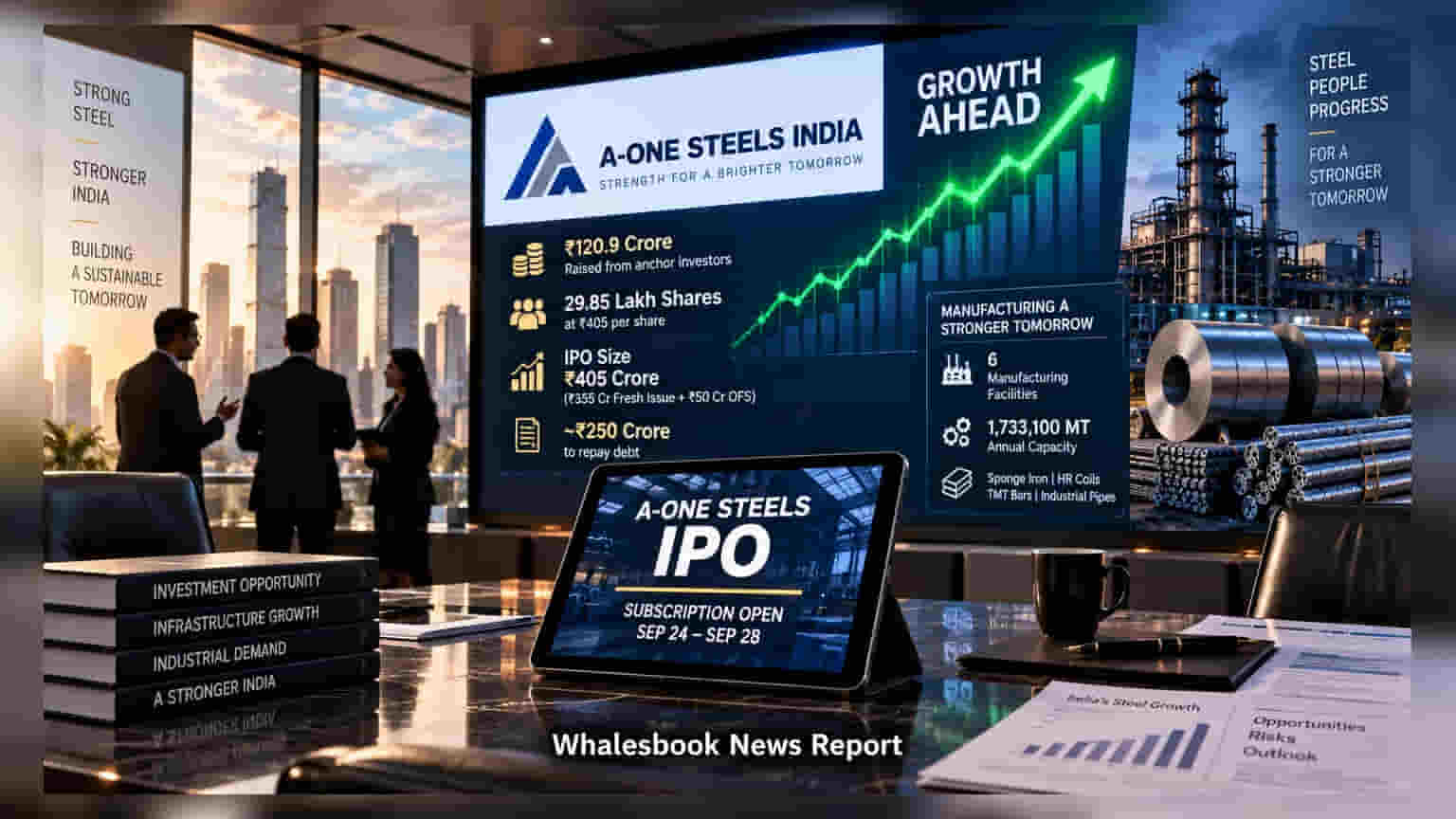
A-One Steels India has raised Rs 120.9 crore from anchor investors, including Morgan Stanley and LRSD Securities, ahead of its Rs 405 crore public offer. The IPO opens for subscription on September 24, with the company planning to use a significant portion of the funds to reduce its debt burden.
A-One Steels India has successfully completed its anchor book allocation, raising Rs 120.9 crore from institutional investors just one day before the launch of its initial public offering (IPO). The company issued 29.85 lakh shares at the upper price band of Rs 405 per share. This early backing from institutional players often serves as a signal of market interest, though retail investors should evaluate the company’s fundamentals independently.
Institutional participation was led by LRSD Securities, which invested Rs 28.39 crore, followed by Morgan Stanley with Rs 25 crore and Longthrive Capital with Rs 20 crore. Taurus Asset Management also participated with Rs 5 crore across four of its schemes. Other participants included Vikas India, SB Opportunities Fund, Venus Investments, and Ashika Global Finance.
IPO Strategy and Debt Reduction
The total IPO size is Rs 405 crore, which consists of a fresh issue of Rs 355 crore and an offer-for-sale segment of Rs 50 crore. A critical area for investors to monitor is the company’s capital allocation strategy. Management has indicated that approximately Rs 250 crore from the net proceeds will be used to pay down debt. Reducing debt is generally a positive step, as it helps lower interest expenses and improves the company’s financial flexibility. However, investors will want to track whether this amount is sufficient to meaningfully change the company's leverage profile in the long term.
Operational Context and Sector Risks
A-One Steels India currently operates six manufacturing facilities across Karnataka and Andhra Pradesh, with a total annual production capacity of 1,733,100 metric tons. The company produces a range of items including sponge iron, HR coils, TMT bars, and industrial pipes. While the capacity scale is significant, the steel manufacturing sector is inherently capital-intensive and cyclical.
Investors should consider the sector-specific risks that affect all steel players. The profitability of these companies is often sensitive to fluctuations in the prices of raw materials like iron ore and coal, as well as shifts in global and domestic demand. Because the steel industry is highly competitive, margins can come under pressure if the company cannot pass on cost increases to customers. Furthermore, as the company operates in a cyclical industry, its performance can vary significantly depending on the broader economic environment and infrastructure demand.
The IPO subscription window opens on September 24 and will remain open until September 28. Future monitorables for investors will include the company's ability to maintain stable profit margins amid raw material price volatility, the actual impact of the debt repayment on its balance sheet, and its ability to maintain high usage of its manufacturing capacity.