

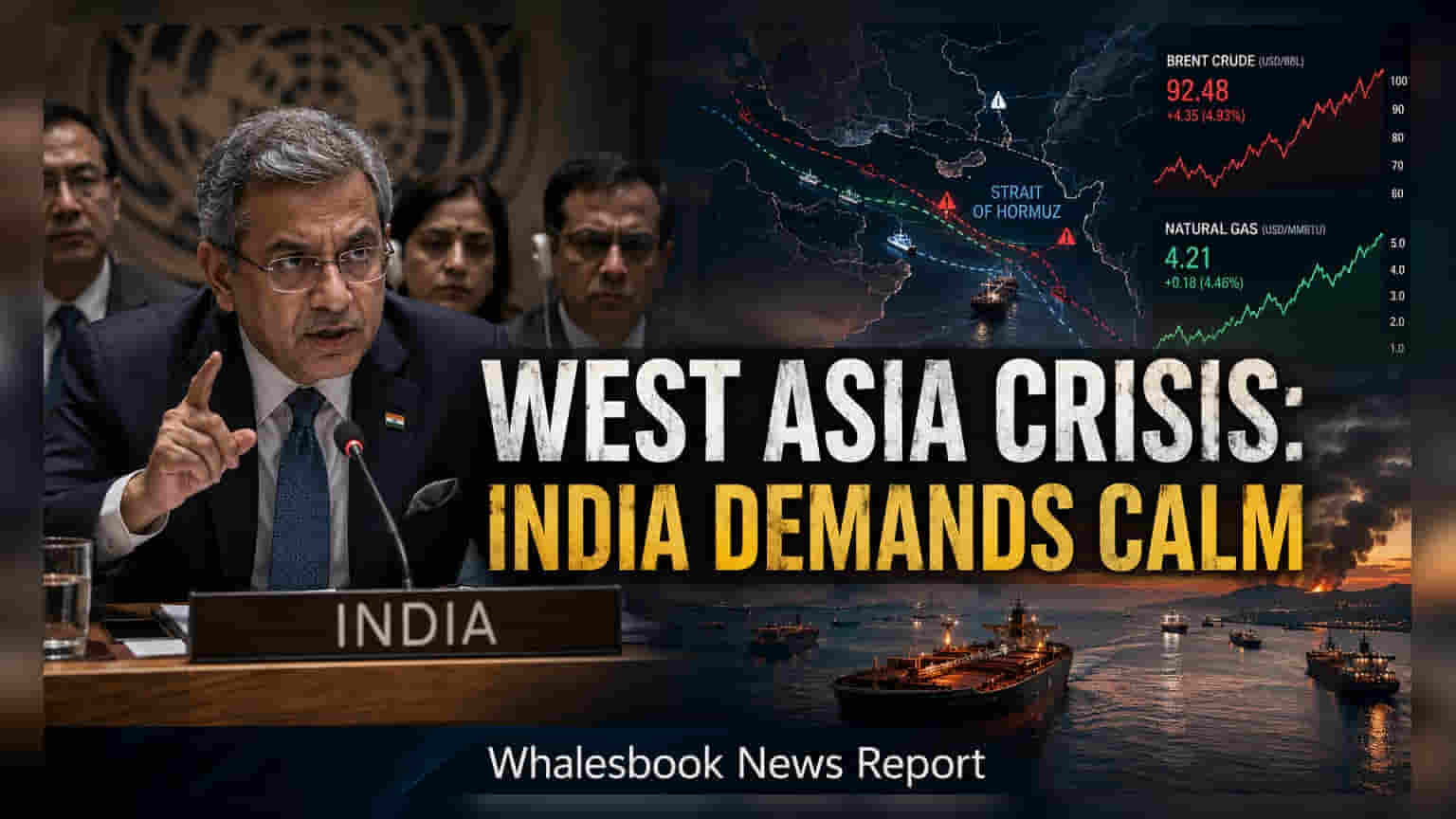
India has condemned recent attacks on commercial vessels in the Strait of Hormuz, urging immediate de-escalation. The situation threatens major trade routes, with India’s annual bilateral trade with the region valued at approximately $180 billion. Investors may track potential impacts on shipping costs, insurance premiums, and energy import prices.
India has formally expressed deep concern regarding the surge in hostilities in West Asia, specifically citing repeated attacks on commercial shipping vessels navigating the Strait of Hormuz. Ambassador Parvathaneni Harish, India's Permanent Representative to the UN, highlighted that these assaults have not only obstructed international waterways but have also resulted in casualties among Indian citizens. The government has stressed that the restoration of unimpeded navigation is essential, warning that the disruption of these critical trade corridors carries significant economic implications for the nation.
Economic Stakes and Trade Routes
The region serves as a vital hub for India’s economic interests. Beyond the $180 billion in annual bilateral trade, India maintains substantial financial exposure through over $31 billion in foreign direct investment. Furthermore, the reliance on this region for energy imports and the dependence on remittances, which exceed $52 billion annually from the Gulf Cooperation Council, underline why any prolonged instability is a serious concern for the Indian economy. For companies heavily reliant on exports to or imports from the Middle East, the current maritime volatility may increase logistics costs and insurance premiums, potentially pressuring profit margins for firms in the shipping, logistics, and energy sectors.
Impact on Energy and Logistics
The vulnerability of the Bab al-Mandab Strait and the Red Sea remains a primary monitorable. While the immediate focus is on maritime security, the potential for delays in the movement of goods could lead to inventory disruptions or higher freight expenses. Historically, instability in these corridors has led to increased volatility in global commodity prices, including crude oil. Given that India is a significant importer of oil and gas from the region, any sustained threat to supply chains could influence domestic fuel costs and inflationary trends, which ultimately affects the broader equity market and sectors sensitive to energy prices.
Regional Stability and Humanitarian Concerns
Beyond maritime security, India has reiterated its support for a two-state solution regarding the Gaza crisis and continues its commitment to humanitarian aid, pledging approximately $175 million in development assistance. The government’s focus also extends to the stability of Yemen and the security of UNIFIL peacekeepers in Lebanon. For the international community and Indian investors alike, the primary next steps will involve monitoring whether diplomatic efforts can restore safety in the Strait of Hormuz and prevent further escalation. The market will specifically watch for any updates on shipping insurance rates, tanker availability, and energy price movements, as these will serve as early indicators of the severity of the logistics disruption.