

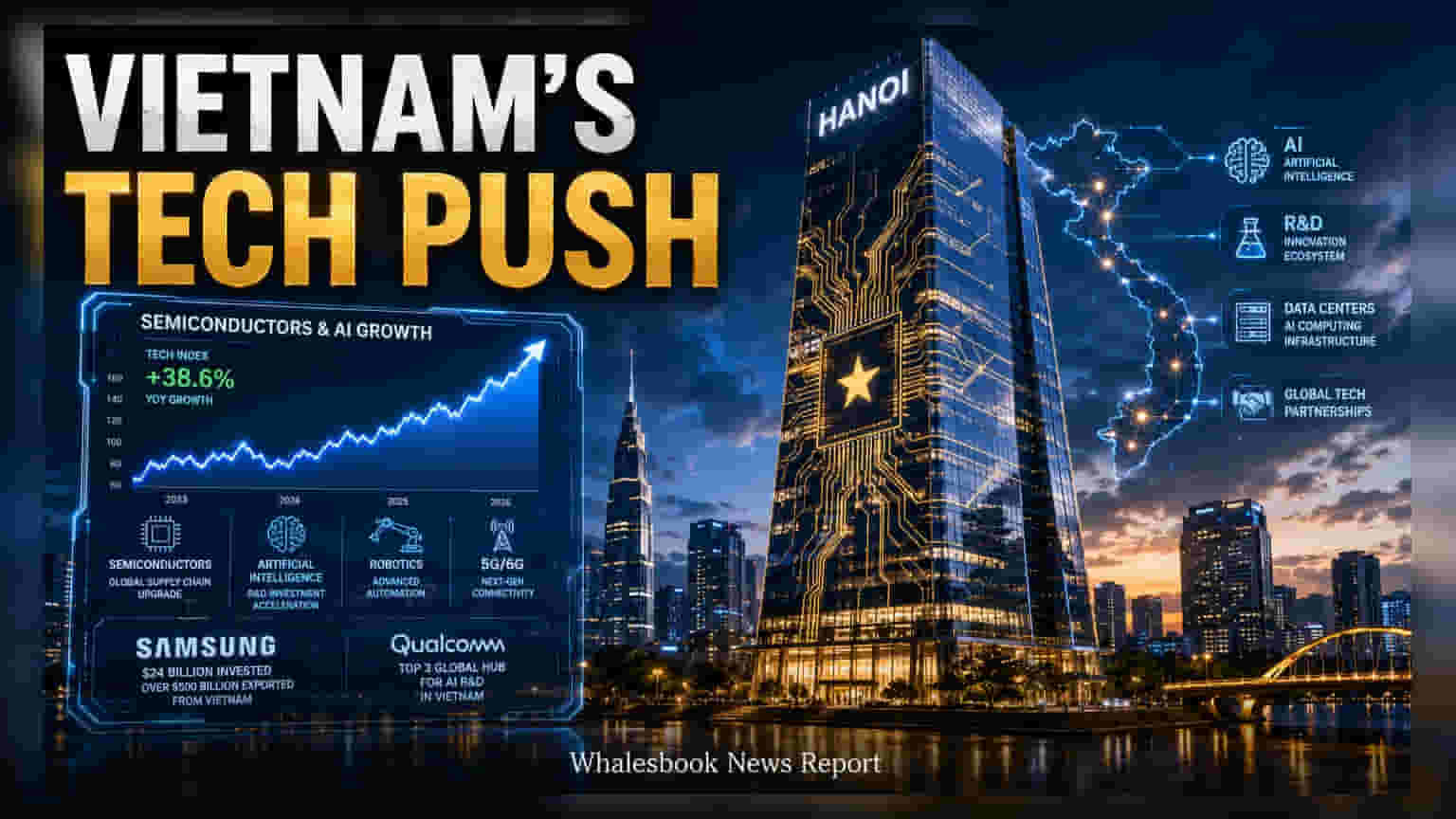
Vietnam is pushing tech giants Samsung and Qualcomm to expand their AI and semiconductor research locally. While the government aims to elevate the nation’s status in the high-tech value chain, investors are closely watching Samsung’s stock performance amid competitive pressures and ongoing discussions around shareholder returns.
Vietnam is aggressively trying to upgrade its status in the global technology sector. On August 27 and 28, 2026, government leadership in Hanoi held high-level meetings with executives from Samsung Electronics and Qualcomm. The goal is to move Vietnam from being a purely manufacturing-focused base to a regional center for research, development, and high-tech innovation, particularly in artificial intelligence, robotics, and next-generation connectivity.
Qualcomm has responded with plans to significantly expand its footprint in the country. The company aims to develop Vietnam into one of its top three global hubs for research and development in artificial intelligence. This will focus on advanced technologies like 5G and 6G networks, as well as infrastructure for data centers, which are essential for the growing demand in AI computing.
Samsung Electronics, which has already invested $24 billion in the country, remains the most significant player in Vietnam’s manufacturing sector. Over the past 17 years, the company has exported over $500 billion worth of goods from its Vietnamese facilities. However, the Vietnamese government is now pressing the electronics giant to shift its focus. They are looking for Samsung to integrate more deeply into the country’s innovation ecosystem, rather than just using it for assembly.
Investors in Samsung are watching these developments against a complex market background. Despite reporting record revenue and operating profits in the second quarter of 2026, the company’s stock price has faced volatility in late August. This pressure largely stems from investor disappointment regarding the company’s plans for shareholder returns, which did not meet the expectations of many market participants.
Beyond the company-specific concerns, Samsung also faces intense pressure in the broader semiconductor market. Competition from rivals like SK Hynix is heating up, particularly in the high-memory chip space. Furthermore, the company’s financial success is heavily tied to the memory semiconductor cycle. Any slowdown in spending by major AI technology companies—often called hyperscalers—could put pressure on future revenue.
For investors, the key monitorable will be how these companies balance new commitments in Vietnam with their global cost structures and competitive challenges. While the government’s push for high-tech development offers potential for long-term growth, the immediate focus for shareholders will likely remain on Samsung’s ability to navigate competitive threats and manage investor expectations regarding dividends and capital returns.