

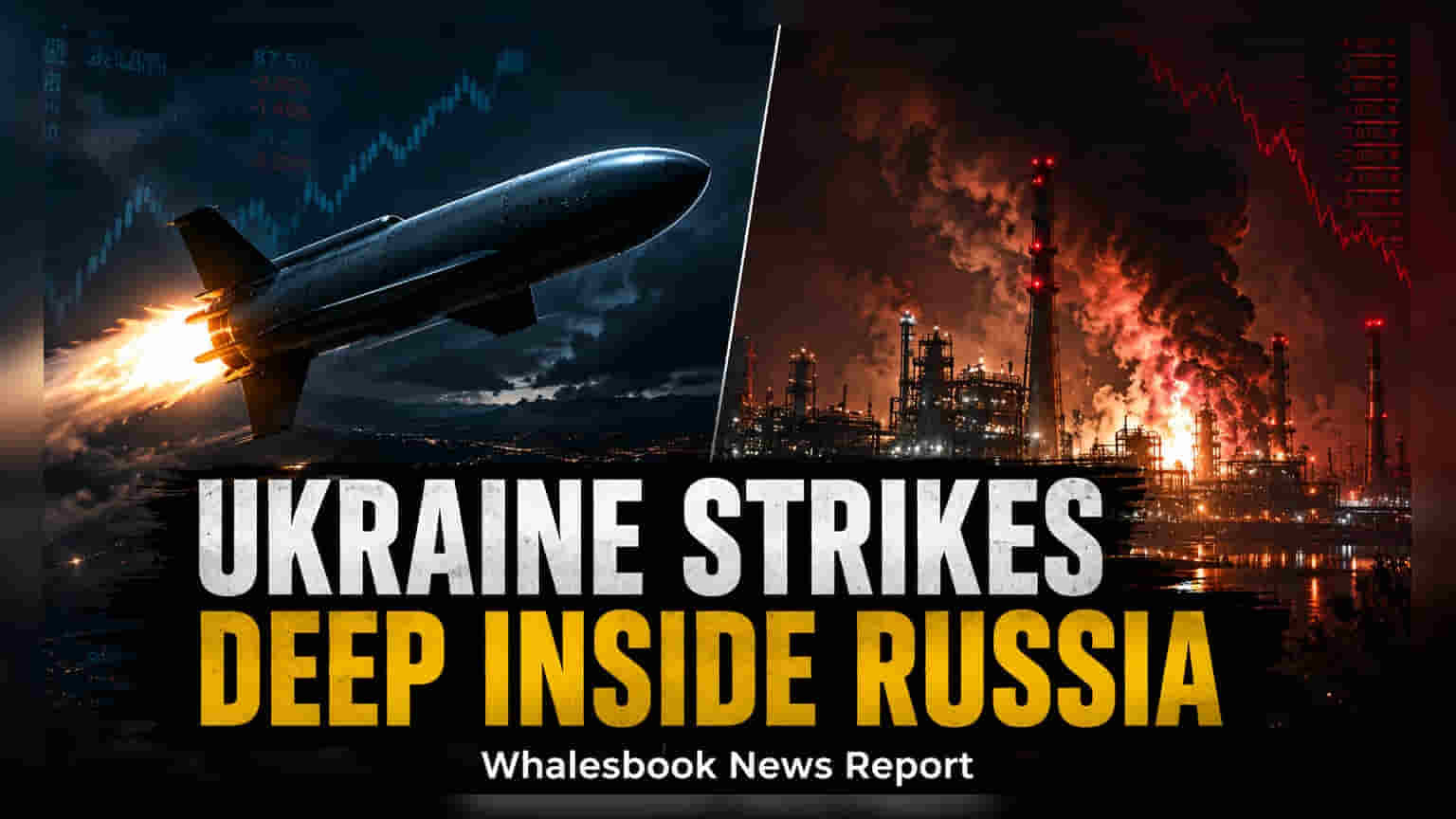
Ukraine has used its domestically built 'Flamingo' missiles to strike a Russian rocket production facility and an air base, deepening the conflict. For investors, this escalation heightens geopolitical risks, which can impact global commodity prices, shipping costs, and overall market stability.
Ukraine announced on Saturday that its forces successfully struck two critical military and industrial targets deep inside Russian territory using its newly developed 'Flamingo' cruise missiles. The strikes targeted the Progress Centre in the Samara region and the Savasleyka air base, located approximately 900 kilometers and 700 kilometers respectively from the front lines.
The Progress Centre facility, which is linked to Russia's state space agency Roscosmos, is involved in the production of rocket technology and electronics. By targeting such industrial infrastructure, Ukraine is attempting to disrupt Russia's military supply chain and reduce its ability to sustain long-term operations. The operation utilized the FP-5 Flamingo missile system, a technology developed by the private Ukrainian defense startup Fire Point.
From a market and economic perspective, this escalation is a significant development for global investors. Heightened conflict deep within Russian territory increases the risk profile for global commodity markets, particularly energy and food supplies. Historically, major escalations in this region have led to increased volatility in oil and gas prices due to concerns over supply disruptions and transport logistics. Furthermore, higher tensions often result in increased insurance premiums for shipping vessels navigating through affected regions, potentially adding to global logistics costs.
Another layer of interest for market participants is the demonstrated effectiveness of domestic defense technology. The use of locally produced missiles like the Flamingo highlights the growing role of private defense technology startups in modern conflict. This trend is shifting how defense budgets and industrial priorities are managed globally, with countries increasingly looking toward indigenous technology to reduce reliance on international supply chains for critical defense equipment.
Looking ahead, investors will monitor the potential for retaliatory measures from Russia and whether this escalation leads to further pressure on key infrastructure. The immediate focus for markets will be the impact on global energy prices and whether these strikes lead to shifts in shipping and insurance policies for international trade. Any sustained disruption to industrial capacity or logistics networks could impact sectors dependent on stable supply chains, making geopolitical stability a critical monitorable for investors in the coming weeks.