

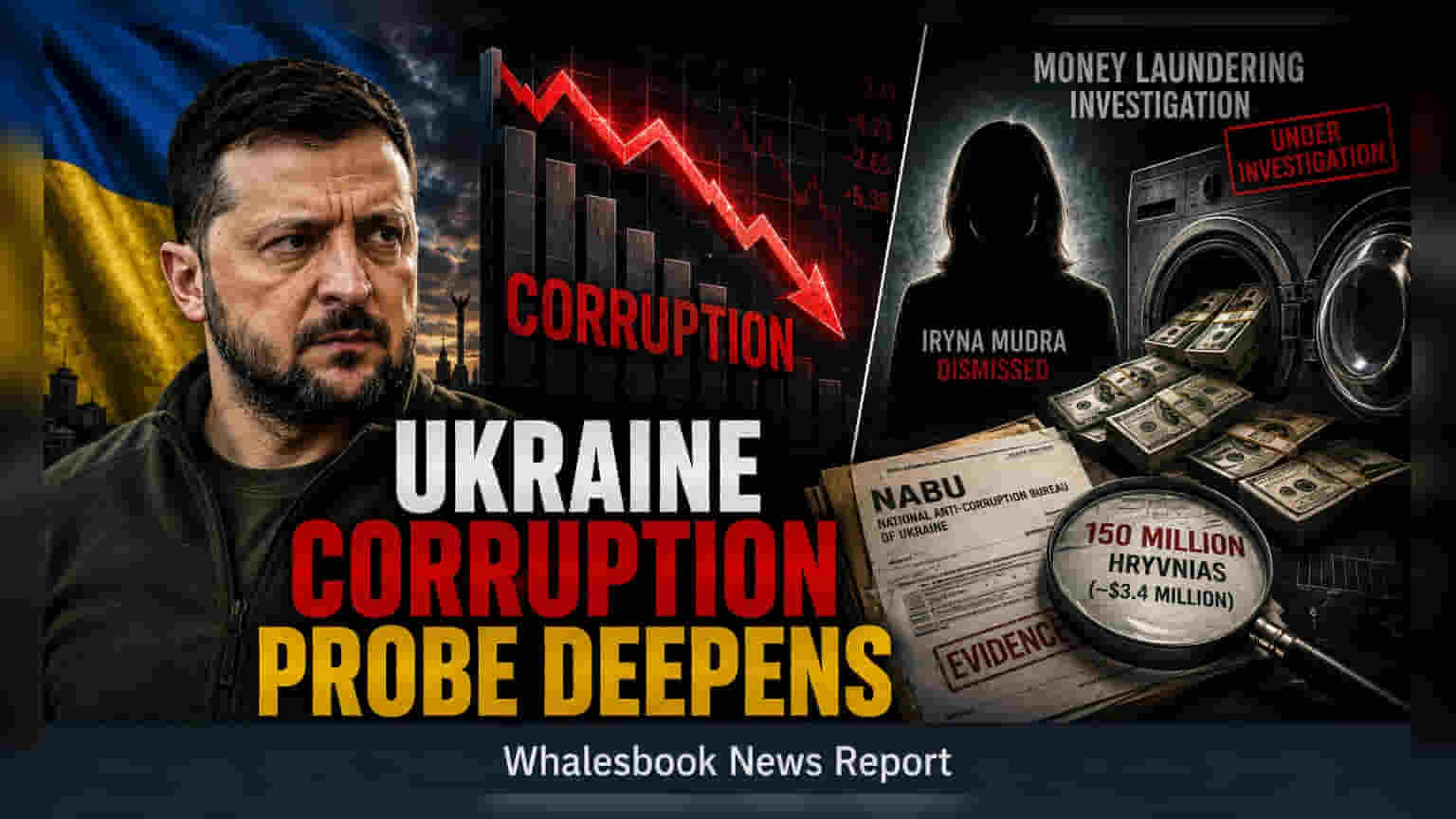
Ukrainian President Volodymyr Zelenskyy has dismissed deputy head of office Iryna Mudra as investigators intensify a corruption probe involving a $3.4 million money-laundering case. The development adds political pressure on the administration as it navigates wartime challenges and works toward European Union integration.
Ukrainian President Volodymyr Zelenskyy has removed a high-ranking official, Iryna Mudra, from her position as a deputy head of the Presidential Office on August 19, 2026. The dismissal follows a broadening investigation by the National Anti-Corruption Bureau into a suspected money-laundering scheme involving approximately 150 million hryvnias, or roughly $3.4 million.
According to reports, the investigation centers on the misuse of funds intended to provide bail for a defendant in a previous high-profile corruption case. While Mudra has not been formally charged as a suspect, investigators have confirmed that her office and home were subject to searches as part of the broader inquiry. The investigation reportedly involves a network of former lawmakers, bank officials, and state employees.
This administrative action highlights the internal pressure the Ukrainian government faces as it attempts to reform its governance structures. The ability to control corruption is a critical factor for Ukraine as it pursues membership in the European Union, where transparency and the rule of law are essential requirements. Any perception of widespread graft within the government can complicate international support and the path toward European integration.
Beyond the specific case, the political landscape in Ukraine remains complex. The government is currently managing the challenges of an ongoing war while balancing internal calls for national elections, which the administration has noted are prohibited under current martial law. These domestic pressures, combined with the ongoing anti-corruption efforts, create a challenging environment for the government’s long-term stability.
Investors and international observers often monitor these developments, as political stability and the integrity of government institutions are necessary for long-term economic planning, aid, and reconstruction efforts. The key development to watch moving forward will be whether the investigation expands to implicate other senior officials and how the government manages the resulting political and public discourse regarding these reforms.