

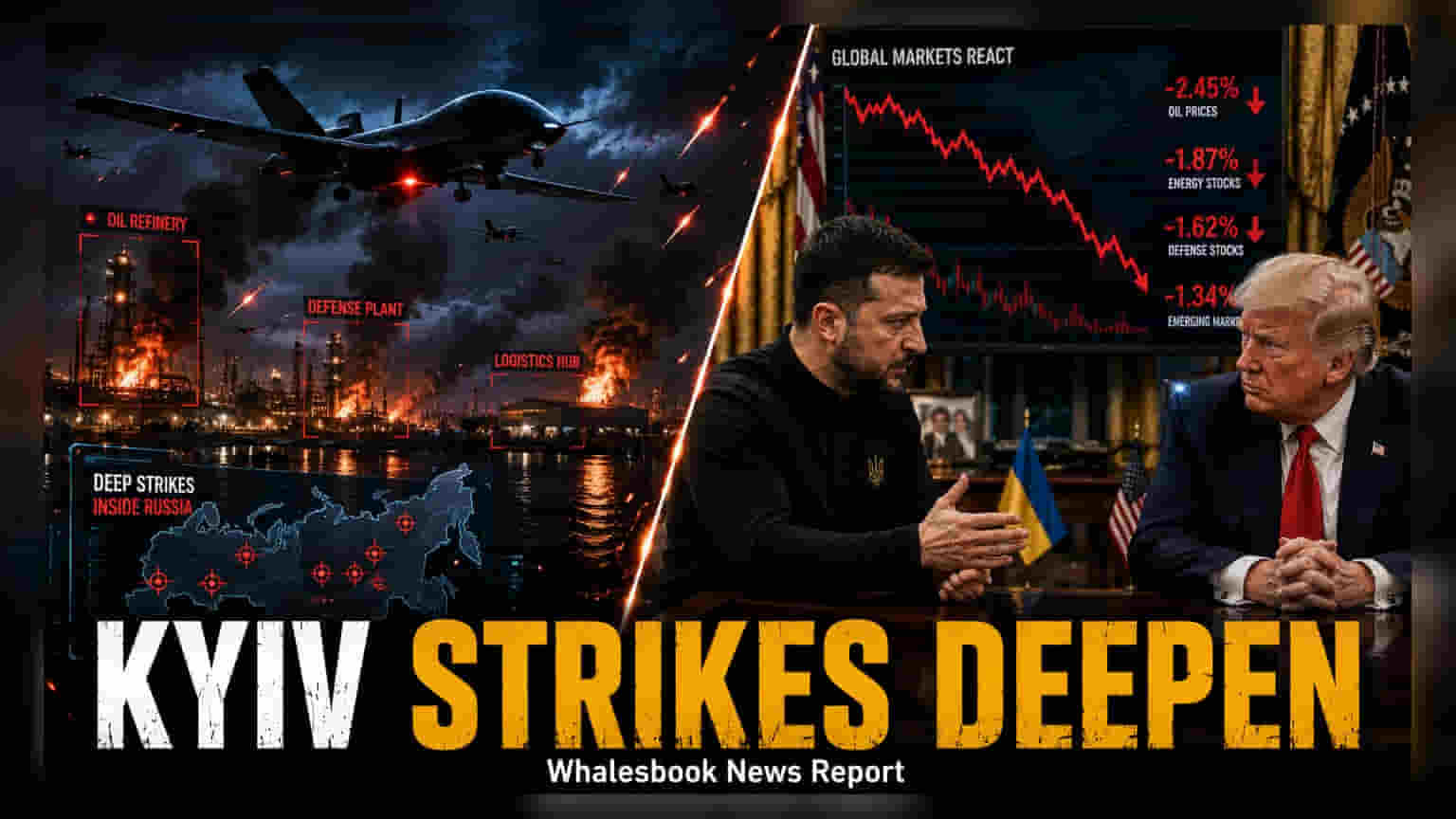
Ukraine’s intensified long-range strikes on Russian oil refineries and defense sites are reshaping the conflict's dynamics. As diplomatic ties between Kyiv and Washington show signs of improvement, the ongoing escalation continues to threaten global energy stability. Indian investors should monitor how these sustained disruptions influence crude oil prices and regional economic risks in the coming months.
The ongoing conflict between Ukraine and Russia has entered a more aggressive phase, with Kyiv significantly escalating its long-range drone strikes deep inside Russian territory. These operations are increasingly targeting critical infrastructure, including major oil refineries and defense production facilities, rather than just frontline military positions. For global markets, this shift introduces new variables regarding energy supply stability and regional economic volatility.
Escalating Conflict Hits Energy Infrastructure
The strategic focus of these strikes has broadened to include industrial sites vital to the Russian war economy. Reports indicate that Ukrainian forces have successfully targeted several key oil refineries, contributing to concerns about fuel supply stability within Russia. Because Russia is a major global energy producer, any prolonged disruption to its refining or export capabilities can influence international oil prices. For the Indian market, which remains heavily dependent on crude oil imports, fluctuations in global energy prices driven by geopolitical uncertainty are a standard monitorable. Additionally, these strikes have impacted logistics hubs and warehouses, such as those operated by major retail entities, suggesting an effort to create economic pressure within Russian borders.
Shifting US-Ukraine Relations
Beyond the battlefield, the diplomatic landscape is showing notable changes. Relations between Kyiv and Washington, which previously faced public friction, appear to be evolving. In recent comments, US President Donald Trump has acknowledged President Zelenskyy’s effectiveness, marking a distinct departure from earlier, more critical rhetoric. This improvement in ties is strategically important as Ukraine relies on Western support to sustain its defense capabilities. The change in tone may suggest a realignment in how the United States approaches long-term aid and military support for Ukraine, though policy shifts remain subject to ongoing geopolitical negotiations.
War Intensity and Economic Impact
Despite the tactical successes of these deep strikes, the conflict remains a high-pressure situation for both sides. Ukraine continues to face significant challenges, particularly a critical shortage of air defense interceptors, such as the Patriot missile systems, which are essential for protecting its cities from retaliatory Russian barrages. These retaliatory strikes, which frequently target Ukrainian civilian and urban centers, maintain the high cost of the war for the Ukrainian economy.
The human and economic cost remains high, with civilian casualties reported by both sides. The sustainability of this high-intensity conflict depends on several factors, including the capacity of Ukraine to maintain its domestic weapons production and the continued financial and military backing from international allies. For investors, the broader risk lies in the potential for prolonged disruption to global supply chains, rising commodity prices, and the unpredictable nature of regional stability. The next important monitorable will be the impact of these strikes on global oil price trends and whether diplomatic pivots lead to any changes in the intensity of the conflict or aid structures.