

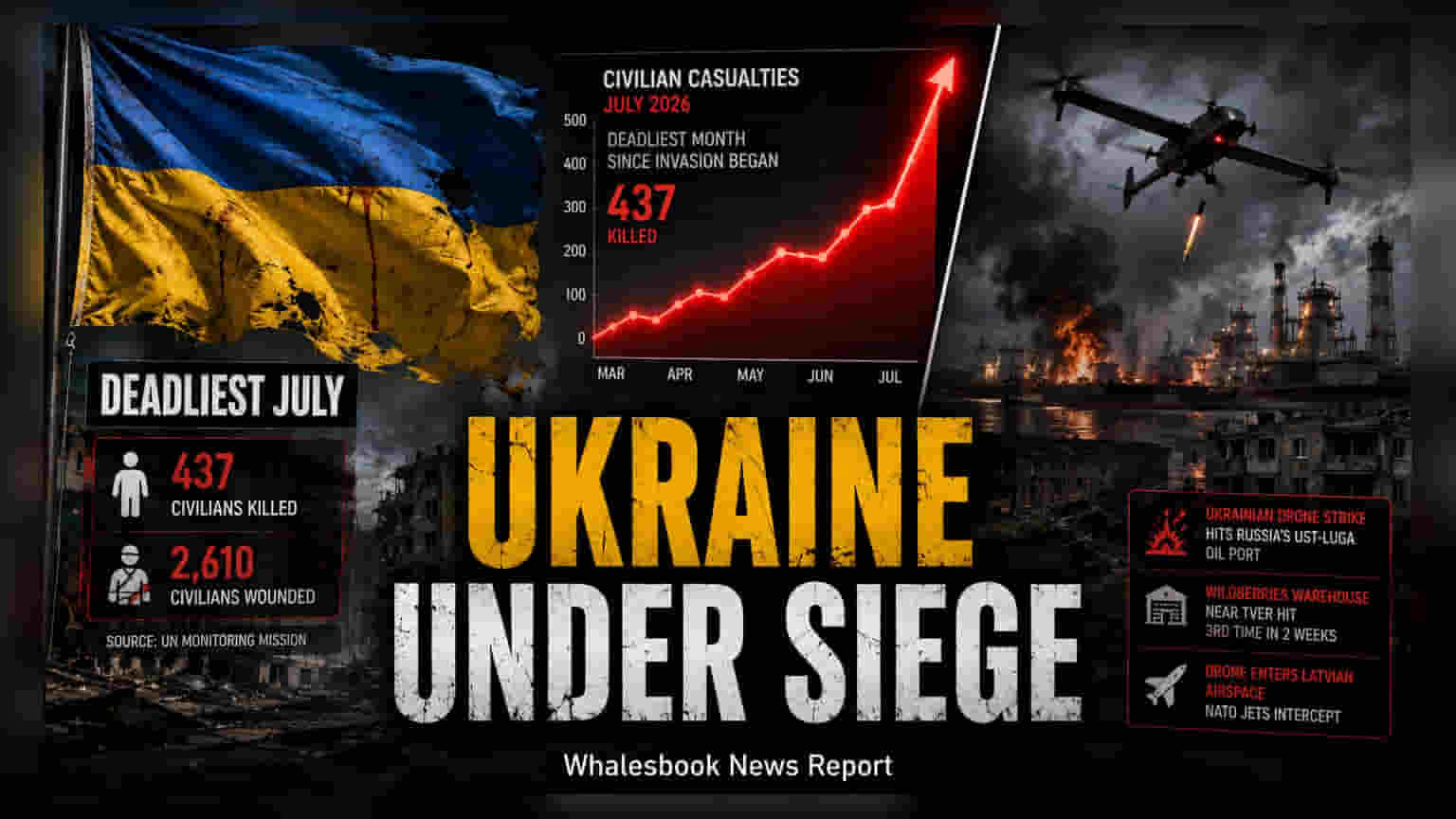
July 2026 was the deadliest month for Ukrainian civilians since the early days of the invasion, with 437 deaths reported by the UN. The conflict has intensified in mid-August, with drone strikes impacting critical Russian energy export terminals and logistics warehouses, raising concerns about potential supply chain disruptions and regional market stability.
The conflict in Ukraine has entered a volatile phase, with the United Nations reporting that July 2026 was the deadliest month for civilians since the initial weeks of the invasion. According to the UN monitoring mission, 437 civilians were killed and 2,610 were wounded last month. This humanitarian impact continued into mid-August, with a reported Russian drone strike in the Sumy region on August 14 resulting in the deaths of a 29-year-old woman and her nine-year-old son.
Beyond the human toll, the intensity of the fighting has expanded to include long-range operations targeting critical infrastructure. On August 14, Ukrainian forces conducted a drone strike on the port of Ust-Luga in Russia’s Leningrad region. As a major terminal for oil and gas exports, strikes on this facility are closely monitored by global markets due to the potential for disruptions in energy supply chains. Any significant or repeated damage to such infrastructure can impact export volumes, which is a factor that energy sector observers track for signs of pricing pressure.
Logistics infrastructure has also become a frequent target. Reports indicate that a warehouse facility belonging to the major online retailer Wildberries near Tver, Russia, sustained damage from drone debris. This incident marks the third time this logistics site has been impacted within two weeks. For supply chain managers and businesses operating in the region, the recurring targeting of such distribution hubs highlights the operational risks and the potential for increased costs related to transport, inventory safety, and insurance.
The widening scope of these operations has also introduced broader security risks. There have been reports of increased drone activity involving multiple Russian regions, with a recent incident where NATO fighter jets shot down a drone that had entered Latvian airspace. The incident was attributed to regional electromagnetic warfare operations.
For investors and global market analysts, the key monitorables moving forward include the frequency of attacks on energy export terminals and the stability of supply chain logistics in the region. While these events are primarily geopolitical, their influence on regional energy prices, supply chain reliability, and the potential for spillover effects into neighboring NATO-affiliated territories remains a point of focus for those tracking global economic conditions.