

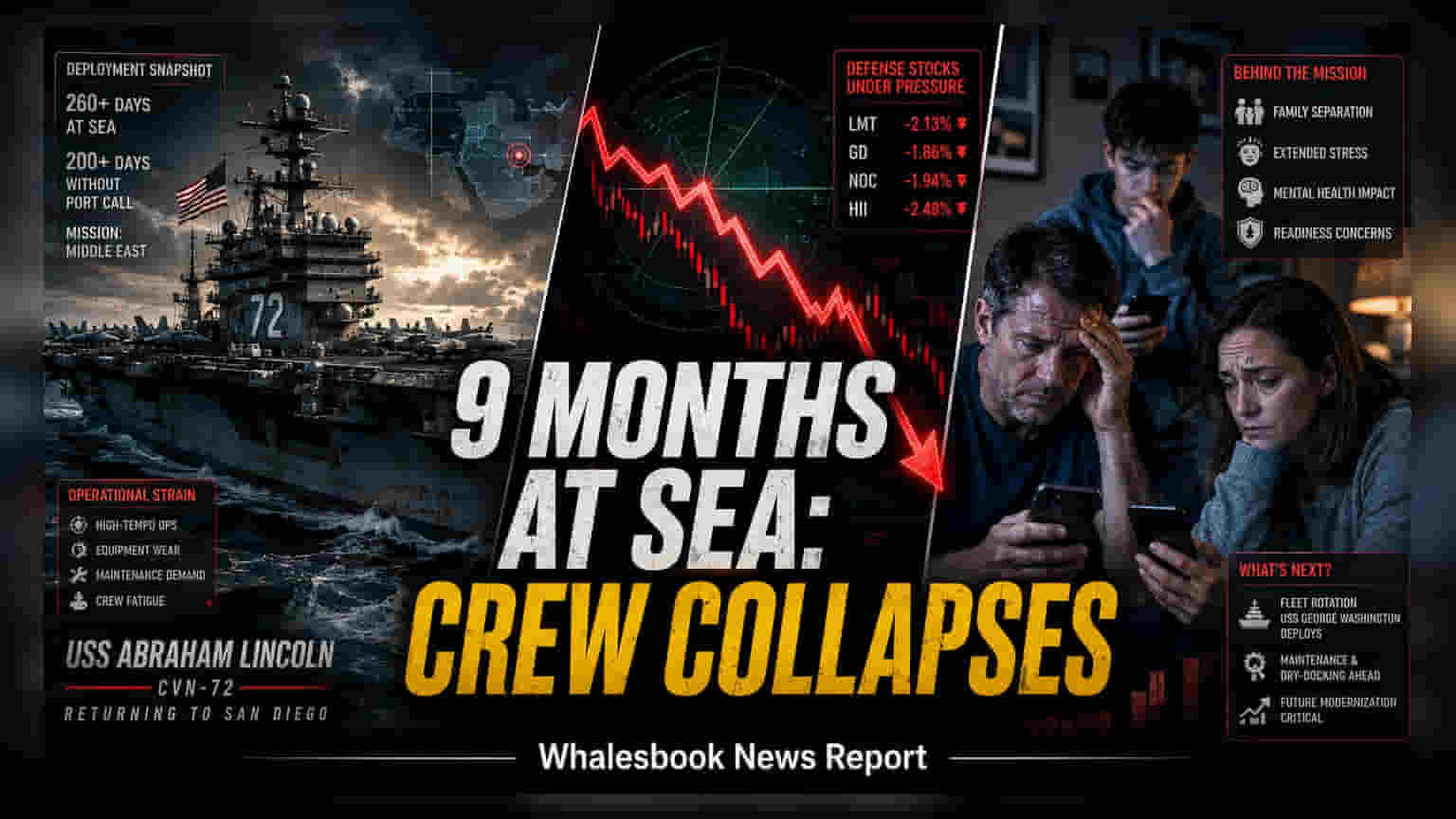
The USS Abraham Lincoln is departing the Middle East after a record-breaking 260-day mission amid the ongoing conflict with Iran. Investors are monitoring the defense sector as high-tempo operations continue to strain naval assets, which may drive long-term maintenance and replacement demand.
The U.S. Navy aircraft carrier USS Abraham Lincoln (CVN-72) is concluding its mission in the Middle East after a continuous deployment exceeding 260 days. The vessel, which spent over 200 consecutive days at sea without a port call, is now beginning its transit back to San Diego. This extended deployment was primarily driven by the ongoing U.S. conflict with Iran, which required maintaining a strong naval presence in the region.
Operational Strain and Equipment Maintenance
For defense sector investors, the key takeaway from such prolonged deployments is the significant operational wear and tear on naval hardware. The USS Abraham Lincoln is a Nimitz-class carrier, a platform originally designed by Huntington Ingalls Industries. Continuous high-tempo operations beyond standard rotation cycles place heavy stress on both the crew and the ship’s complex systems. This often necessitates increased maintenance requirements upon return to port, which can influence long-term capital allocation for defense contractors involved in ship repair and modernization.
While officials have pushed back against reports of degraded living conditions and crew exhaustion, the duration of the deployment highlights the reality of current geopolitical tensions. The strain on naval assets is a recurring theme in the defense industry, as prolonged duty cycles require more frequent dry-docking and equipment upgrades to ensure fleet readiness. Investors often track these operational trends to gauge potential demand for defense services and next-generation equipment upgrades.
Geopolitical Shifts and Fleet Rotation
The departure of the USS Abraham Lincoln marks a transition in the U.S. naval posture in the Middle East. The carrier is being relieved by the USS George Washington, ensuring that the U.S. maintains a carrier strike group presence in the region. This rotation is critical given the current geopolitical risks, including regional instability and tensions with Iran. For stakeholders, the speed and efficiency of such fleet rotations are significant as they indicate the U.S. military's capacity to sustain high-intensity operations globally.
Public and political scrutiny has intensified regarding the impact of these extended missions on personnel welfare and long-term fleet readiness. While U.S. military leadership has emphasized the resilience of the crew and the operational necessity of the mission, these discussions underscore the challenges of managing older carrier assets in a high-threat environment.
The next important monitorable for the market will be the maintenance schedule and the timeline for fleet modernization as the U.S. Navy continues to balance high operational demand with the necessity of upgrading aging naval infrastructure.