

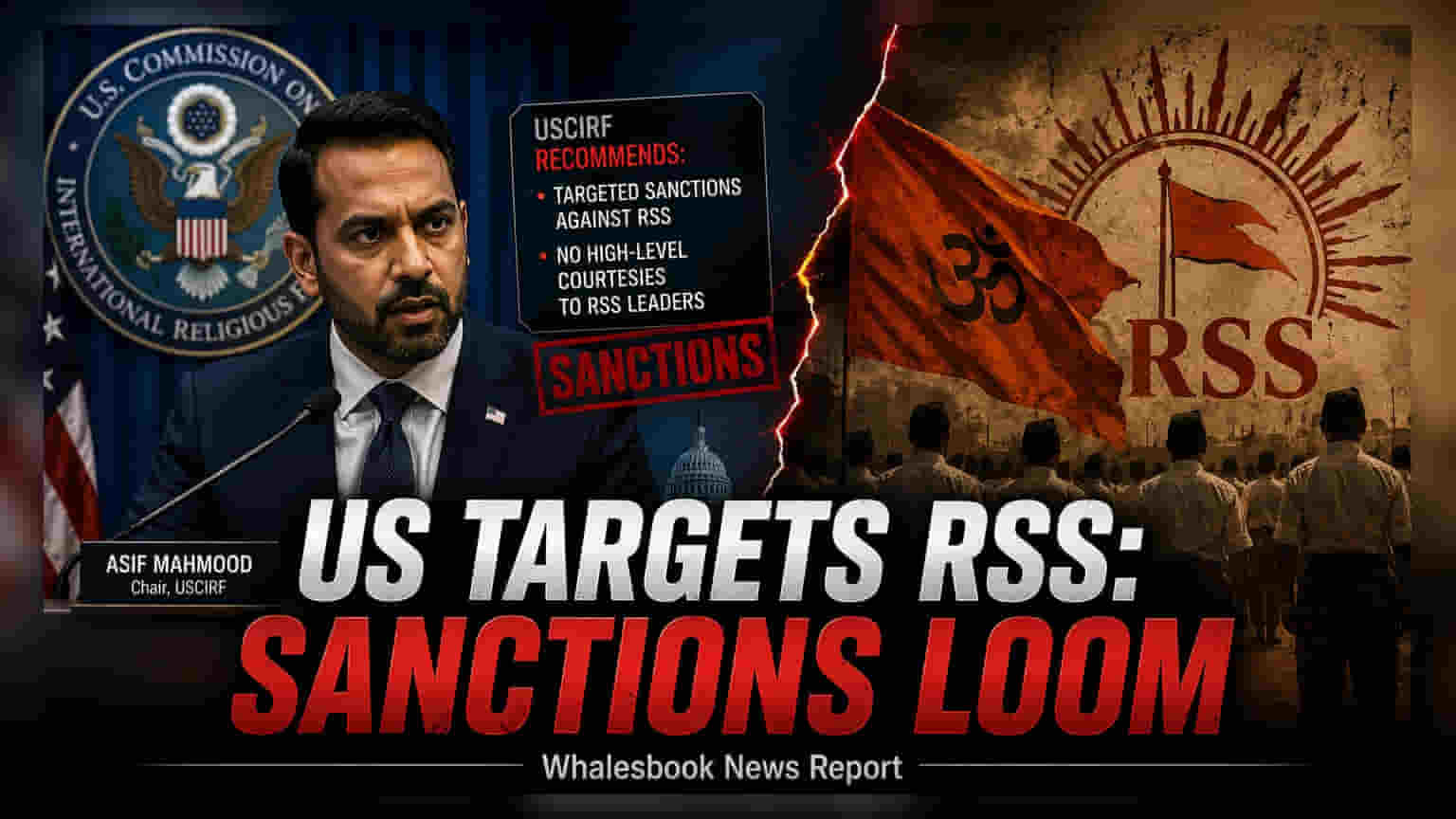
The U.S. Commission on International Religious Freedom (USCIRF) has recommended targeted sanctions against the RSS, ahead of the organization’s chief Mohan Bhagwat’s scheduled visit to the U.S. on August 29, 2026. The Indian government has previously rejected such findings, labelling the commission’s reports as biased and inaccurate.
The U.S. Commission on International Religious Freedom (USCIRF), a federal advisory body, has called for targeted sanctions against the Rashtriya Swayamsevak Sangh (RSS) and has suggested that the U.S. government refrain from offering high-level diplomatic courtesies to its leaders. This recommendation comes just days before RSS chief Mohan Bhagwat is scheduled to visit the United States for an event on August 29, 2026.
The USCIRF, currently chaired by Asif Mahmood, has previously advocated for stricter measures regarding India’s religious freedom policies. In its March 2026 Annual Report, the commission recommended that the U.S. Department of State designate India as a 'Country of Particular Concern' and proposed sanctions against the RSS and India's Research and Analysis Wing (R&AW). The commission claims these organizations have been involved in religious freedom violations, an assertion that has drawn consistent criticism.
The Indian government has firmly rejected the findings and recommendations of the USCIRF. Officials in New Delhi have repeatedly characterized the commission’s reports as misrepresentations of the reality in India, arguing that they reflect a biased perspective rather than an objective assessment. India maintains that it has a robust framework for protecting religious rights and views such recommendations as interference in internal affairs.
While the USCIRF is an independent bipartisan body, its recommendations are not binding on U.S. government policy. However, its statements are often monitored for the tone they set in bilateral diplomatic discussions. The upcoming visit of the RSS chief remains a focal point for observers of India-U.S. relations, as this development adds a layer of diplomatic complexity to the planned engagements. The core issue for observers will be how such public recommendations impact the tone of upcoming high-level diplomatic meetings and whether they create friction in the broader bilateral relationship between the two nations.