 Whalesbook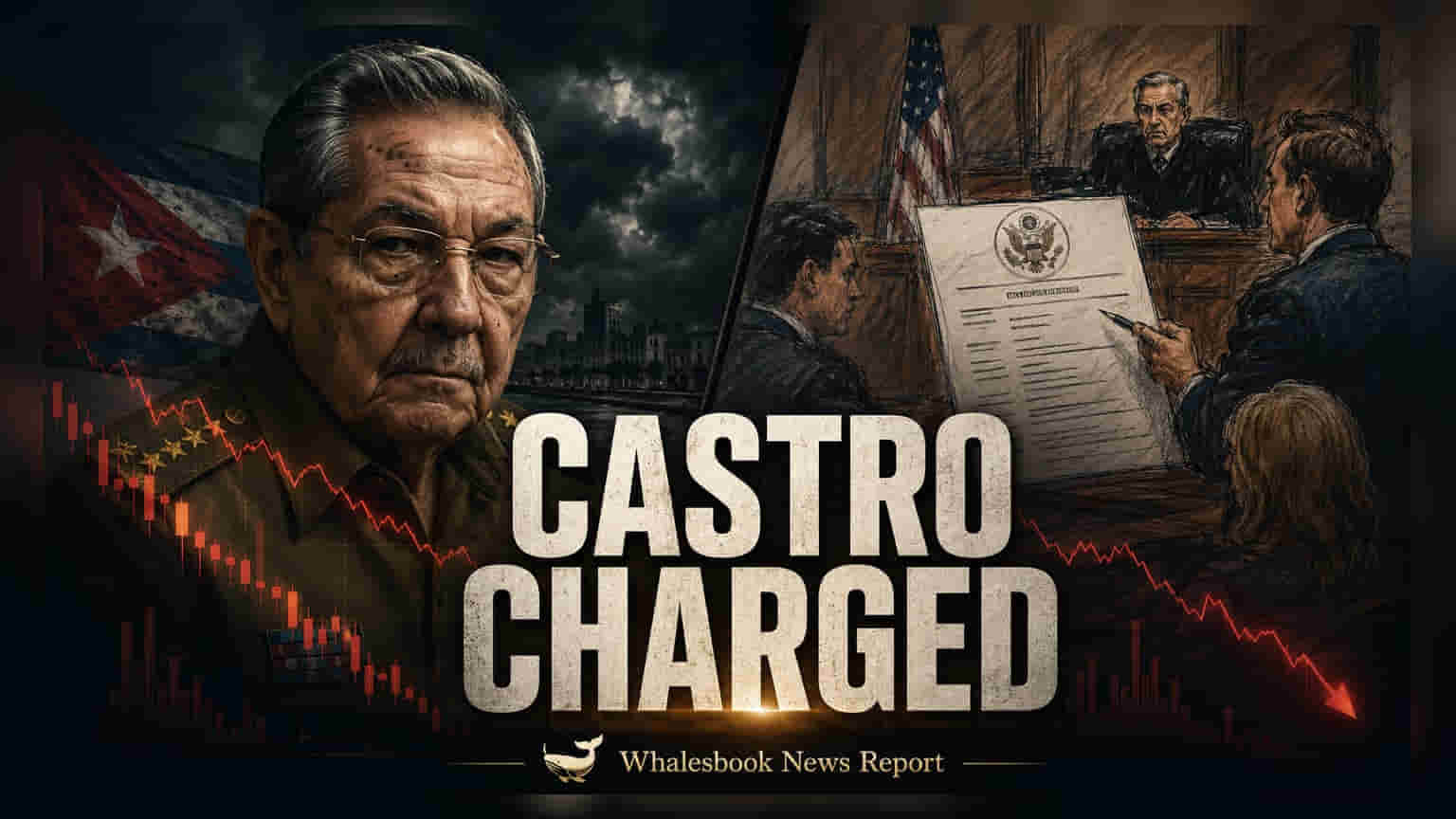


Legal Action Targets Castro for 1996 Incident
Former Cuban leader Raul Castro has been formally charged by the Trump administration with conspiracy, murder, and aircraft destruction. The charges stem from the 1996 shootdown of two planes operated by the exile group Brothers to the Rescue. Acting U.S. Attorney General Todd Blanche characterized the indictment as a significant legal development, noting the rarity of senior Cuban officials facing U.S. charges for actions leading to American fatalities. This indictment is expected to further deteriorate already strained diplomatic relations between the United States and Cuba.
Intensified U.S. Pressure on Cuba
Since resuming office, President Trump has implemented a series of escalating sanctions against Cuba, including measures to block fuel supplies. These actions are intended to pressure the Cuban leadership into enacting political changes. Secretary of State Marco Rubio has attributed Cuba's economic struggles to its government and has reiterated an offer of humanitarian aid contingent on reforms. However, Cuban President Miguel Diaz-Canel has defended the 1996 shootdown as a necessary act of self-defense, asserting compliance with international law.
Historical Context of U.S.-Cuba Relations
The indictment is viewed by some as part of a broader U.S. strategy to influence Cuba through economic and diplomatic isolation, building upon the long-standing trade embargo. The U.S. has also previously disrupted fuel exchanges between Venezuela and Cuba, exacerbating economic challenges on the island. Cuban officials, however, continue to affirm their nation's commitment to its chosen developmental path.
Background of the 1996 Incident
Raul Castro, a prominent figure in the Cuban Revolution, previously served as Minister of the Armed Forces for nearly five decades before succeeding his brother Fidel Castro as president from 2008 to 2018. The 1996 incident involved planes from Brothers to the Rescue, a group that searched for Cuban migrants. The downing resulted in the deaths of Carlos Costa, Armando Alejandre Jr., Mario de la Pena, and Pablo Morales. While Cuba asserted that the planes violated its airspace, the International Civil Aviation Organization later determined the aircraft were shot down in international waters. Previous U.S. charges against Cuban officers in 2003 did not result in extradition or charges against the Castro brothers.
International Law and Sovereignty Debates
The legal basis for the indictment rests on the U.S. interpretation of accountability for actions resulting in American deaths. Cuba's defense, as articulated by President Diaz-Canel, centers on the principle of legitimate self-defense and the protection of national sovereignty against perceived external threats. The disagreement highlights differing perspectives on territorial integrity and the application of international law in the context of political tensions.