 Whalesbook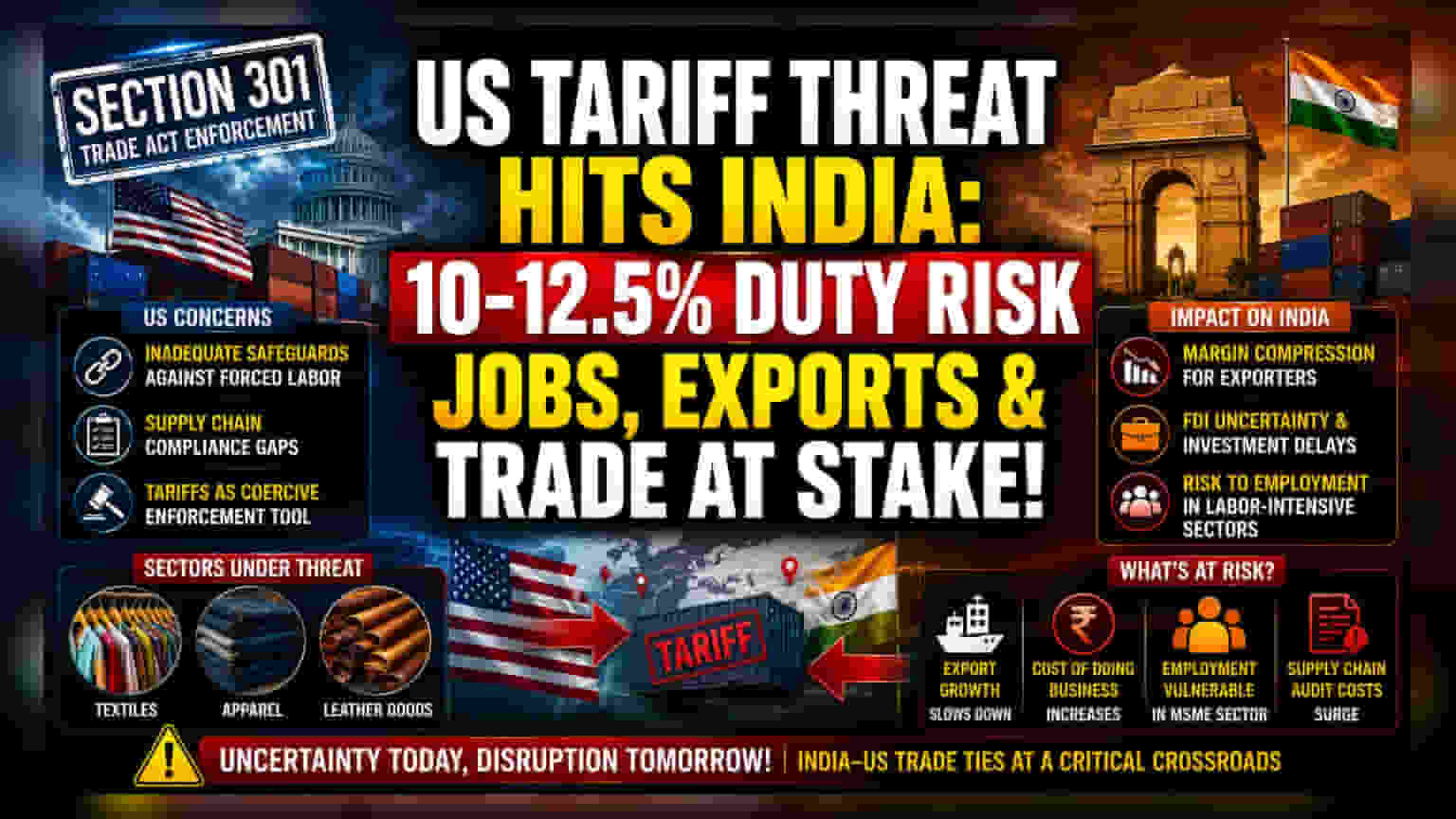


The Geopolitical Lever
The U.S. Trade Representative’s recent Section 301 findings have introduced significant friction into the Washington-New Delhi economic dialogue. By categorizing India among nations lacking sufficient safeguards against forced labor in supply chains, the U.S. has effectively moved from diplomatic consultation to a coercive tariff-based framework. This is not merely an isolated trade dispute but a calculated pivot in U.S. enforcement policy that targets the core of India’s labor-intensive export sectors.
The Economic Impact of Proposed Duties
The proposed 10% to 12.5% tariff structure strikes directly at the margins of export-oriented industries, particularly textiles, apparel, and leather goods. Unlike broad-based tariffs, these are surgical, aimed at industries where India competes directly with Vietnam and Bangladesh. While officials are currently discussing mitigation through volume-based exceptions for specific garment imports, the uncertainty alone creates a chilling effect on foreign direct investment. Businesses typically demand policy stability before committing to long-term manufacturing contracts, and this sudden regulatory volatility forces procurement managers to re-evaluate their reliance on Indian-sourced components to mitigate potential cost spikes.
Historical Precedents and Sectoral Risks
Historically, Section 301 investigations have served as a precursor to protracted trade wars, most notably the U.S.-China tariff escalations that began in 2018. Markets generally react to these announcements with a sharp uptick in volatility for export-heavy indices. If these duties materialize, Indian firms will face a twofold challenge: immediate margin compression from the tariffs themselves and the indirect cost of implementing rigorous, U.S.-compliant supply chain auditing processes. Peer nations currently under similar scrutiny have previously seen significant capital flight as importers shift volume to suppliers with more transparent, pre-verified labor provenance.
The Forensic Bear Case
From a risk perspective, the timing of this announcement suggests the U.S. is prioritizing labor compliance enforcement over immediate strategic alliances. Analysts observing the negotiations note that India’s domestic legislative progress on forced labor has been slower than what current U.S. standards demand. If the Indian government chooses to prioritize sovereignty over its labor inspection protocols, the friction could escalate into a long-term trade hurdle. Furthermore, the reliance on textile exports for employment stability makes this sector particularly vulnerable; any failure to secure the proposed volume-based exceptions could lead to an immediate contraction in factory-gate output, worsening domestic unemployment concerns while failing to satisfy the U.S. legislative mandate for tighter trade barriers.