

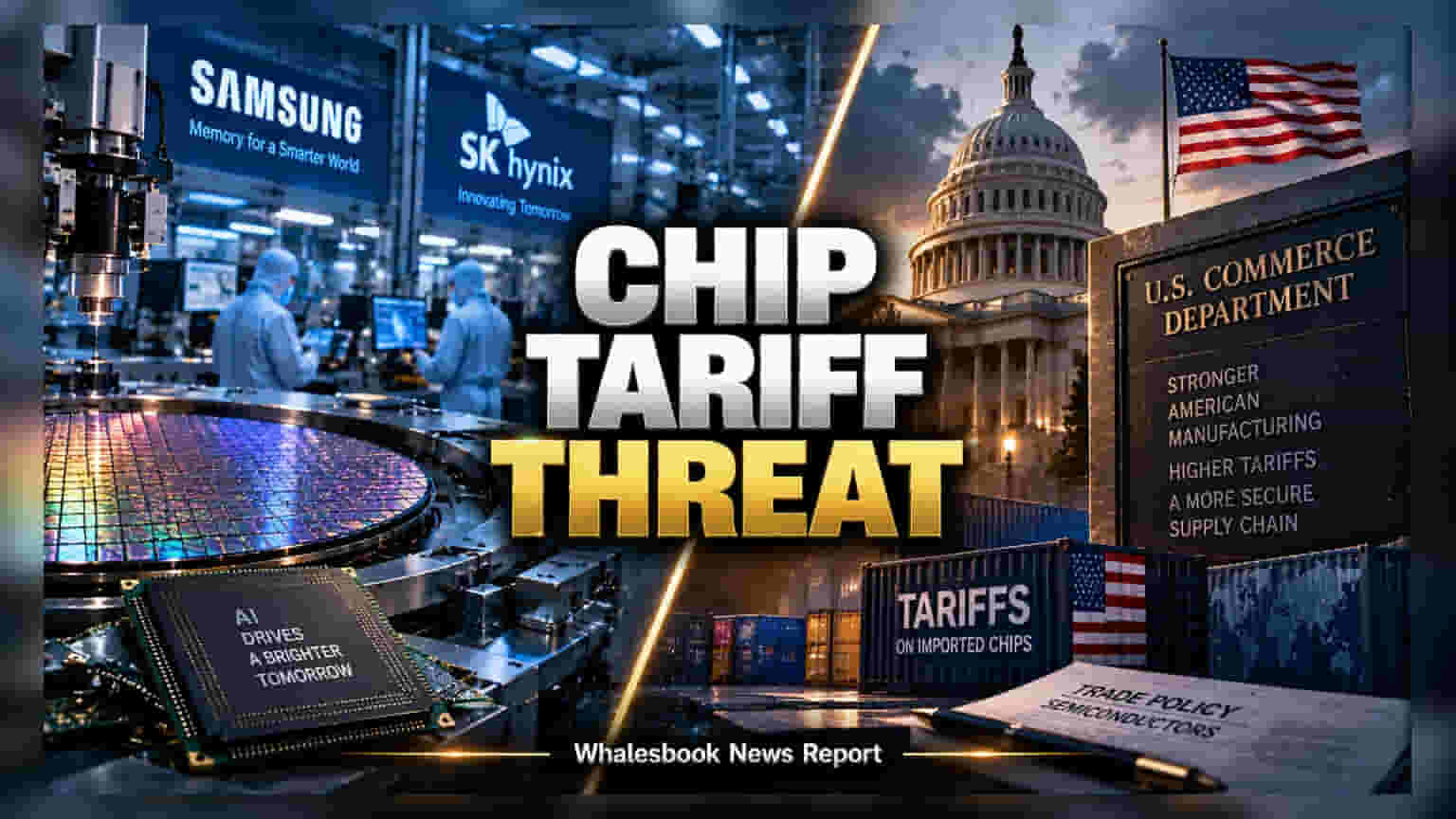
New US trade policies targeting chips manufactured outside the country are creating uncertainty for South Korean leaders Samsung and SK Hynix. These firms, key suppliers for global AI infrastructure, are now in intense negotiations to avoid higher import duties, highlighting risks to global semiconductor supply chains.
The semiconductor industry is facing renewed uncertainty as the United States considers a "targeted, thoughtful" tariff policy aimed at incentivizing domestic chip production. US Commerce Secretary Howard Lutnick recently signaled that semiconductor imports manufactured outside of the United States could face new duties, a move that places significant pressure on South Korean manufacturing giants Samsung Electronics and SK Hynix.
For investors, the situation centers on the balance between US domestic manufacturing goals and the reality of the current global supply chain. Samsung and SK Hynix are the world’s leading memory chip producers and are essential partners for US-based technology companies building out artificial intelligence infrastructure. While both South Korean firms have already committed to building new facilities in Texas and Indiana, the transition takes time. The risk now is that potential tariffs could apply before these US-based facilities are fully operational, creating a period of cost pressure for these companies.
Financial and Operational Risks
The core investor concern is the potential impact on profit margins. If the US enforces tariffs on chips imported from South Korea, these companies will face a difficult choice: absorb the cost, which would reduce their earnings, or pass the price increase to customers, which could disrupt demand. Furthermore, the pressure to avoid these tariffs may force Samsung and SK Hynix to accelerate their capital spending to complete US manufacturing sites faster than originally planned. While expansion is generally positive, doing so at an accelerated pace can place heavy pressure on cash flow and debt management.
Diplomatic Hurdles
The trade dispute is not happening in isolation. South Korean officials are currently in urgent negotiations, citing prior agreements that guarantee their chipmakers treatment as favorable as other major global competitors. However, these trade discussions are becoming complicated by broader geopolitical issues. Stalled progress on sensitive defense projects, such as South Korea's nuclear-powered submarine ambitions, has limited the diplomatic leverage Seoul has in its trade bargaining.
For investors monitoring the broader technology sector, the outcome of these negotiations is critical. A failure to secure exemptions could lead to higher component costs for AI hardware, potentially impacting the wider tech ecosystem. On the other hand, a compromise that allows for a smoother, phased transition would likely stabilize market sentiment.
The key monitorable for investors in the coming months will be the official US policy details regarding tariff exemptions. Specifically, the market will look for clarity on whether the US will grant "grandfather" clauses or grace periods for memory chips produced in South Korea while US-based facilities are still under construction. Until a final framework is released, uncertainty regarding the cost of production and the timeline for US manufacturing expansion is likely to persist.