

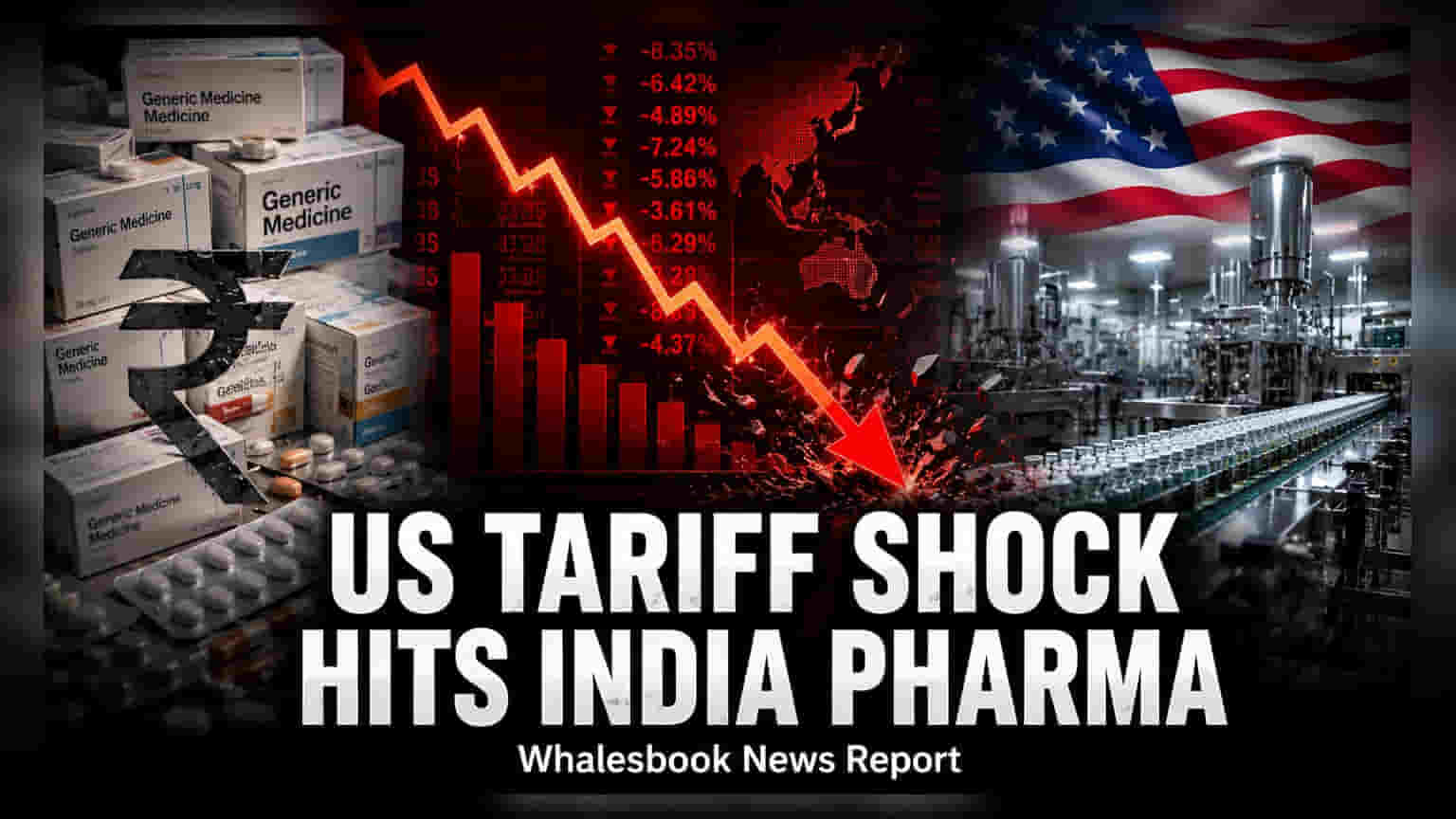
The US has announced a plan to impose steep tariffs reaching up to 200% on imported generic drugs to promote local manufacturing. This policy directly affects India, which supplied $9.7 billion in pharmaceuticals to the US in 2025. Major Indian exporters may face pressure, though those with existing US-based manufacturing facilities could be better positioned to navigate the new costs.
Detailed Coverage
The United States has unveiled a new trade strategy aimed at shifting generic pharmaceutical manufacturing back to American soil. Starting August 1, the US government plans to implement a tariff structure that will see zero percent tariffs initially, followed by a 100% tariff after one year, and rising to 200% thereafter. As India currently serves as the largest supplier of generic prescriptions to the US, accounting for nearly 47% of all such prescriptions, this shift creates significant uncertainty for the domestic pharmaceutical industry.
Impact on Profit Margins and Pricing
While low-cost generic medicines may continue to be price-competitive even after tariffs, the situation is more complex for higher-value products and branded generics. For these categories, the added cost of 100% to 200% tariffs could render imported products significantly less attractive to American healthcare providers and insurers. This environment may force Indian companies to reconsider their pricing strategies or accelerate plans for local production. Analysts suggest that the ultimate burden of these tariffs might fall on the US healthcare system, but Indian exporters could face narrowed profit margins as they attempt to maintain their market share against domestic US competitors.
Strategic Position of Leading Players
Several major Indian pharmaceutical companies have already established an operational presence within the United States. Firms such as Sun Pharma, Zydus Lifesciences, Lupin, Aurobindo Pharma, Cipla, and Dr Reddy's Laboratories have invested in FDA-approved manufacturing units on American ground. These companies may find themselves in a relatively safer position compared to competitors that rely entirely on exports from India. However, the cost of scaling up these existing US operations to meet higher demand will be a primary concern for investors. Companies without substantial US-based manufacturing capacity may face the most significant pressure on their business models.
Market Diversification as a Risk Mitigation
The dependence on the US market remains a key risk factor for the Indian pharmaceutical sector. In 2025, India exported $9.7 billion worth of pharmaceuticals to the US. To protect long-term revenue stability, industry experts are emphasizing the need for Indian companies to diversify their export destinations. Expanding reach into markets across Europe, Latin America, Africa, and Asia could provide a necessary buffer against policies aimed at reshoring production in North America.
For investors, the next steps will involve monitoring how companies adjust their manufacturing footprints and whether they can successfully pass on increased costs to US customers without losing volume. Quarterly earnings reports and management commentary regarding new capital spending in the US will be the key indicators of how effectively each company is adapting to this changing regulatory environment.