

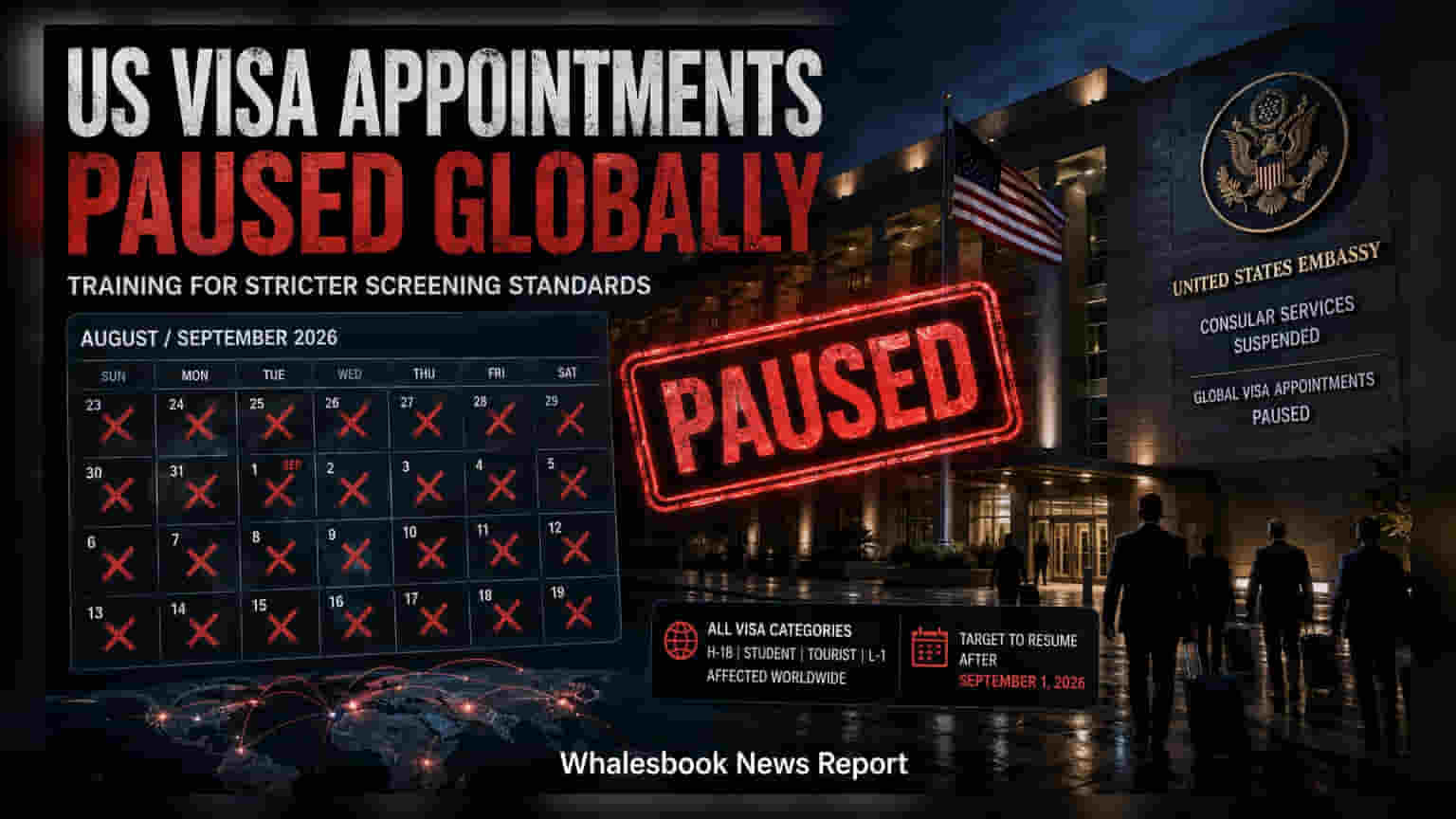
The US State Department has paused visa appointments worldwide to train staff on stricter immigration rules. Appointments are being rescheduled for after September 1, 2026. This administrative delay creates uncertainty for Indian IT firms relying on H-1B visa mobility and affects students planning to travel for higher education.
The United States Department of State has implemented a global suspension of visa appointments at its embassies and consulates. This operational pause is intended to facilitate an intensive training program for consular officers. The training is part of the administration's current effort to implement stricter immigration screening standards, with a specific focus on identifying applicants who might rely on US public financial benefits.
For applicants with pre-scheduled interviews, this suspension means cancellations and rescheduling. Current reports indicate that the embassy system is targeting resumption of services for dates after September 1, 2026. This global measure is not specific to India but affects all visa categories, including H-1B worker visas, student visas, and tourist travel.
For Indian investors, the primary area of focus is the potential impact on the Indian IT services sector. Companies such as TCS, Infosys, Wipro, HCL Tech, and Tech Mahindra frequently deploy employees to the US on H-1B and L-1 visas to handle on-site client projects. Any significant disruption or delay in visa stamping or renewal processes can lead to temporary challenges in project execution and on-site service delivery. While these companies often have local hiring strategies in the US to mitigate dependence on visas, a sudden pause in consular services remains a factor that the market often monitors for potential operational delays.
Beyond IT services, the education sector faces similar uncertainty. Many Indian students prepare to travel for the fall academic intake. Delays in visa processing can create logistical hurdles for students, potentially affecting the near-term revenue of education consultancies and related service providers. Travel and airline sectors also watch such administrative pauses, as they often correlate with short-term dips in international passenger traffic.
Investors should note that this policy shift operates within a broader, volatile regulatory environment. While this specific training pause is administrative, the administration’s overall immigration agenda remains a point of intense scrutiny. It is important to distinguish this from other legal developments; for instance, a federal judge recently ruled against a separate, different policy that had suspended visa issuance for applicants from 75 nations. This indicates that while the administration is pushing for stricter standards, the legal and regulatory path remains subject to judicial review and potential challenges.
The key monitorable for shareholders in companies with high US exposure will be management commentary in upcoming quarterly results regarding visa processing timelines and their ability to maintain project continuity. Investors may also look for updates from the US State Department regarding the official resumption of full-scale consular operations once the training phase concludes.