

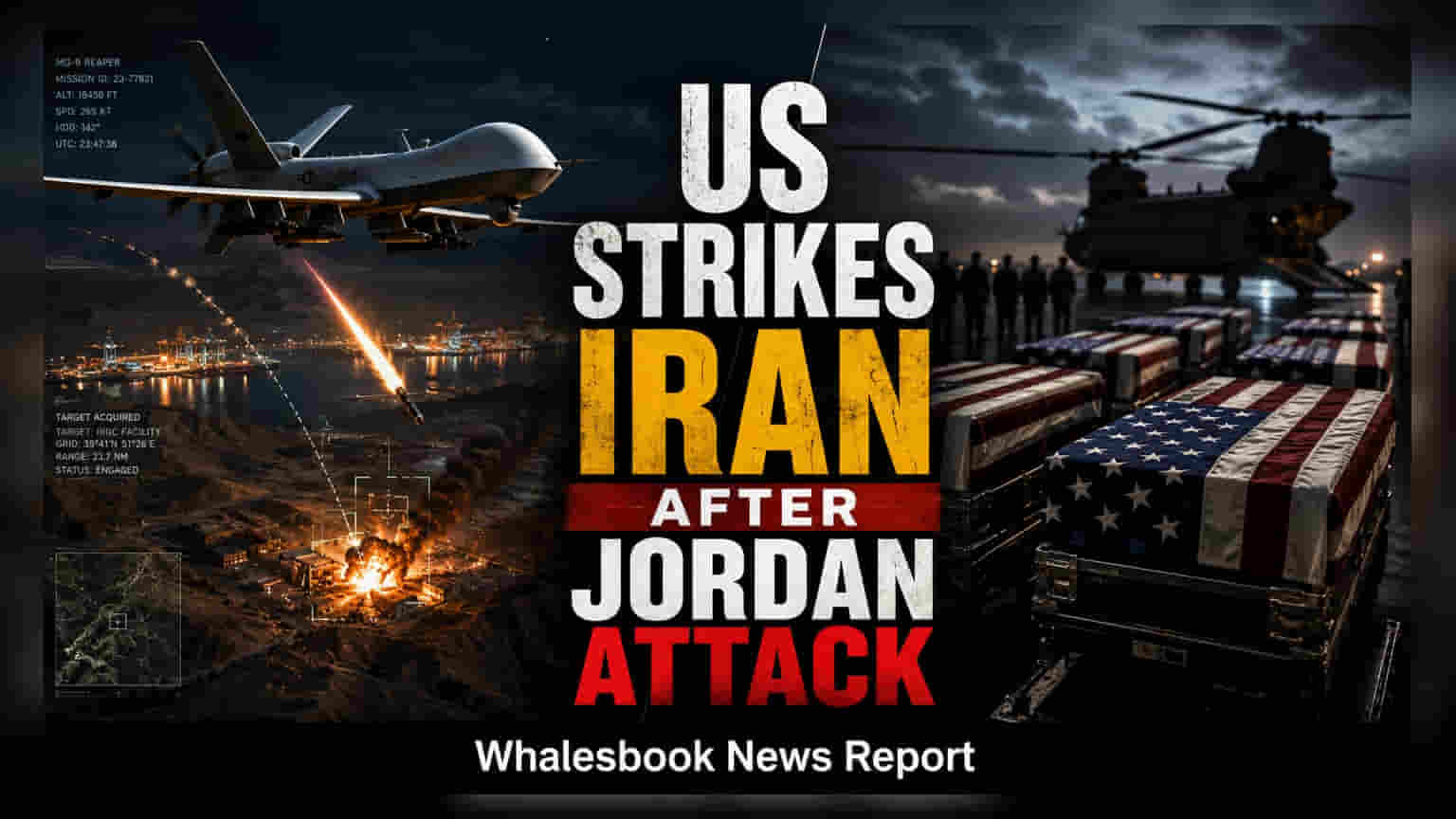
The US military launched retaliatory airstrikes against Iranian targets following an attack in Jordan that resulted in two American service member deaths. This escalation heightens concerns regarding the safety of global oil transit through the Strait of Hormuz.
The United States military initiated a series of airstrikes against Iranian facilities early Sunday, according to an official statement from US Central Command. This military action was ordered by President Donald Trump following a ballistic missile and drone attack in Jordan that claimed the lives of two American service members and left one person missing. Four other personnel sustained injuries during the incident in Jordan but have since been discharged from local medical facilities.
Impact on Global Energy Routes
These strikes were strategically aimed at degrading Iran's ability to interfere with commercial shipping in the Strait of Hormuz. The Strait is a vital maritime chokepoint that serves as a primary route for global oil supply. Any prolonged tension or military activity in this area historically introduces significant uncertainty into energy markets, as a large percentage of the world's daily oil production passes through these waters.
Beyond shipping infrastructure, the operation specifically targeted elements of the Islamic Revolutionary Guard Corps that were linked to the initial attack in Jordan. While Iranian officials have acknowledged the strikes near the southern port city of Sirik, details regarding the scale of damage or specific assets affected remain limited.
Rising Regional Tensions
Following the collapse of a ceasefire agreement last week, diplomatic relations between Washington and Tehran have reached a new low. Supreme Leader Mojtaba Khamenei has publicly dismissed US commitments, further complicating efforts to de-escalate the situation. The regional instability has prompted concerns among global investors regarding potential supply chain disruptions and fluctuations in energy commodity prices.
For investors, the primary monitorable in the coming days will be the response from Iran and its regional allies. The market will also track any comments from global energy regulators or shipping associations regarding the safety of transit through the Strait of Hormuz. Continued military activity or retaliatory measures could lead to increased volatility in oil and gas indices, as well as broader implications for shipping companies with exposure to Middle Eastern trade routes.