

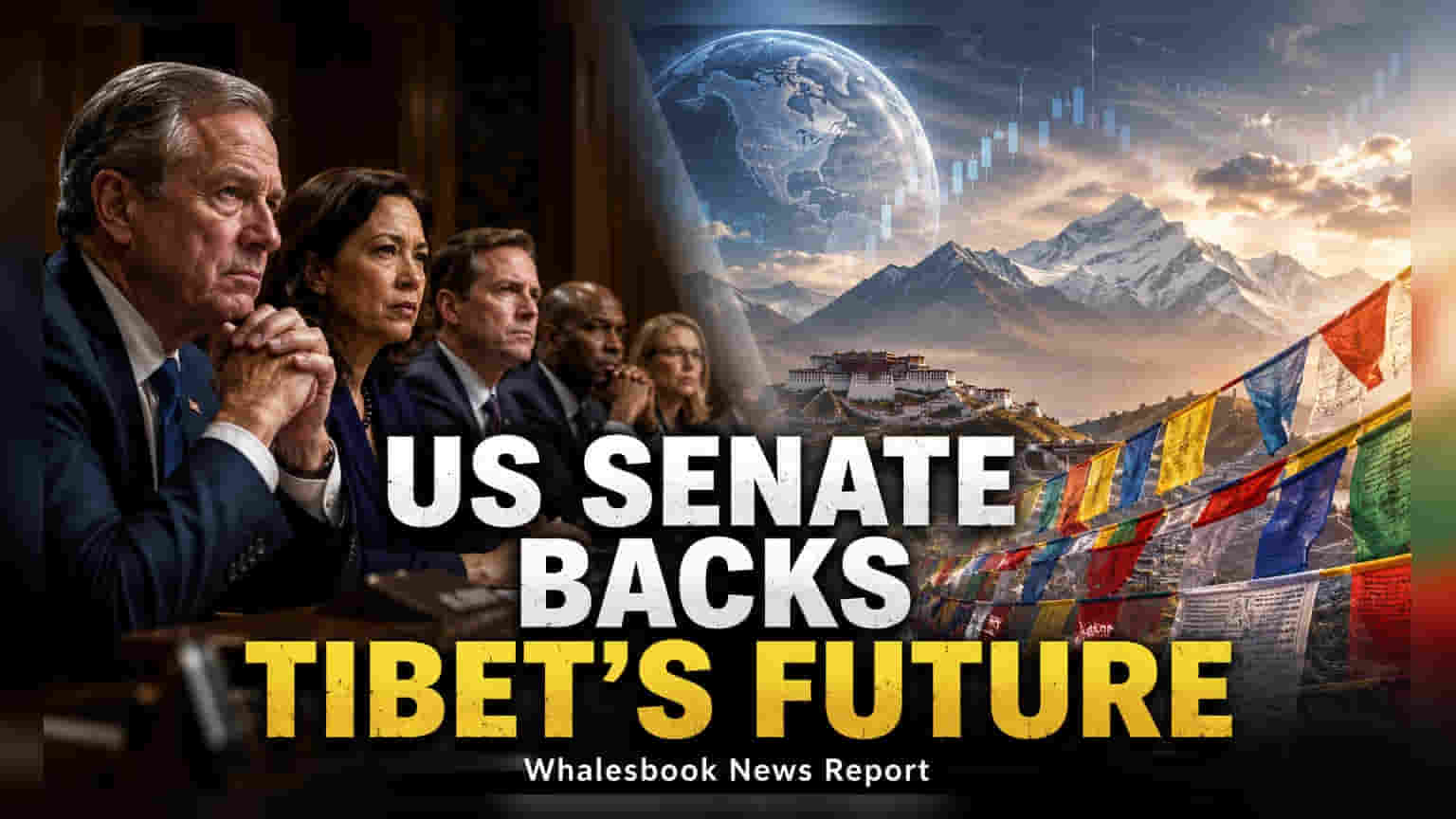
A bipartisan group of U.S. senators has introduced the 'Assuring the Future of Tibet Act' to ensure official support for the Central Tibetan Administration beyond the current Dalai Lama’s lifetime. This legislative move aims to block external interference in the succession process and marks a significant diplomatic development in U.S.-China relations, which investors track as part of the broader geopolitical landscape.
A bipartisan group of U.S. senators, led by Jeff Merkley and Jim Risch, introduced the 'Assuring the Future of Tibet Act' (AFTA) on August 11, 2026. The proposed legislation seeks to codify American support for the Central Tibetan Administration (CTA) and ensure the continuity of Tibetan governance structures long after the lifetime of the 14th Dalai Lama.
The bill represents a significant step in U.S. foreign policy toward the region. It explicitly recognizes the Gaden Phodrang Trust as the sole authority responsible for the recognition of future Dalai Lamas, a direct attempt to prevent the Chinese government from interfering in the traditional selection process. By mandating that the U.S. government engage at high levels with the Sikyong, or the political leader of the CTA, the bill intends to provide institutional legitimacy to the Tibetan leadership on the international stage.
From a macroeconomic perspective, this move signals heightened diplomatic friction between the United States and China. For Indian investors, developments in U.S.-China relations often function as a macro indicator of global stability. While this legislative activity does not have a direct impact on the stock market or specific company earnings, increased geopolitical tensions between major global powers can occasionally influence investor sentiment, commodity prices, and supply chain outlooks in interconnected markets.
It is important to note that the AFTA is currently a proposed piece of legislation. It is a companion to a House bill introduced in May 2026 by Representatives Jim McGovern and Michael McCaul. For the bill to become law, it must clear both chambers of the U.S. Congress and receive the President's signature. The legislative process can be lengthy, and the final language of the bill may be subject to revisions or amendments before any vote takes place.
The bill also outlines objectives for the U.S. to advocate for the CTA’s status within international organizations, including the United Nations. Investors who monitor geopolitical risk often track such legislative moves to gauge the trajectory of international trade policies and diplomatic relations. Future updates on the status of this bill in the U.S. Congress will provide more clarity on how the U.S. intends to formalize its position on Tibetan succession and autonomy.