

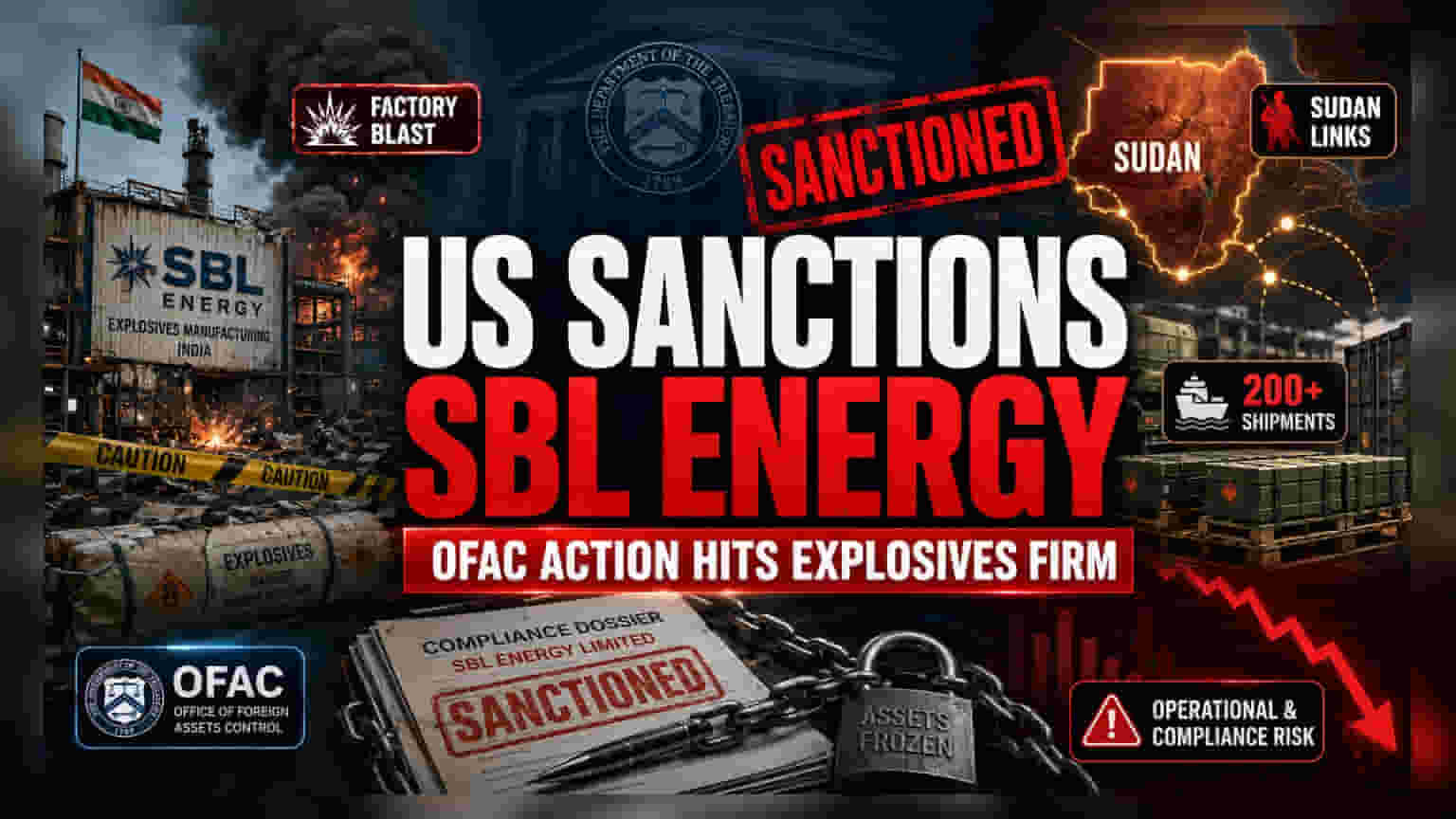
The US Treasury has sanctioned SBL Energy Limited and its CEO, Alok Choudhari, for allegedly supplying explosives to networks fueling Sudan's civil war. This international regulatory action adds to existing operational challenges for the Raipur-based explosives manufacturer, which was already facing a rating watch following a factory accident earlier this year.
What Happened
The United States Department of the Treasury’s Office of Foreign Assets Control (OFAC) has imposed sanctions on Raipur-based SBL Energy Limited and its CEO, Alok Choudhari. The regulatory action, announced on June 26, 2026, alleges that the company and its leadership were involved in supplying explosives and logistical support to networks linked to the Sudanese Armed Forces (SAF). According to the US authorities, SBL Energy reportedly delivered over 200 shipments of explosives and related materials to Target Multiactivities Company (TMAC), a Sudanese firm accused of managing the SAF's arsenal. These materials were allegedly used in combat operations during the ongoing civil war in Sudan.
The Business Impact
SBL Energy Limited is a significant player in the Indian industrial explosives sector, catering to mining, infrastructure, and defense industries. The company, which is an unlisted public entity, has traditionally focused on manufacturing explosives, detonators, and accessories. Being placed on an OFAC sanctions list typically carries severe consequences for any company’s international business. This includes the freezing of assets within US jurisdiction and a prohibition on any US-based individuals or entities from conducting business with the sanctioned party. For a manufacturer with a stated ambition to expand its global supply chain, such restrictions can create major hurdles in procurement, export finance, and international partnerships.
Existing Operational Challenges
This sanction comes at a difficult time for the company. Earlier this year, in March 2026, SBL Energy experienced a factory explosion at its manufacturing facility in Raulgaon, near Nagpur. This incident, which resulted in fatalities, led to the temporary shutdown of operations at that site. Following the accident, credit rating agencies had placed the company’s bank facilities on a 'Rating Watch with Negative Implications,' citing uncertainty regarding the duration of the plant closure and its impact on the company’s financial stability. The dual pressure of regulatory sanctions and existing operational recovery challenges presents a complex situation for the management.
Why Compliance Matters
For companies in the sensitive explosives and defense-related sector, maintaining strict compliance with international trade laws is critical. The US Treasury’s action highlights the increasing scrutiny on procurement networks that, directly or indirectly, sustain conflict zones. For stakeholders and industry observers, the primary concern now is how the company navigates these international restrictions while managing its domestic operational commitments. The company has previously attracted investment from private equity firms, making the governance and compliance aspects of this situation a key area of interest for its financial partners.
What Stakeholders Should Monitor
Moving forward, the focus will be on the company’s legal and operational response to the sanctions. Key areas to track include:
- Regulatory Updates: Any official response or appeals from SBL Energy regarding the US designations.
- Operational Continuity: Progress on the resumption of operations at the affected Nagpur facility and the impact of the sanctions on supply chain contracts.
- Compliance Measures: Whether the company implements new internal oversight to address international trade regulations.
- Financial Health: Future communications from rating agencies and creditors regarding the company’s credit risk profile in light of these new international developments.