

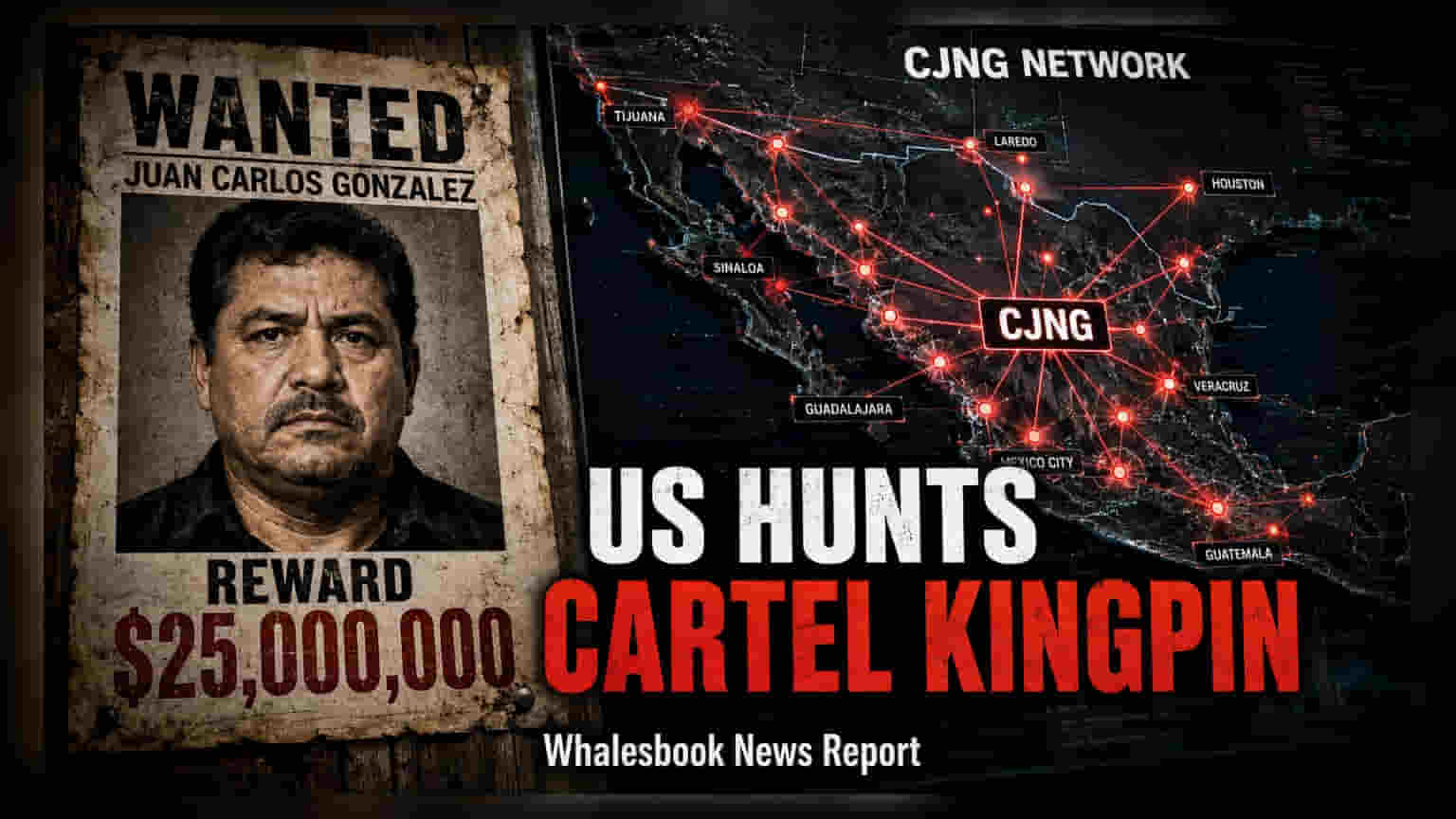
The U.S. government has increased the reward for information on CJNG leader Juan Carlos Valencia González to $25 million. This action is part of a broader $100 million crackdown on the criminal organization, which authorities have designated as a foreign terrorist entity. The move signals intensified U.S. efforts to disrupt the group's leadership and curb its illicit global activities.
The U.S. State Department has raised the reward for information leading to the capture of Juan Carlos Valencia González, also known as "Pelón," to $25 million. This significant increase from the previous $5 million bounty marks an escalation in U.S. efforts to dismantle the Jalisco New Generation Cartel (CJNG), which American authorities consider one of the most powerful criminal organizations in Mexico.
The announcement on August 5, 2026, is part of a larger U.S. strategy involving a combined $100 million in rewards for various leaders of the CJNG. In addition to these financial incentives, the U.S. administration has implemented new visa restrictions targeting family members and business associates linked to the organization. These measures are designed to disrupt the cartel’s leadership structure and its financial networks.
Following the death of the cartel's former leader, Nemesio Rubén Oseguera Cervantes, widely known as "El Mencho," in February 2026, U.S. intelligence identified González as the successor. The CJNG is designated as a foreign terrorist organization by the United States, and its operations are extensive, covering large parts of Mexico and extending into the U.S. market.
For international market observers, developments involving the CJNG are significant due to their impact on regional geopolitical stability. While the CJNG is a criminal network and not a publicly traded company, its illicit activities—including drug smuggling and money laundering—create complex regulatory and security challenges for companies operating in the region. Heightened security tensions or shifts in U.S.-Mexico cooperation policies can influence regional trade environments.
The latest U.S. actions place increased pressure on the Mexican administration to strengthen its own enforcement against the group. The U.S. has also previously raised the possibility of further intervention if these criminal networks are not adequately addressed, a factor that investors monitor when assessing geopolitical risk in North America.
The next steps for this situation involve the effectiveness of these sanctions and rewards in providing actionable intelligence to law enforcement. The market will continue to observe how the U.S. administration’s efforts to cripple the cartel’s financial and operational capabilities unfold in the coming months.