

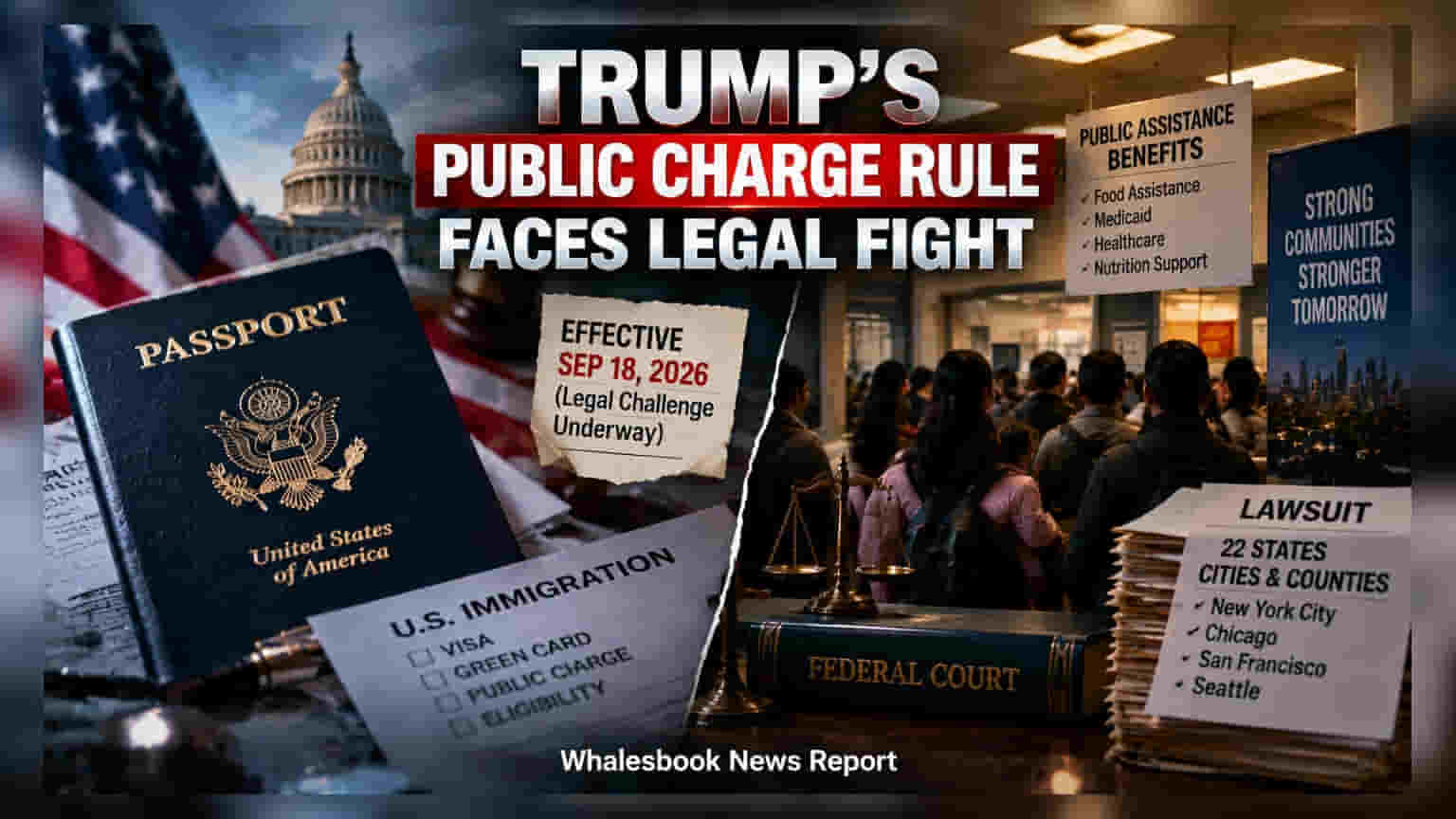
A coalition of 22 states and several cities has launched legal action to stop the Trump administration's new 'public charge' policy from taking effect on September 18, 2026. The rule expands the criteria for denying Green Cards based on the use of government benefits. While this policy does not have a direct link to Indian stock market movements, it remains an important regulatory update for those tracking US immigration policy and visa landscapes.
The Trump administration’s updated 'public charge' rule, which is scheduled to take effect on September 18, 2026, is currently facing significant legal opposition. A coalition of 22 states, alongside a group of cities and counties—including New York City, Chicago, San Francisco, and Seattle—has filed federal lawsuits seeking to block the policy before its implementation date.
Understanding the New Rule
The policy expands the criteria that US immigration officers use when deciding whether to grant Green Cards or visas. Under this rule, officials have greater discretion to deny applications if they believe the individual might rely on public assistance in the future. The scope of this rule is broad, including various non-cash benefits such as food assistance and Medicaid, effectively reinstating and widening a policy that was previously narrowed under the Biden administration. The Department of Homeland Security has stated that the measure is intended to ensure immigrant self-sufficiency, framing the legal pushback as an effort by certain jurisdictions to maintain existing federal funding models.
Why States Are Suing
The plaintiffs, which include a large coalition of states and major municipalities, argue that the rule is arbitrary and violates established administrative procedures. Their core concern is a 'chilling effect,' where families might stop accessing benefits they are legally entitled to out of fear that it could jeopardize their immigration status. These states argue that this withdrawal from public health and nutrition programs will strain local budgets, negatively impact public health outcomes, and increase the administrative burden on state and municipal resources.
Investor Context and Market Impact
For Indian investors and market participants, it is important to clarify that this US immigration policy is a regulatory and social development rather than a direct driver of Indian stock market performance. There is no verified evidence linking this specific policy change to movements on the National Stock Exchange (NSE) or the Bombay Stock Exchange (BSE).
However, changes in US immigration and visa policies often carry indirect significance for sectors with high exposure to the US market, particularly IT and technology services, where talent mobility and visa costs are critical operational factors. While this rule is currently a domestic US legal matter, investors usually track such developments to gauge the broader environment for cross-border talent movement and long-term visa policy trends.
What Investors Should Monitor Next
The most critical update to watch will be the outcome of the ongoing legal challenges. If courts grant an injunction, the implementation of the rule could be delayed or halted pending further hearings. Conversely, if no such stay is issued, the rule is slated to become active on September 18, 2026. For those concerned with the broader regulatory environment, monitoring subsequent court rulings and any official guidance from the Department of Homeland Security regarding how these rules will be applied in practice will be the key to understanding the policy's final impact.