

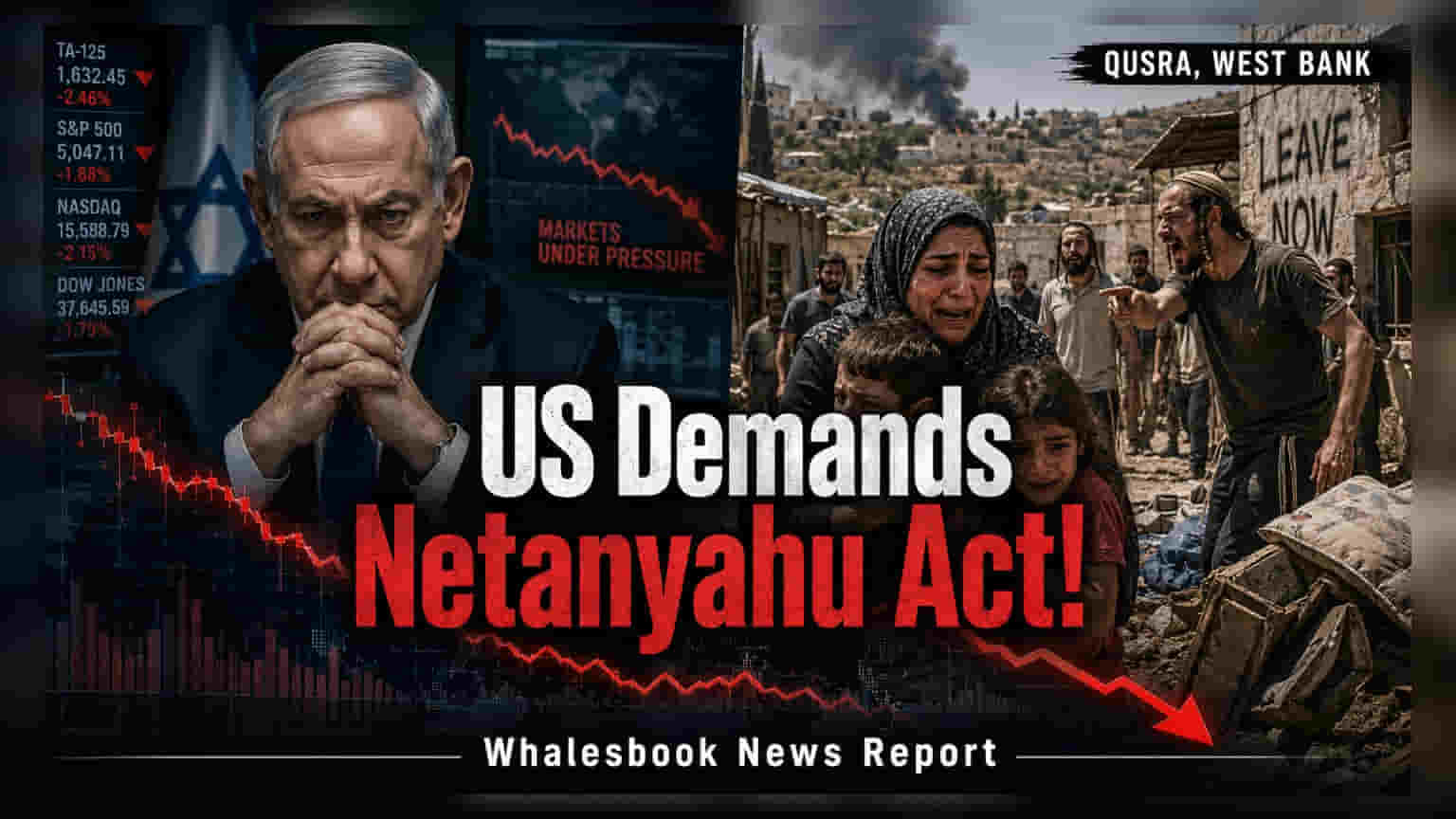
Washington is pressuring Israeli Prime Minister Benjamin Netanyahu to publicly condemn Jewish settlers after a reported siege in the West Bank village of Qusra. The situation, which includes trapped Palestinian families, has caused diplomatic friction. This development is relevant to investors as a signal of rising geopolitical risk in the Middle East, a factor that can influence global commodity prices and market sentiment.
The United States is increasing diplomatic pressure on Israeli Prime Minister Benjamin Netanyahu to publicly condemn actions by Jewish settlers who have allegedly besieged Palestinian families in the West Bank village of Qusra. The situation escalated significantly after reports emerged that approximately 15 people, including children, have been trapped in their homes for nearly a week without access to basic utilities such as water and electricity.
Adding to the diplomatic strain, one of the besieged homes reportedly belongs to a Palestinian-American. U.S. Ambassador to Israel Mike Huckabee has taken a firm stance on the matter, openly labeling the settlers involved as “Israeli terrorists.” This description marks a sharp rise in the severity of Washington’s rhetoric regarding settler violence in the occupied territory.
For Prime Minister Netanyahu, this crisis creates a difficult political situation. His current government coalition relies on the support of right-wing parties and a powerful constituency that supports the settler movement. A public condemnation could potentially destabilize his government by alienating these key domestic allies, especially with elections on the horizon. This internal political dilemma complicates Israel's response to the international demand for action.
From a macroeconomic perspective, investors often track such developments in the Middle East due to the potential for regional instability. While this event is currently a diplomatic and humanitarian issue, increased friction in the West Bank can sometimes lead to broader regional tensions. These situations are frequently monitored by global markets, as any significant escalation can impact supply chains, crude oil prices, and overall investor sentiment regarding geopolitical risk.
The Israel Defense Forces have reportedly been deployed to the village to address the situation, stating they were operating to maintain security and manage the presence of civilians. However, the incident highlights a broader trend of rising tensions in the region. The primary monitorable for global observers and investors will be whether this diplomatic pressure leads to a formal policy shift by the Israeli government or if the political standoff continues. Any further escalation in the West Bank remains a variable that could influence the regional risk profile in the coming weeks.