

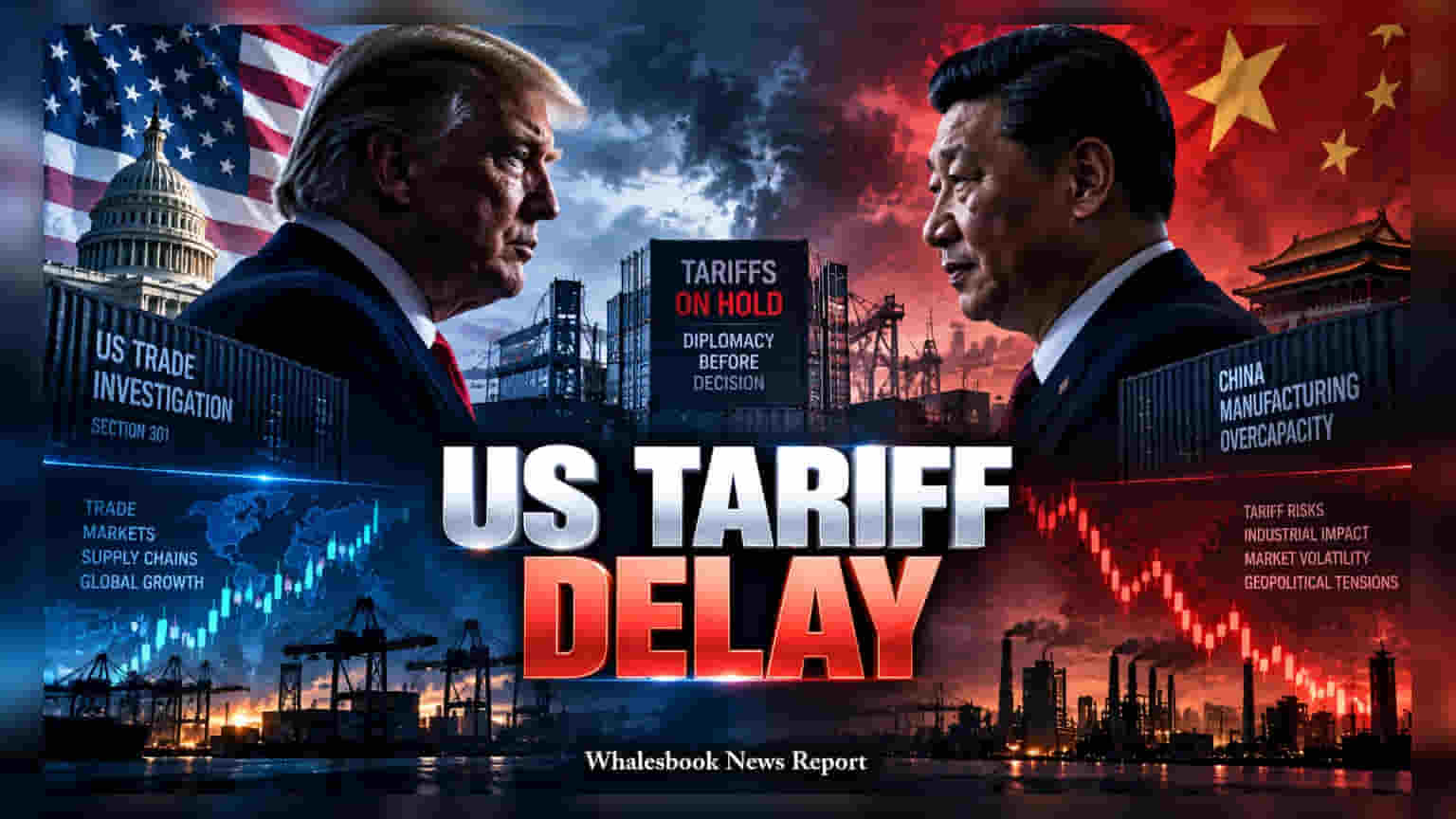
The US government has deferred a decision on new manufacturing tariffs on Chinese goods until after the meeting between President Trump and leader Xi Jinping. This delay aims to manage diplomatic tensions, though uncertainty remains regarding whether total trade duties will rise toward a 20% threshold, which could impact global industrial supply chains.
The US administration has delayed the release of its investigation findings regarding Chinese manufacturing overcapacity. This pause is widely seen as a diplomatic measure ahead of the critical summit between President Trump and Chinese leader Xi Jinping. Originally, the US was expected to announce a 7.5% levy on specific Chinese goods, but this has now been pushed back to prevent immediate friction before the leaders meet to discuss trade imbalances and global industrial policy.
At the center of this uncertainty is an investigation launched under Section 301 of the US Trade Act of 1974. This probe evaluates industrial output and market practices among key trading partners. While the market had focused on a potential 7.5% tariff, the broader risk involves existing and proposed duties that could push total tariff rates on Chinese imports toward 20%. This level, previously seen earlier in the decade, carries significant implications for global trade costs and corporate profit margins.
For global markets and Indian investors, this news highlights a period of wait-and-watch. Trade barriers directly impact industrial and technology companies that depend on complex, cross-border supply chains. If the US ultimately decides to implement higher tariffs after the summit, it could force multinational companies to accelerate the supply chain shift away from China. While this strategy often benefits countries like India, the immediate effect of trade wars is typically global market volatility and concern over slowing trade growth, which can ripple into broader financial markets.
The primary risk for investors is the unpredictability of the final tariff structure. A higher-than-expected duty could lead to sudden price adjustments in industrial, chemical, and technology sectors, where companies often operate on thin margins and depend on stable raw material costs. Investors should track the post-summit announcements closely, as any shift in trade policy could affect global market sentiment and currency stability, which indirectly influences the Indian stock market.