 Whalesbook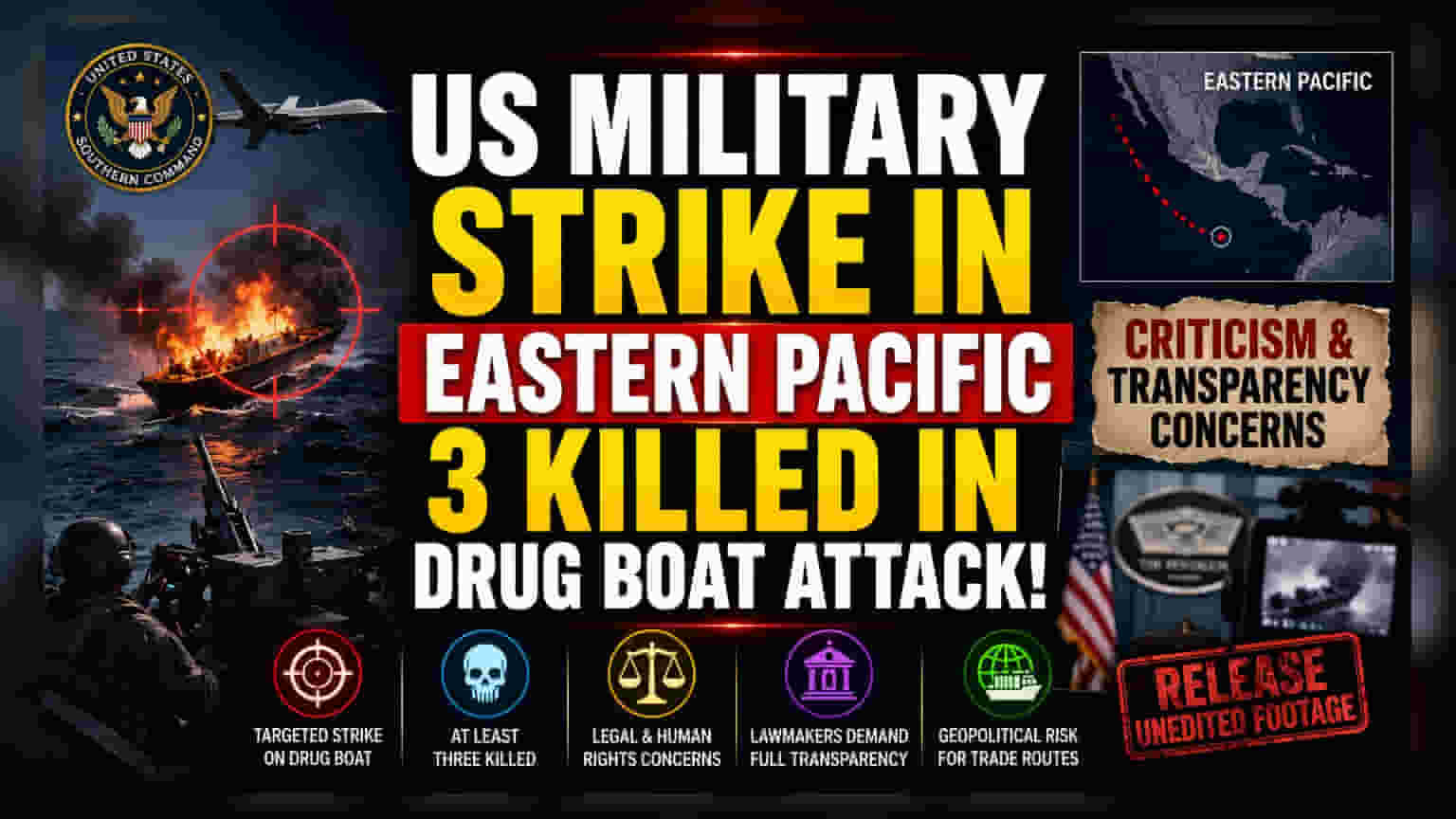
The US military conducted a strike on a suspected drug smuggling vessel in the Eastern Pacific, resulting in three fatalities. The incident, part of broader anti-narcotics efforts, has drawn scrutiny regarding transparency and operational protocols. Investors often monitor such maritime security developments as they can influence regional stability and global shipping safety.
What Happened
The United States military conducted a lethal operation against a vessel in the Eastern Pacific on Thursday, which resulted in the deaths of at least three individuals. The US Southern Command, which oversees military operations in the region, confirmed that the strike targeted a boat it identified as being involved in active drug smuggling operations along established narcotics routes. Official reports described the action as a targeted strike following intelligence assessments.
Context of the Operation
The US administration has been intensifying efforts to disrupt drug trafficking networks operating in international waters. This specific incident is being framed by US authorities as part of a wider campaign against cartels. Military officials released unclassified visual evidence appearing to show the target vessel on fire following the engagement, citing the presence of what they termed "narco-terrorists."
Criticism and Transparency Concerns
The operation has faced criticism from various stakeholders, including human rights organizations and lawmakers. The primary concerns revolve around the transparency of the decision-making process and the verification of targets. Critics have raised questions about the legal basis for such lethal strikes in international waters and have expressed fears that unintended civilian casualties, such as local fishermen, could be caught in the conflict.
This incident follows previous reports of similar military actions in the region, including an event in September where a "double-tap" strike—a tactic involving a second strike shortly after the first—was reported to have resulted in multiple fatalities. Due to these past events, there is ongoing pressure from some US senators for the Pentagon to release unedited footage of these maritime operations to verify the nature of the targets and the protocols followed.
How Investors May Read This
While this event is geopolitical in nature rather than a direct corporate development, such incidents are often monitored by observers tracking global security and maritime stability. Maritime routes are critical for global logistics, and increased military activity in key shipping lanes can sometimes lead to heightened geopolitical risk premiums.
For investors, the key monitorable remains the stability of trade routes and any potential shift in regional policy that could affect logistics or security costs. Additionally, the ongoing debate regarding US military transparency and the potential for regulatory or legislative reviews of these operations may influence the long-term approach to maritime security in the Eastern Pacific.

