

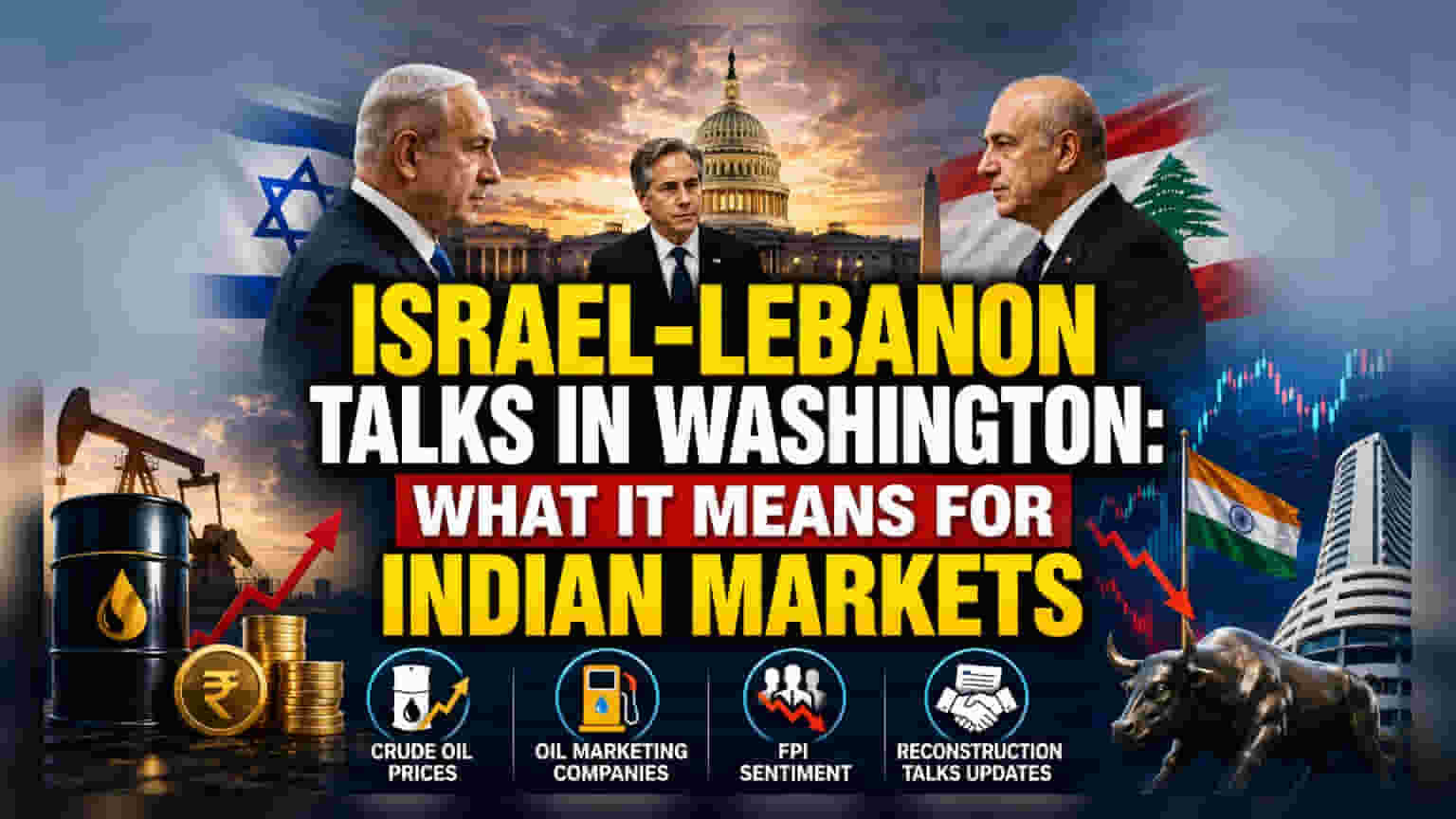
The US is hosting direct talks between Israel and Lebanon in Washington next week to discuss a ceasefire and reconstruction. For Indian investors, the outcome is critical because stability in the Middle East helps stabilize global crude oil prices, impacting India’s inflation, currency, and energy-dependent sectors like OMCs and airlines.
What Happened
The U.S. State Department has confirmed that direct negotiations between Israel and Lebanon will take place in Washington, D.C., from June 23 to 25, 2026. These talks aim to build on a recent ceasefire announcement and focus on reconstruction, economic recovery, and stopping the ongoing cycle of violence in the region. This is a follow-up to engagement seen in previous months, though a lasting peace remains difficult to secure.
Why This Matters For Indian Markets
For the Indian stock market, the Middle East is not just a geopolitical map; it is the primary source of India's energy imports. India imports over 85% of its crude oil requirements. When conflict escalates in this region, it creates uncertainty in global oil supply, leading to higher Brent crude prices. Higher oil prices are generally negative for the Indian economy because they increase the import bill, widen the current account deficit, and pressure the Indian Rupee. If these Washington talks lead to a genuine reduction in tensions, it could help calm oil price volatility. Conversely, failure to stabilize the region often results in 'risk-off' sentiment, where foreign investors pull money out of emerging markets like India to move into safer assets like gold or US treasuries.
The Hezbollah Factor: A Key Risk
Investors should be aware that the path to peace is not clear. A major hurdle is that Hezbollah, a key party in the conflict, is not participating in these direct negotiations. Persistent fighting and cross-border fire between Hezbollah and Israel continue to jeopardize peace efforts. Because a significant portion of the region's instability is driven by groups outside the formal government-to-government framework, ceasefire announcements have struggled to hold in the past. If the talks fail to address these deep-rooted security issues, the risk of a renewed escalation remains high, which would likely keep energy prices volatile.
What Investors Should Track Next
There is no direct list of companies that trade based on this specific news, but the impact is broad and sector-specific.
Crude Oil Prices: Track Brent crude movements. Any spike following news of failed talks often puts pressure on oil-importing sectors like Paint manufacturers, Tyre companies, and Aviation stocks.
Oil Marketing Companies (OMCs): Indian OMCs like IOC, BPCL, and HPCL are sensitive to global crude volatility. While they have mechanisms to adjust retail prices, sustained volatility affects their marketing margins.
FPI Sentiment: Watch the broader Nifty and Sensex for changes in foreign institutional investor (FII) flows. In times of global geopolitical stress, FIIs often turn net sellers in Indian equities.
Updates on Reconstruction Talks: Monitor the tone of the post-meeting statements. Any sign of a genuine breakthrough that lowers regional risk premiums could provide relief to market sentiment.