

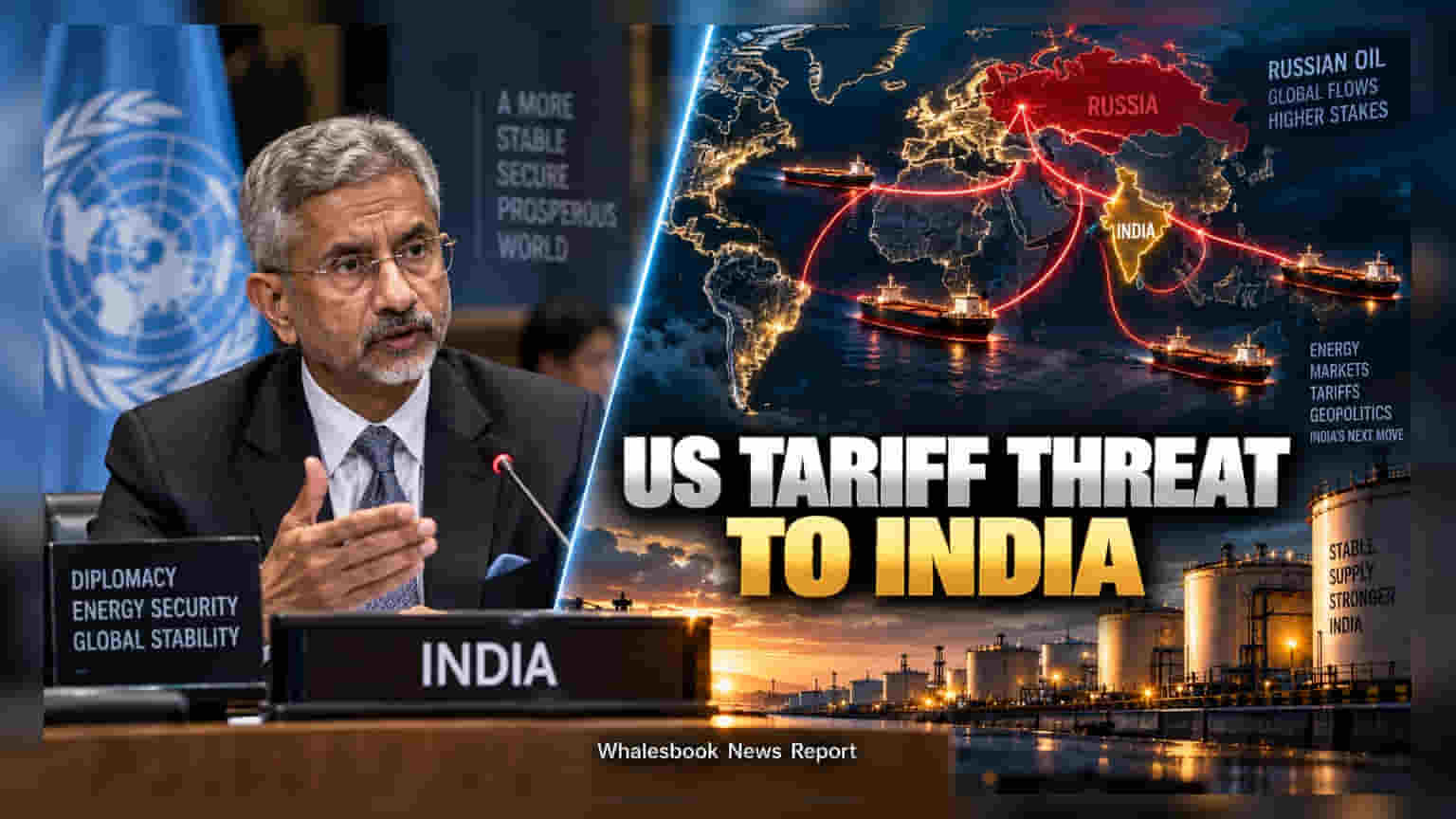
The US has enacted the Sanctioning Russia and Iran Act, granting authority to impose 100% tariffs on countries purchasing Russian energy. This legislation puts India’s energy import strategy under scrutiny, raising concerns about potential margin pressure for domestic refiners and broader inflationary risks. Investors are monitoring the situation as diplomatic efforts continue to address the impact on India's energy costs.
The United States has enacted the Lindsey O. Graham Sanctioning Russia and Iran Act of 2026, a new law that grants the US administration authority to levy tariffs of up to 100% on nations that continue to import crude oil and gas from Russia. This development, signed into law on September 18, 2026, has prompted high-level diplomatic discussions between India and the US, with External Affairs Minister S. Jaishankar addressing the matter directly with US Secretary of State Marco Rubio at the United Nations General Assembly in New York.
Impact on Indian Refining Margins
For Indian investors, the legislation brings a significant layer of uncertainty for the energy sector. Over the past few years, Indian refiners, including public sector giants like Indian Oil Corporation (IOCL), Bharat Petroleum (BPCL), and Hindustan Petroleum (HPCL), alongside private refiners such as Reliance Industries and Nayara Energy, have significantly increased their intake of Russian crude. This preference was driven by the availability of Russian oil at a competitive discount compared to Brent crude benchmarks. This access to lower-cost feedstock has been a key factor in supporting the refining margins and financial performance of these companies, as it allowed them to manage domestic fuel pricing pressures more effectively.
If the US administration decides to exercise its new authority and imposes tariffs, the cost-effectiveness of Russian crude could disappear. Indian refiners would then be forced to pivot to alternative sources, such as the Middle East or the US. Replacing a large portion of their Russian oil imports with more expensive alternatives would likely lead to an increase in input costs, which could put pressure on the gross refining margins of these companies. Investors are currently watching how this potential shift in sourcing strategy might affect the long-term profitability of these energy majors.
Economic and Inflationary Risks
Beyond the specific impact on company balance sheets, the potential tariff regime poses broader economic challenges for India. Oil imports constitute a major portion of India's import bill. A shift to higher-priced energy sources, forced by the threat of sanctions, could widen the country's Current Account Deficit (CAD) and place additional pressure on the Indian Rupee. Furthermore, higher import costs typically translate into increased fuel costs for the economy, which can contribute to broader inflationary pressure.
Diplomatic Context and Next Steps
While the law grants broad power, it does not mandate an immediate tariff, providing some room for diplomatic navigation. The discussions between Minister Jaishankar and Secretary Rubio reflect the strategic friction surrounding this issue. India has consistently maintained that its procurement decisions are based on market dynamics and the need to ensure energy security for its population.
The primary monitorable for investors is the US administration’s future regulatory announcements regarding whether it will actually invoke these tariffs. Until there is clarity on the implementation, the energy sector may experience heightened volatility. Investors should track official government updates, management commentary from major refiners regarding their import diversification plans, and movements in global crude oil price differentials.