

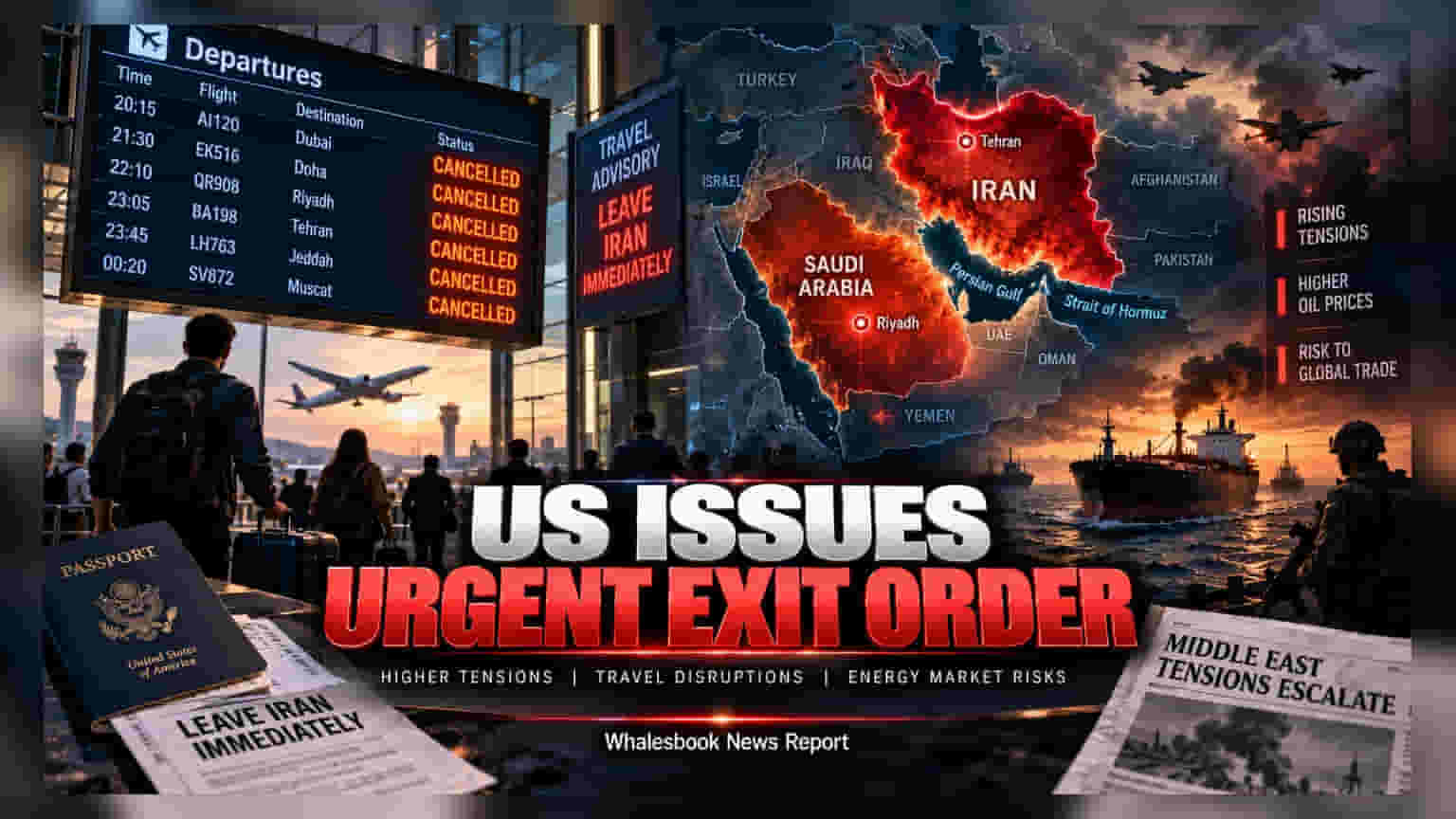
The United States has mandated its citizens leave Iran immediately, citing severe regional instability and potential airspace closures. For Indian markets, this escalation in West Asia heightens concerns over global crude oil supply, potentially pressuring energy, aviation, and shipping stocks due to rising fuel costs and increased logistical risks.
The United States government has issued an urgent directive ordering all American citizens to leave Iran immediately. This decision follows deteriorating security conditions across West Asia, where officials have raised alarms about the risk of military escalation and sudden, unpredictable closures of airspace. The advisory specifically warns of possible targeted actions against Western institutions and infrastructure, creating a volatile environment that has heightened safety concerns for foreign nationals throughout the region.
Impact on Global Oil Prices and Energy Markets
For Indian investors, geopolitical instability in West Asia is a significant monitorable, primarily due to its potential impact on global crude oil prices. As a major importer of crude oil, India is sensitive to supply shocks in this region. If regional tensions lead to concerns about supply disruptions or higher insurance costs for oil tankers navigating key routes like the Strait of Hormuz, Brent crude prices often see upward pressure. Historically, rising oil prices can increase India's import bill and potentially influence inflation trends, which the Reserve Bank of India closely tracks.
Sector-Specific Sensitivity
Investors typically watch specific sectors when geopolitical tension arises in oil-producing regions. Oil Marketing Companies (OMCs) like Indian Oil Corporation (IOC), Bharat Petroleum Corporation (BPCL), and Hindustan Petroleum Corporation (HPCL) can face pressure if higher global crude prices cannot be passed on to consumers. Increased fuel costs may also impact the profitability of the aviation sector, as Aviation Turbine Fuel (ATF) prices are directly linked to global crude benchmarks. Airlines, which operate with thin margins, often face challenges when fuel costs rise unexpectedly.
Logistics and Shipping Risks
Beyond energy prices, the situation creates potential uncertainty for the shipping and logistics industry. Security risks in West Asian waters can lead to higher insurance premiums for cargo vessels, which impacts shipping margins. Companies involved in maritime trade routes passing through or near the affected areas may face operational challenges, including route diversions or longer transit times. Any interruption in normal trade flows affects the cost of transporting goods, which can be an added headwind for export-import companies.
What Investors Should Monitor
Moving forward, the primary factor for market participants will be the stability of oil supply chains and the reaction of global energy prices. Investors may keep an eye on official updates regarding the movement of vessels through the region, as well as any broader geopolitical developments that could influence crude benchmarks. On the domestic front, keeping track of management commentary from energy and aviation companies regarding fuel price hedging and cost management strategies can provide a clearer picture of how these businesses are navigating the current environment. Sustained, rather than temporary, instability is what usually drives significant changes in economic and sector-specific financial projections.