

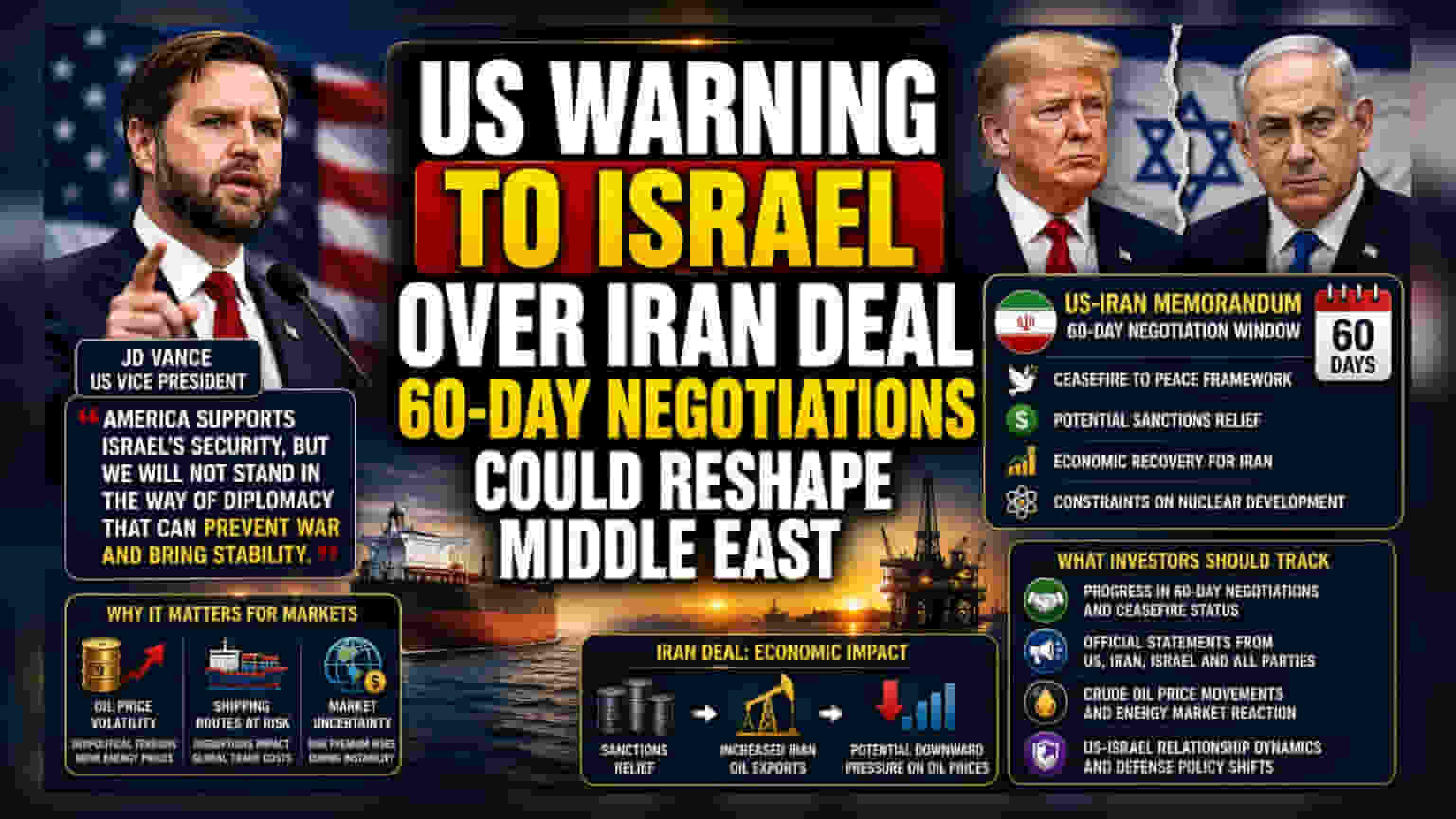
US Vice President JD Vance has publicly signaled a shift in relations with Israel, warning against opposition to a new US-Iran diplomatic memorandum. As the administration pushes for this framework, investors should monitor potential volatility in global crude oil prices, shipping routes, and defense sector sentiment. This pivot indicates a broader strategy change that may influence geopolitical stability and energy costs.
What Happened
US Vice President JD Vance has issued a public warning to Israel, signaling a potential recalibration in the diplomatic relationship between the two nations. The friction centers on a new memorandum between the Trump administration and Iran, which aims to initiate a 60-day negotiation window. This period is intended to transition a current ceasefire into a broader regional peace framework. The deal includes potential provisions for sanctions relief, economic recovery, and constraints on nuclear development, which the current US administration views as a path toward stability.
Why It Matters For Global Markets
Geopolitical tensions in the Middle East are a primary driver of global market volatility, particularly for energy and shipping. Israel’s opposition to the US-Iran memorandum creates uncertainty regarding regional security. For investors, the primary monitorable is the price of crude oil. If the diplomatic process reduces regional confrontation, it could influence the supply-side outlook for energy. Conversely, if tensions escalate or if the US-Israel alliance undergoes a period of instability, market participants often increase the 'risk premium' on oil, leading to price spikes. Additionally, shipping routes in this region are critical for global trade, and any disruption can affect supply chain costs.
The Economic Implications of the Iran Deal
President Trump’s memorandum proposes economic initiatives, including potential sanctions relief for Iran. Historically, changes to sanctions regimes have direct consequences for the global energy market. If the negotiation leads to increased Iranian oil exports, it would add to global supply, potentially putting downward pressure on energy prices. However, the success of this agreement depends on the commitment of all parties involved. Market analysts typically track such negotiations for clarity on long-term energy output, as policy shifts here can alter the competitive landscape for energy-exporting nations.
Assessing The Risk And Strategic Shift
Beyond energy prices, the change in tone from the US administration impacts defense sector sentiment. The US provides substantial material and financial support to Israel’s defensive capabilities. VP Vance’s public mention of this dependency suggests that the US may be less inclined to defer to Israeli strategic priorities that conflict with its own diplomatic goals. For investors in the defense sector, this shift highlights the importance of monitoring how changes in military aid or policy alignments affect long-term contracts and regional stability. Markets generally dislike unpredictability, and a period of 'recalibration' between two major allies often leads to short-term fluctuations in sensitive sectors.
What Investors Should Track
Investors should look for updates on the 60-day negotiation period initiated by the US-Iran memorandum. Key monitorables include the status of ceasefire agreements, official statements from the involved governments regarding the progress of these talks, and the reaction of global oil benchmarks to any changes in regional stability. While no immediate rupture in diplomatic ties has occurred, the evolving nature of the US-Israel relationship regarding Iran is a significant factor in evaluating the long-term risk profile for the Middle East.