

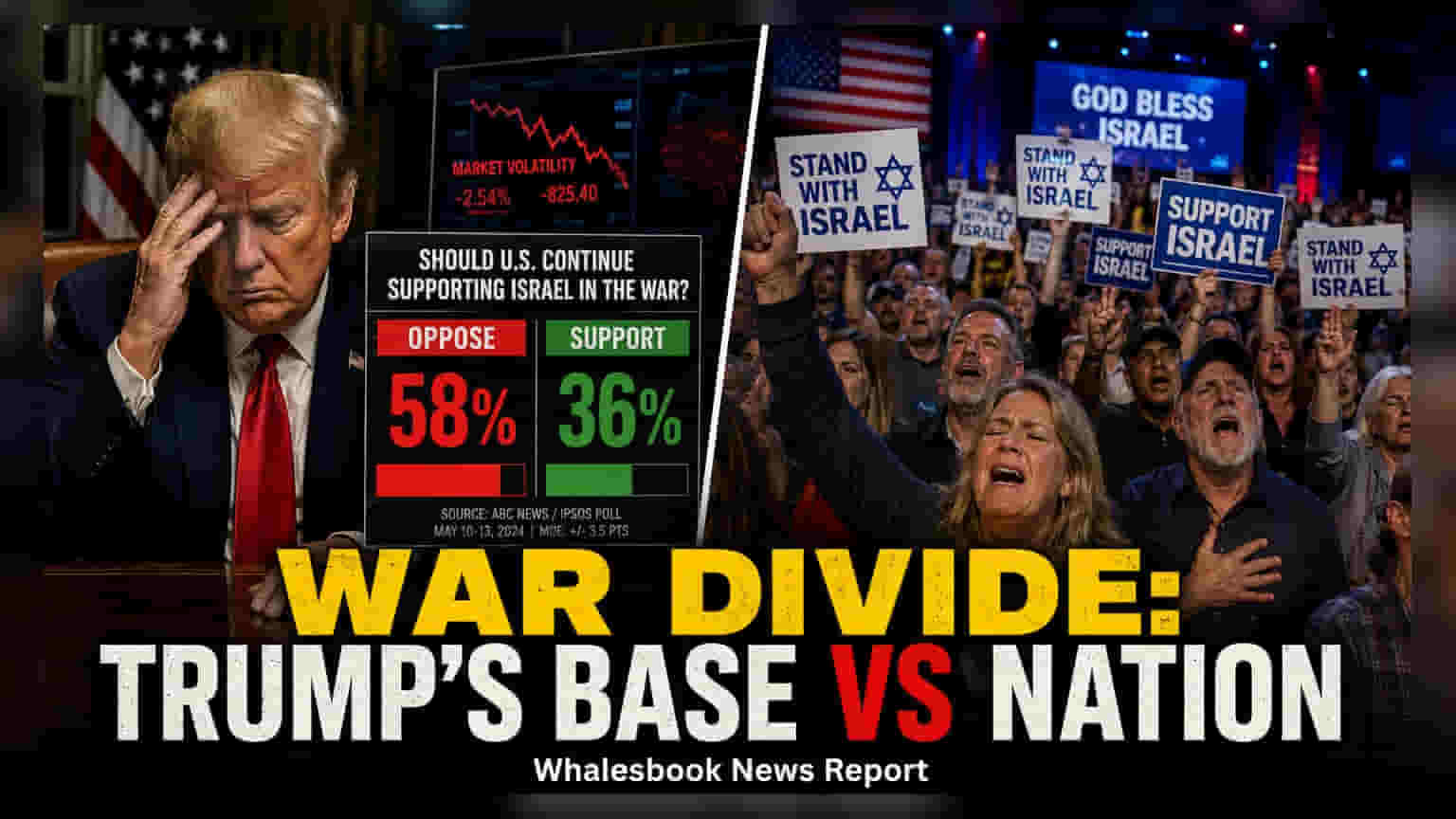
As the US-Iran conflict enters its sixth month, President Donald Trump faces rising domestic opposition of 57% alongside strong support from his evangelical base. For Indian investors, the ongoing disruption in the Strait of Hormuz remains a primary monitorable, driving oil price volatility and inflationary pressures that impact Nifty and Sensex sentiment.
President Donald Trump is currently navigating a complex political environment as the military conflict in Iran, which commenced in February 2026, enters its sixth month. While domestic disapproval of the war has risen to approximately 57 percent, the president continues to receive steadfast support from his evangelical base, particularly Christian Zionist groups. For global financial markets and Indian investors, the political dilemma is secondary to the tangible economic risks created by this ongoing standoff.
Global Energy and Inflation Pressures
The central concern for markets is the continued blockade of the Strait of Hormuz, a vital maritime corridor for global oil supplies. Persistent military tensions, including US strikes on vessels, have prevented a return to normal shipping operations, keeping global energy prices volatile. For India, which relies heavily on energy imports, sustained high oil prices function as an economic headwind. This pressure can keep domestic inflation elevated, potentially limiting the ability of the Reserve Bank of India to ease monetary policy and affecting the profit margins of energy-dependent companies across sectors like manufacturing and logistics.
Fiscal Costs and Market Volatility
The conflict is also placing a strain on the United States' fiscal position. Reports indicate that the war has already contributed over $48 billion in additional borrowing costs for the US government in 2026. Higher borrowing costs in the US can lead to a stronger dollar and tighter global liquidity, which historically exerts pressure on emerging market equities. Indian investors have witnessed this uncertainty reflected in the volatility of the Nifty and Sensex. When global risks increase, foreign institutional investors often reduce exposure to emerging markets, causing sharp corrections in index performance.
Investor Monitorables
The geopolitical landscape remains unpredictable, with risks of further military escalation or prolonged shipping disruptions. Investors should track developments in the Strait of Hormuz, as any new incident could trigger immediate spikes in commodity prices. Furthermore, the inflationary impact of energy costs will remain a critical factor in corporate earnings reports. While diplomatic efforts to reopen energy routes appear stalled, any clear signal of progress or, conversely, a significant escalation in military action will continue to dictate short-term sentiment in both US and Indian stock markets.