

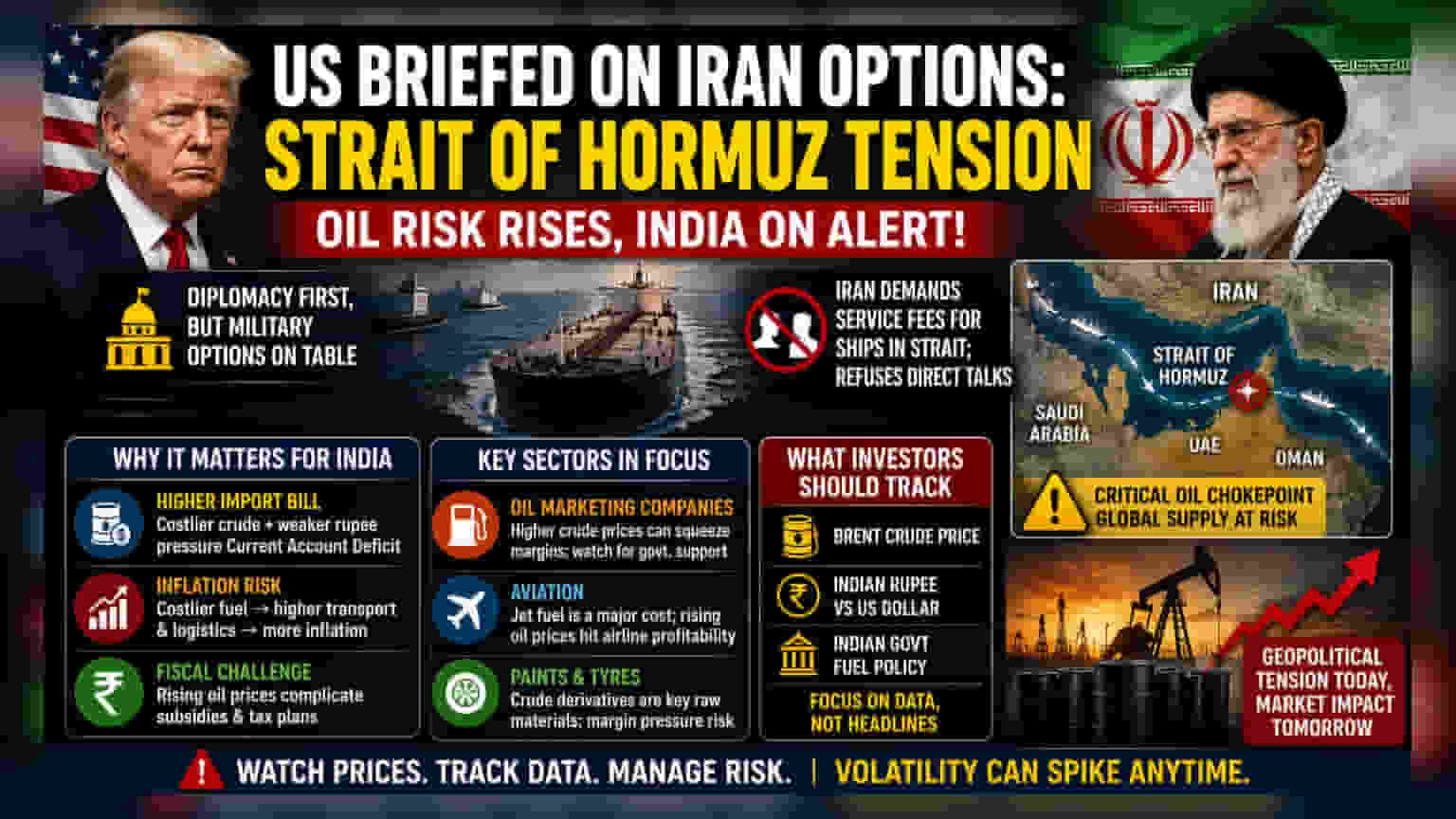
US President Donald Trump is weighing military options against Iran while favoring diplomacy, even as Iran refuses direct talks. For Indian investors, the primary risk lies in the potential disruption of the Strait of Hormuz, a vital route for global oil shipments. Increased tensions could spike crude oil prices, which may negatively impact India's trade balance, inflation, and corporate margins.
What Happened
US President Donald Trump has been briefed on potential military actions concerning Iran. While the administration is currently prioritizing diplomacy, the situation remains fluid. A key point of tension involves the Strait of Hormuz, a critical global maritime chokepoint. Reports indicate that Iran is demanding service fees from ships passing through this route, a move the US opposes. Meanwhile, Iran has signaled it will not engage in direct high-level talks with US envoys, adding to the uncertainty surrounding a potential diplomatic solution.
The Strait of Hormuz Risk
The Strait of Hormuz is one of the world's most important oil transit corridors. A significant portion of global oil production, including a large part of India's crude oil imports, passes through this narrow waterway. For Indian markets, the risk is not just about the geopolitical conflict itself, but the potential for supply chain disruption. If tensions escalate to a point where shipping is obstructed, or if insurance premiums for oil tankers rise sharply, the landed cost of crude oil for India could increase quickly.
Why This Matters For Indian Investors
India is a major importer of crude oil, meaning the country's economy is highly sensitive to price changes. A sustained rise in global crude prices generally creates three major challenges for the domestic market:
Import Bill: India pays for oil imports in US dollars. A spike in oil prices, combined with a potential weakening of the rupee against the dollar, increases the national import bill, which can pressure the Current Account Deficit.
Inflation Risk: Higher fuel prices filter through the economy, raising transportation and logistics costs, which can fuel headline inflation.
Fiscal Policy: If oil prices rise significantly, it complicates the government's fiscal math, especially regarding subsidies or tax adjustments on petrol and diesel.
Key Sectors In Focus
Investors often watch specific sectors when oil prices fluctuate due to geopolitical tensions:
Oil Marketing Companies (OMCs): If global crude prices rise, these companies may face pressure on profit margins if they are unable to fully pass on the cost to consumers. Investors often track whether these companies receive government support during periods of high oil volatility.
Aviation: Jet fuel is a major operating cost for airlines. A sharp rise in crude prices can lead to higher fuel expenses, potentially squeezing profitability for players like IndiGo and other carriers.
Paints and Tyres: Many companies in these sectors rely on crude oil derivatives as raw materials. When oil prices stay elevated for a long period, input costs for these manufacturers can rise, which may pressure their operating margins.
What Investors Should Track
Given the unpredictable nature of geopolitical events, investors should focus on verified data rather than speculation. Key monitorables include the movement in Brent crude prices, the strength of the Indian Rupee against the US Dollar, and any official announcements from the Indian government regarding fuel pricing policy. Tracking these indicators provides a clearer picture of the actual economic impact, regardless of the headlines.