

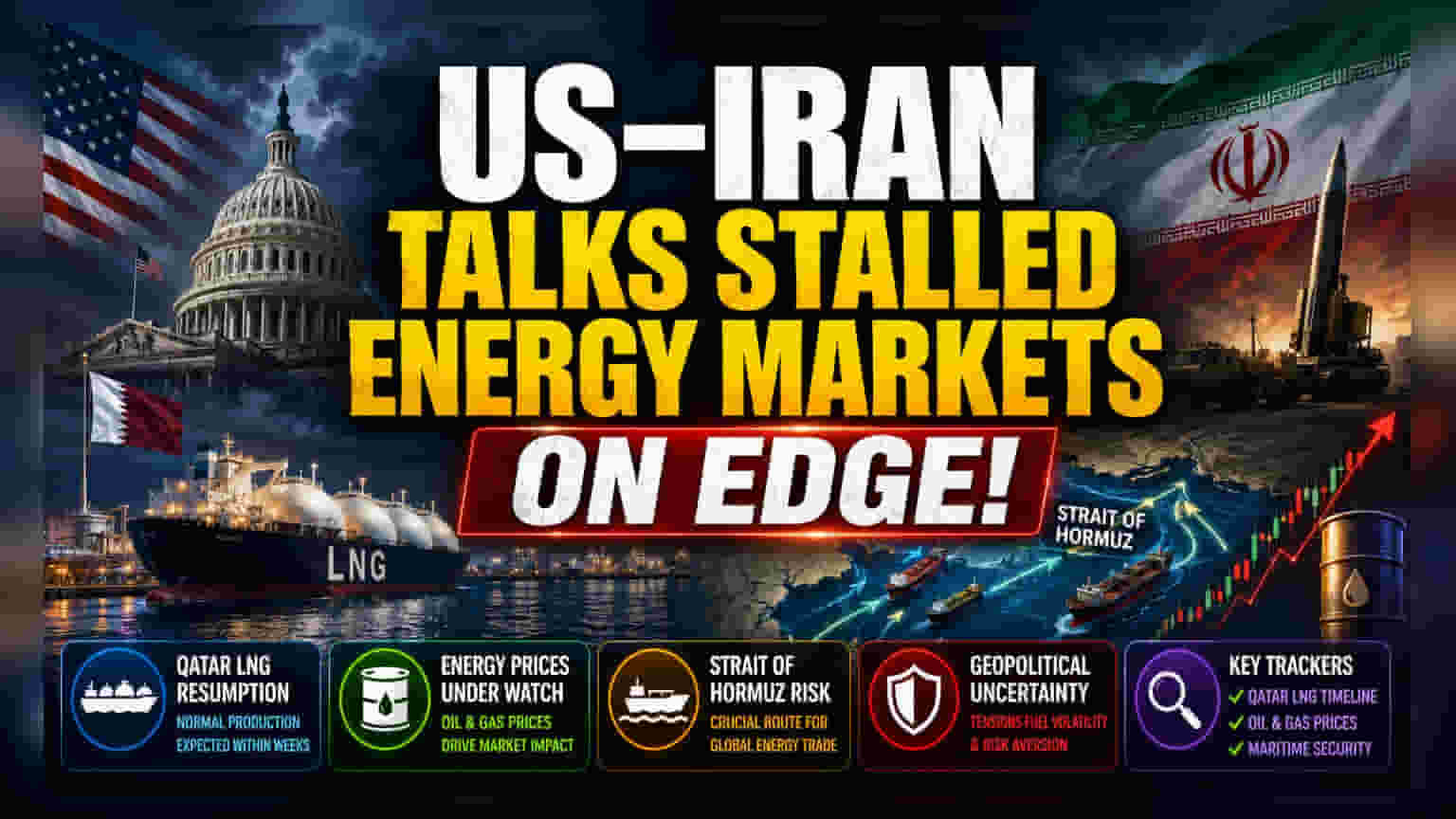
Negotiations between the US and Iran regarding a nuclear deal have stalled, heightening geopolitical uncertainty. A key update for global energy markets is Qatar’s plan to resume liquefied natural gas (LNG) production within weeks. Indian investors should track how these developments influence crude oil price volatility and energy supply stability.
What Happened
Diplomatic negotiations aimed at a US-Iran nuclear agreement have faced a setback as discussions remain at an impasse. The US Senate has passed a resolution to restrict the President's war powers regarding Iran, though a presidential veto is anticipated. Adding to the geopolitical complexity, Iran’s military officials have announced a shift toward an offensive doctrine, while a dispute over International Atomic Energy Agency (IAEA) inspections continues. Amid these tensions, Qatar’s government has signaled that it expects to resume normal liquefied natural gas (LNG) production within weeks, following a disruption earlier this year caused by a drone attack.
The Energy Market Connection
For global financial markets, the most significant factor is the stability of energy supplies. Qatar is a major global exporter of LNG, and the resumption of its production capacity is a critical development for international energy markets. A reliable supply of LNG can help moderate price volatility in global gas markets. Investors generally watch these supply-side signals closely, as any delay or further disruption in Qatar’s production could put upward pressure on energy prices, which affects businesses reliant on natural gas and fuel-based energy.
Why India Focuses On The Strait Of Hormuz
Indian investors often look at developments in the Middle East due to the country's high reliance on imported crude oil and natural gas. The Strait of Hormuz serves as a vital shipping lane for energy exports from the region. Any escalation in military tension or diplomatic standoff between the US and Iran can raise concerns about the safety of maritime trade routes. If tensions rise to a point where shipping is disrupted or insurance costs for tankers increase, this can lead to higher import costs for Indian energy companies and impact the trade deficit.
Geopolitical Risks And Market Sentiment
Geopolitical uncertainty often leads to increased volatility in global stock markets and commodity prices, particularly in the oil and gas sector. The US Senate’s move to restrict war powers highlights the internal political debate in the US regarding its foreign policy. While markets often factor in ongoing diplomatic friction, any sudden shift toward conflict—such as the reported move by Iran toward an offensive military doctrine—can trigger risk aversion among investors. When risk aversion is high, investors tend to move toward safe-haven assets, which can impact the flow of capital in emerging markets like India.
What Investors Should Track
Investors may track three key areas to gauge the potential business impact. First, monitor the actual timeline for Qatar’s resumption of LNG production, as this will influence energy supply expectations. Second, watch global crude oil and natural gas prices, which are direct indicators of how markets are pricing in geopolitical risk. Third, keep an eye on updates regarding maritime security in the Strait of Hormuz. Any official confirmation of supply disruptions or significant changes in shipping costs can have direct consequences for Indian energy importers and related industrial sectors.