

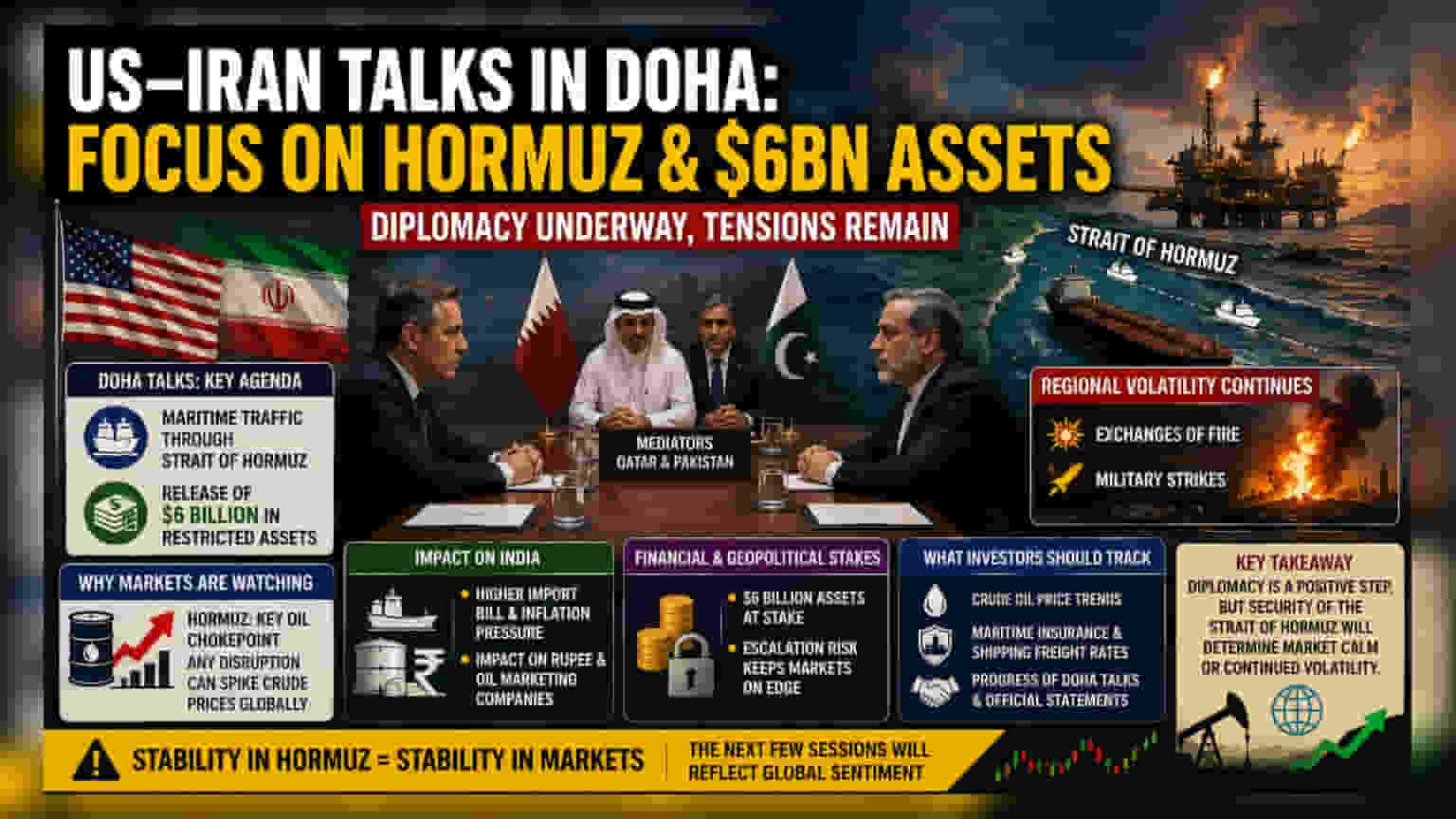
US and Iranian officials are meeting in Doha for indirect talks, with Qatar and Pakistan mediating. The discussions focus on reopening the Strait of Hormuz and releasing $6 billion in frozen assets. For Indian investors, the outcome is significant as it directly influences global oil prices, shipping freight rates, and the stability of energy imports for India.
What Happened
US and Iranian officials have started indirect talks in Doha, facilitated by mediators from Qatar and Pakistan. The discussions aim to implement a memorandum of understanding, which emerged from the Lake Lucerne Summit, to address the ongoing conflict in the Middle East. The agenda centers on two critical issues: the status of maritime traffic through the Strait of Hormuz and the release of $6 billion in restricted Iranian financial assets. While diplomatic efforts are underway, the region faces continued volatility, including reported exchanges of fire and military strikes, which remain a primary concern for international stability.
Why Markets Are Watching The Strait of Hormuz
The Strait of Hormuz is the world's most important oil chokepoint. A significant portion of global daily oil production passes through this narrow waterway. For global markets, any tension in this area immediately raises concerns about supply disruptions, which often leads to spikes in crude oil prices. If the talks fail to ensure safe passage for vessels, the resulting risk to global energy supplies could lead to higher fuel costs worldwide. This is a critical factor for investors to track because oil prices affect inflation and company profit margins globally.
Impact On Indian Oil And Logistics
India is one of the world's largest importers of crude oil, relying on imports for a large part of its energy needs. Geopolitical instability in the Gulf region directly impacts India’s import bill and can create pressure on the Indian Rupee and the profitability of Oil Marketing Companies (OMCs). Additionally, if shipping costs rise due to heightened risk and higher insurance premiums for vessels, logistics and shipping companies may face margin pressure. Investors typically look at how such events influence the cost of raw materials for sectors like chemicals, paints, and transport.
The Financial And Geopolitical Stakes
The release of frozen assets is a complex issue, with Iran seeking to unblock $6 billion. The economic impact of such a release, if successful, could alter the fiscal situation for the country involved, though the primary market focus remains on the cessation of hostilities. With recent reports of military strikes in the Gulf, the environment remains sensitive. Any escalation in the conflict, even if localized, creates uncertainty that markets generally dislike. Traders and investors usually watch these developments for signs of de-escalation that could stabilize commodity prices.
What Investors Should Track
Investors may watch for updates on three main fronts: the stability of crude oil prices, any changes in maritime insurance costs or shipping freight rates, and official statements regarding the progress of the Doha talks. While the diplomatic meeting is a positive step, the effectiveness of the outcome—specifically regarding the security of the Strait of Hormuz—will be the key measure for whether market risk subsides or persists. The next few sessions in global energy and commodity markets will likely reflect the sentiment surrounding these negotiations.