

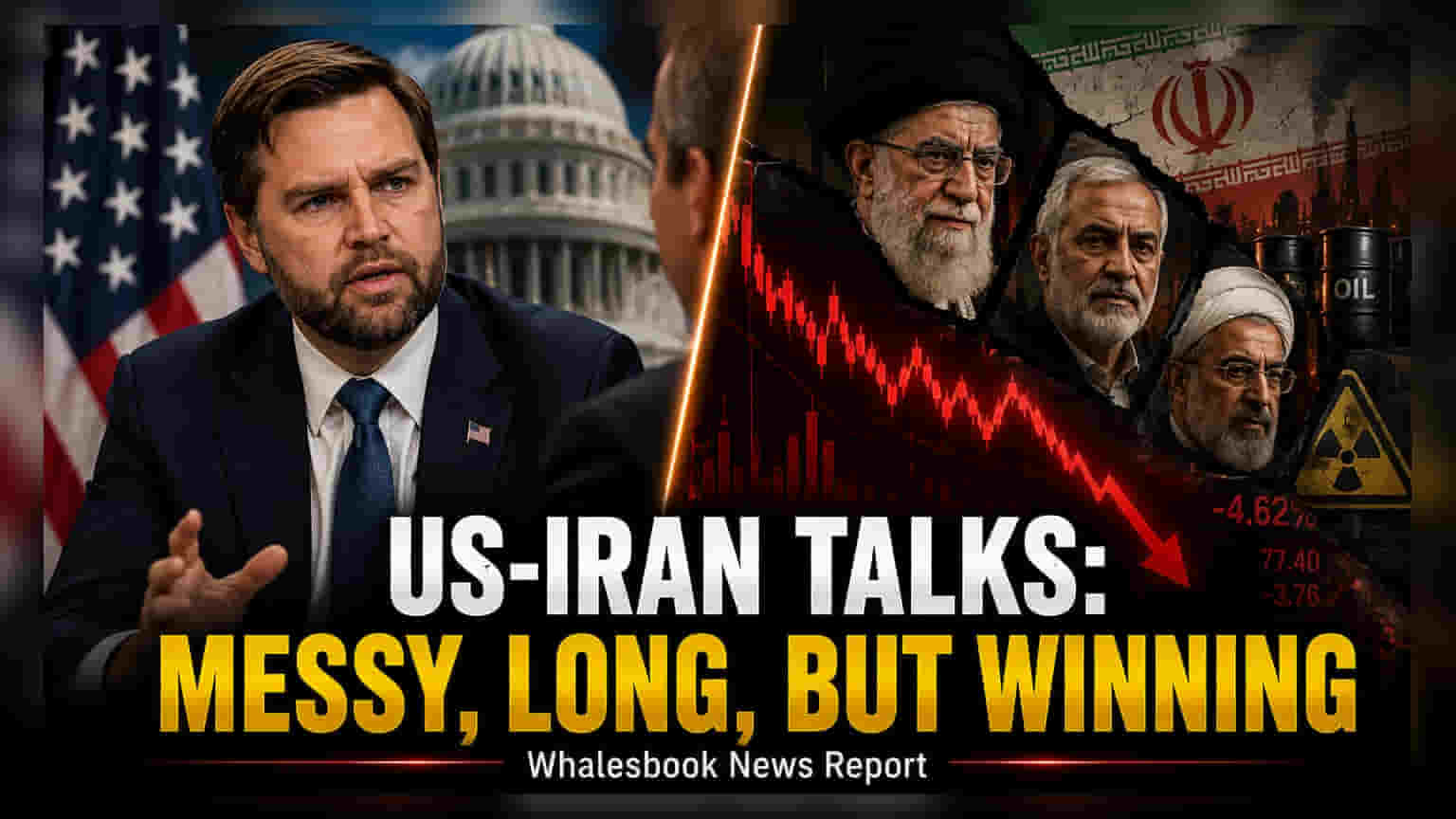
U.S. Vice President JD Vance has described diplomatic negotiations with Iran as lengthy and difficult, citing internal divisions in Tehran. For Indian investors, the outcome of these talks is critical as it influences global crude oil prices, which directly affect India's import costs, inflation, and the profit margins of Oil Marketing Companies.
U.S. Vice President JD Vance recently stated that diplomatic engagements with Iran remain a complex and time-consuming process. In an interview, Vance attributed these difficulties to deep internal divisions within Iran’s leadership, noting that while some factions may be open to dialogue, others continue to oppose it. The U.S. administration plans to maintain pressure through a combination of military, economic, and diplomatic channels to achieve its goals, which include preventing nuclear proliferation and stabilizing global energy markets.
For Indian investors, this development is significant because of India’s heavy reliance on crude oil imports. Global oil prices, which have been hovering around $79 per barrel, are highly sensitive to geopolitical tensions in the Middle East, particularly those involving major shipping routes like the Strait of Hormuz. When tensions rise in this region, crude oil prices often increase, leading to higher import costs for India.
This dynamic directly affects the Indian economy in several ways. Higher crude prices typically lead to increased inflation and put pressure on the Indian Rupee. Furthermore, it impacts the profitability of Indian Oil Marketing Companies (OMCs) such as Indian Oil Corporation (IOC), Bharat Petroleum Corporation (BPCL), and Hindustan Petroleum Corporation (HPCL). These companies import the majority of their crude oil requirements; if international prices stay elevated due to geopolitical uncertainty, their input costs rise, which can pressure their profit margins if retail fuel prices remain unchanged.
Investors should be aware that the situation remains highly fluid. The divergent reports regarding the progress of these negotiations—with some U.S. officials noting progress while Iranian sources occasionally provide differing accounts—create an environment of uncertainty. This uncertainty can trigger sudden volatility in global commodity markets, affecting Indian stocks sensitive to energy costs, including aviation and transportation sectors.
The most important monitorable for investors in the coming weeks will be updates on diplomatic progress and subsequent movements in crude oil prices. Significant breakthroughs in the talks could help stabilize oil prices, while an escalation or a failure in negotiations may lead to renewed price volatility. Investors may track official government statements and global energy market reports to understand how these geopolitical shifts are impacting domestic energy costs.