

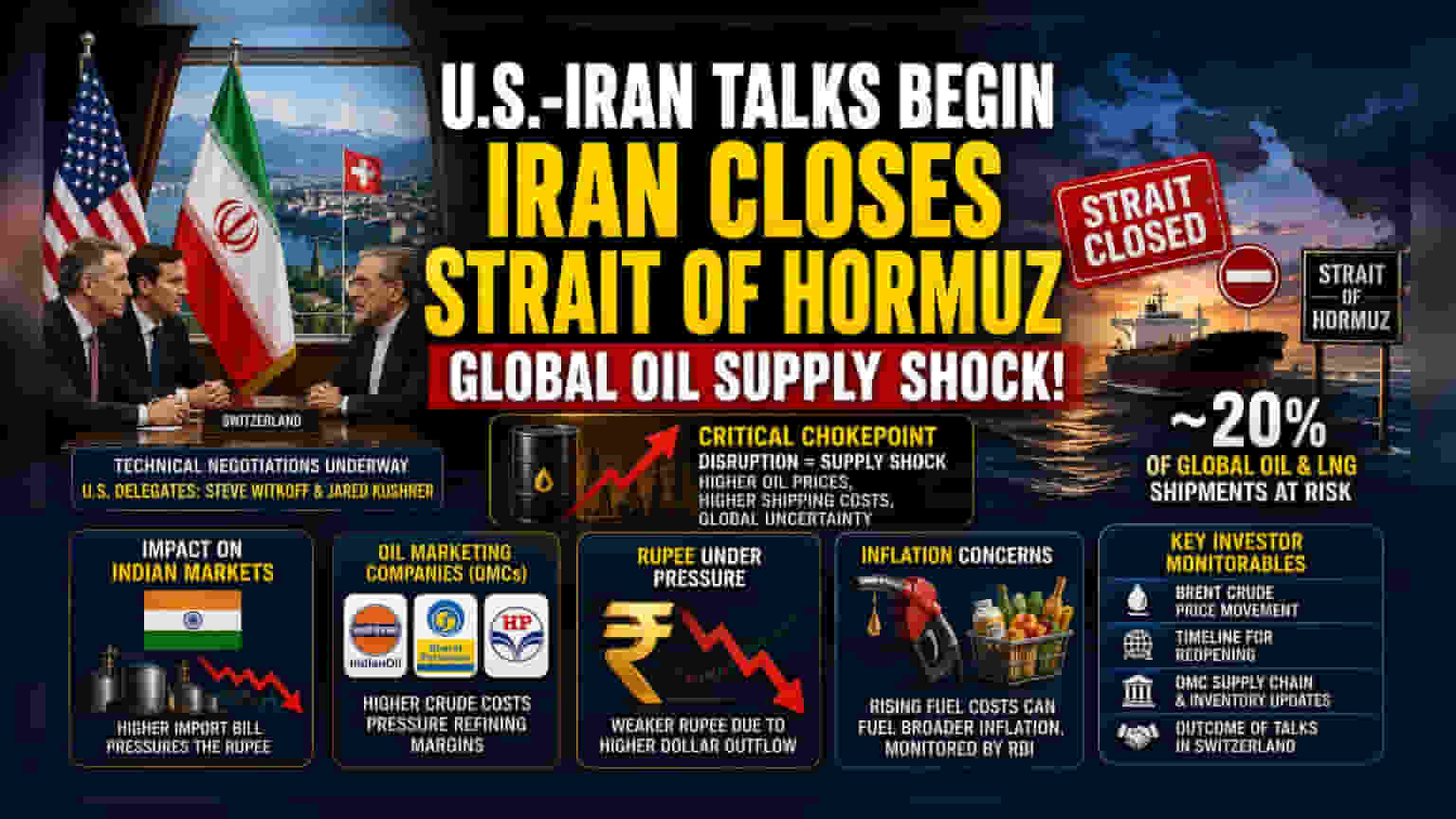
Negotiators from the US and Iran have started technical talks in Switzerland, but the closure of the Strait of Hormuz threatens global energy supplies. As this waterway carries roughly 20% of the world's oil, the standoff may trigger volatility in crude prices, potentially impacting Indian oil marketing companies, inflation, and the Rupee.
What Happened
Technical negotiations between the United States and Iran have officially begun in Switzerland. The discussions are aimed at addressing the framework for a final accord, with American negotiators Steve Witkoff and Jared Kushner leading the U.S. side. However, the diplomatic progress is being overshadowed by a significant escalation on the ground. Iran announced on Saturday that it has closed the Strait of Hormuz, a critical maritime chokepoint that handles approximately 20% of global oil and liquefied natural gas (LNG) shipments. Tehran stated the closure was a response to what it termed a breach of a previously agreed memorandum of understanding by the U.S., as well as ongoing actions in Lebanon.
Why This Matters For Global Energy
The Strait of Hormuz is not just a shipping lane; it is one of the most vital arteries for global energy. When traffic through this waterway is disrupted, it creates an immediate supply bottleneck for crude oil and LNG. For investors, the closure of such a chokepoint is a classic "supply shock" event. Historically, any major restriction on this route leads to uncertainty in global crude oil prices, as traders factor in the potential for reduced supply and higher shipping costs due to delays or rerouting.
Impact On Indian Markets
For Indian investors, the situation has direct implications for sectors sensitive to energy prices. India is a major importer of crude oil, and a sharp, sustained rise in oil prices can have several ripple effects on the domestic market. First, it puts pressure on Oil Marketing Companies (OMCs) like Indian Oil Corporation, BPCL, and HPCL. If the companies cannot pass on the higher crude costs to consumers quickly, their refining margins may come under pressure. Second, higher oil prices often weigh on the Indian Rupee, as more dollars are required for energy imports. Third, persistent energy inflation can complicate the outlook for broader domestic inflation, which is a key factor the Reserve Bank of India monitors when setting interest rates.
The Business Reality Check
While the diplomatic talks in Switzerland are intended to resolve the underlying friction, the immediate business reality is the disruption of physical trade flows. The market is now looking for clarity on two fronts: whether the diplomatic talks can lead to a quick reopening of the Strait, and whether there is an alternative security plan for energy shipments. Until these points are clarified, uncertainty is likely to remain high, which typically leads to volatility in energy-linked stocks and the broader indices.
What Indian Investors Can Track
Investors may monitor a few key indicators in the coming days. First, the movement in Brent crude prices is the most immediate barometer of market sentiment regarding the Hormuz closure. Second, any official statements regarding the timeline for the reopening of the waterway will be critical. Finally, investors should watch for management commentary or exchange filings from Indian oil companies regarding their supply chain security and inventory positions. The outcome of the ongoing talks in Switzerland will be the deciding factor for whether this tension de-escalates or persists.