

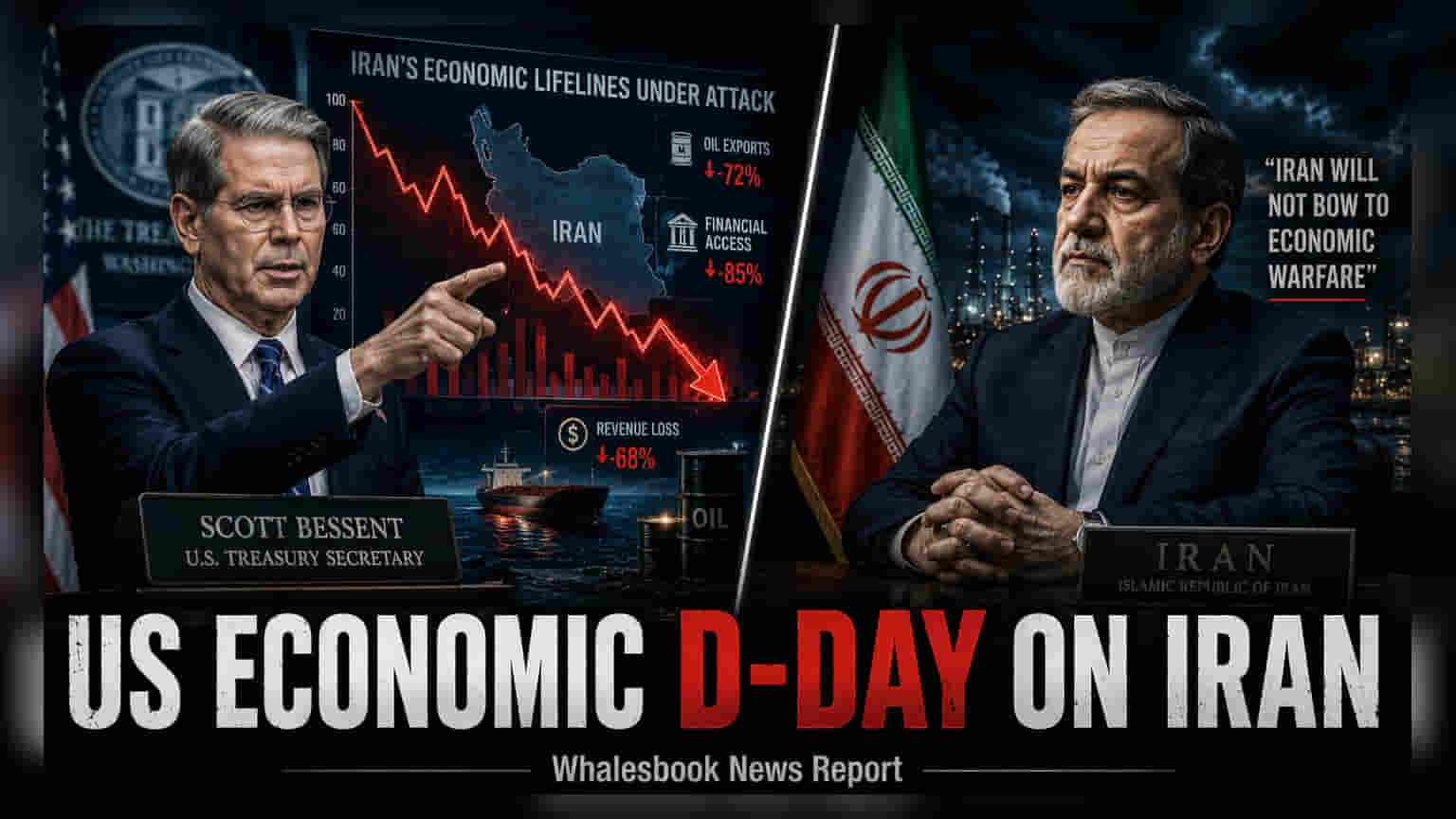
The U.S. Treasury has announced aggressive new sanctions against Iran, specifically targeting the nation's oil exports. This move has sparked fears of a supply disruption in global energy markets, potentially leading to higher crude prices. For Indian investors, the focus remains on how rising oil costs might affect the rupee, domestic inflation, and the profit margins of oil-dependent companies.
The United States Treasury, led by Secretary Scott Bessent, has initiated a wide-ranging financial strategy aimed at severing Iran's economic lifelines. This campaign is focused on blocking Iran's ability to export oil and access international financial networks. As Washington attempts to enforce these strict measures, the move has created immediate uncertainty in global commodity markets, particularly for crude oil, which is a vital resource for India’s economy.
Impact on India’s Economy
India is one of the world's largest importers of crude oil. When global energy supplies are threatened by geopolitical tensions in regions like the Strait of Hormuz, oil prices typically rise. For the Indian market, this presents a significant challenge. Higher oil import bills tend to weaken the Indian rupee against the U.S. dollar and increase the country's import costs. This, in turn, can contribute to higher domestic inflation and complicate the central bank's interest rate policy. Investors generally view sustained spikes in crude prices as a negative factor for India's macroeconomic stability.
Sector Sensitivity and Profitability
Several segments of the Indian stock market are highly sensitive to fluctuations in oil prices. Oil Marketing Companies (OMCs) such as Indian Oil Corporation, Bharat Petroleum, and Hindustan Petroleum often face margin pressure if they are unable to pass on the increased cost of crude to end consumers. Beyond energy, other industries are also affected. Sectors like paints, lubricants, aviation, and tyres rely on oil derivatives for their raw materials. When oil prices remain high for an extended period, these companies often see their profit margins tighten, which can impact their quarterly financial performance.
Geopolitical Context
The situation is complicated by the involvement of major global players. Reports indicate that China remains a large purchaser of Iranian oil, and the U.S. government is reportedly urging Beijing to comply with its sanctions regime. Any escalation in trade or diplomatic friction between the U.S. and China, or between the U.S. and Iran, can lead to increased volatility in global financial markets. This international uncertainty often affects foreign institutional investor sentiment toward emerging markets like India.
Moving forward, the primary monitorable for investors will be the movement in Brent crude oil prices and any updates regarding supply flows from the Gulf. Additionally, investors may track RBI commentary, as the central bank closely monitors imported inflation and oil price trends when determining its monetary policy stance. While the direct impact of the sanctions is evolving, the underlying risk remains the potential for sustained volatility in energy costs.