

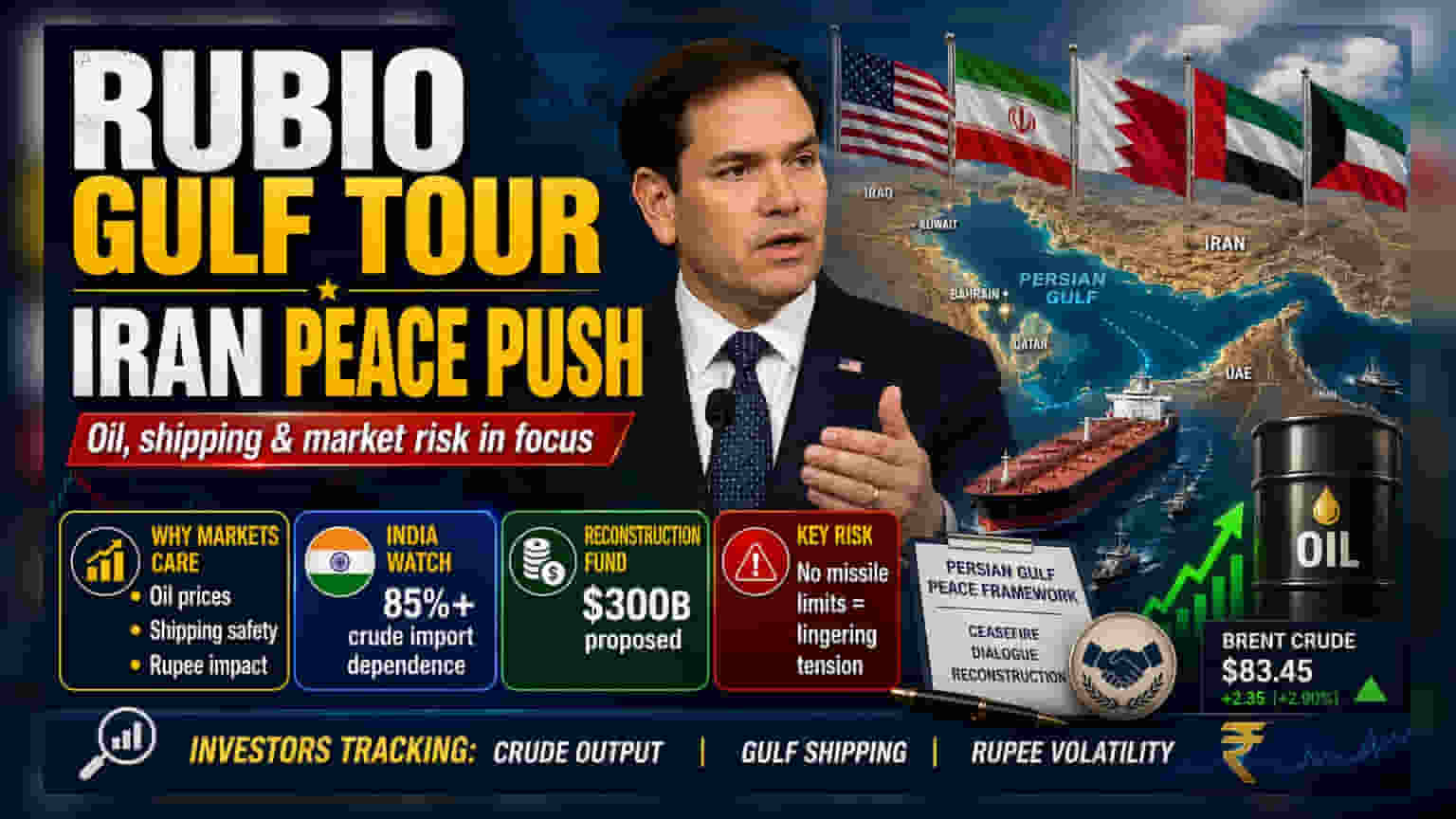
US Secretary of State Marco Rubio is visiting Gulf nations to calm concerns over a pending peace deal with Iran following a 100-day conflict. For Indian investors, the primary focus remains on crude oil stability, as any disruption in this critical energy-producing region directly impacts India’s import costs, inflation, and rupee valuation.
What Happened
United States Secretary of State Marco Rubio has embarked on a diplomatic tour of Persian Gulf nations, including Bahrain, the United Arab Emirates, and Kuwait. The visit comes as the US attempts to secure a peace agreement with Iran following a 100-day conflict that began on February 28, 2026, following US-Israeli strikes. Rubio is meeting with foreign ministers to reassure them that a proposed deal will not jeopardize regional security or economic interests. The US and Iran have signed a Memorandum of Understanding to extend a ceasefire and discuss a permanent resolution, a key development in a region that serves as a global energy hub.
Why Oil And Markets Care
For Indian investors, the geopolitical situation in the Persian Gulf is a major financial variable. India imports more than 85% of its crude oil, much of which travels through or originates in this region. Any instability, threat to shipping lanes, or sudden change in energy output directly affects global oil prices. When crude prices rise, it increases India’s oil import bill, which can put pressure on the rupee and fuel inflation. Consequently, any diplomatic progress that stabilizes the region is closely watched by the market as it could reduce the risk premium on oil prices.
The Reconstruction Fund And Regional Stability
The draft US-Iran agreement reportedly includes a proposed $300 billion reconstruction fund. While Secretary Rubio has clarified that he is not asking Gulf allies to contribute to this fund, the sheer size of such an economic package highlights the massive resources being discussed for regional recovery. Investors watch these developments because the economic reconstruction of a conflict-affected area can lead to long-term shifts in trade, infrastructure spending, and capital allocation across the Middle East. If implemented effectively, such stability could encourage more predictable trade routes, though the details of how Iran manages this reconstruction remain a key point for market analysts.
Lingering Security Risks
While the diplomatic outreach aims to ease tensions, the proposed deal does not reportedly include limitations on Iran's ballistic missile program. This is a crucial detail for investors because it suggests that regional security dynamics may not fully return to pre-conflict status. Persistent uncertainty regarding security often leads to higher insurance premiums for shipping vessels navigating the Persian Gulf, which can indirectly increase the landed cost of commodities. The market will continue to assess whether this peace framework is durable or if it merely pauses the underlying tensions.
What Investors Should Track
Investors may look for updates on three key areas: the stability of daily crude oil production, the safety and movement of shipping traffic through the Persian Gulf, and any statements from global rating agencies or energy bodies regarding the long-term impact of this peace deal. Additionally, any volatility in the rupee against the dollar can often be traced back to global oil price fluctuations, making this diplomatic situation a critical monitorable for the coming months.