

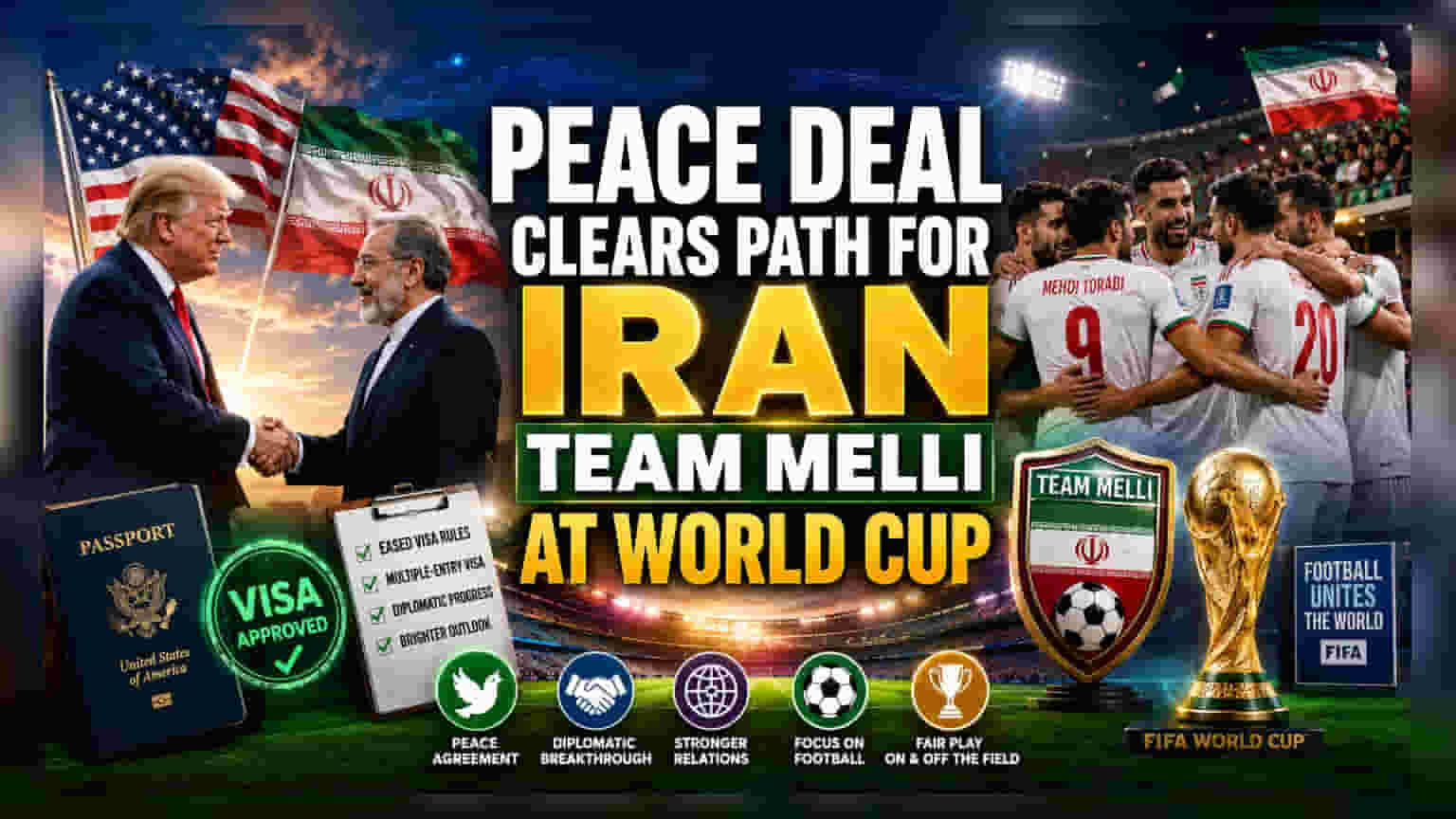
A newly signed peace agreement between the United States and Iran is expected to alleviate visa and travel hurdles for Iran's national football team, 'Team Melli,' at the World Cup. While the move signals a diplomatic thaw, analysts warn that domestic political pressures could still influence how the US manages these hosting obligations in the coming days.
What Happened
A recent peace agreement between the United States and Iran has sparked optimism for the participation of Iran’s national football team, 'Team Melli,' in the ongoing World Cup. The team had previously faced significant operational challenges, including strict visa conditions, delayed approvals, and the forced relocation of their training base from Arizona to Tijuana, Mexico. These logistical hurdles, which also included the denial of entry for certain staff members, had raised questions about the intersection of geopolitical tension and international sporting events.
The Diplomatic Shift
The memorandum of understanding between the two nations marks a potential turning point in bilateral relations. Observers have noted a change in diplomatic tone, which experts suggest may lead to more favorable treatment of the Iranian delegation. For instance, the reissuance of a multiple-entry visa for player Mehdi Torabi is being viewed as a tangible sign of increased flexibility. The hope is that this peace deal will allow the team to focus on the tournament without the constant threat of administrative disruption.
Why Global Events Are Sensitive to Politics
The situation highlights a broader challenge for global sporting bodies: balancing national sovereignty with the requirement to host international events on a level playing field. FIFA, which generally maintains a stance of political neutrality, often faces complex scenarios when host nations have strained relations with participating countries. When politics impacts the movement of athletes, it creates uncertainty for organizers and fans alike. The current case involving Team Melli demonstrates how geopolitical friction can lead to tangible costs, such as the need to relocate base camps and the potential exclusion of technical support staff.
The Reality of Diplomatic Volatility
Despite the positive signals from the peace agreement, analysts caution that the path forward remains complex. The United States government faces domestic pressure from various political factions, which could lead to shifts in policy or a return to stricter measures. Scholars have pointed out that while the recent diplomatic gesture is a step forward, the situation remains fluid. The Iranian football federation’s decision to file a formal complaint with FIFA regarding earlier entry denials underscores that, while the broad political climate may be thawing, operational challenges persist on the ground.
What To Watch Next
The primary monitorable for observers will be how the US adheres to its responsibilities as a host nation under the new diplomatic framework. FIFA’s role in ensuring these obligations are met will also be a key factor. If the peace agreement holds, the expectation is that the remaining administrative and travel hurdles for the Iranian squad will be removed, allowing the tournament to proceed without further political interference.