

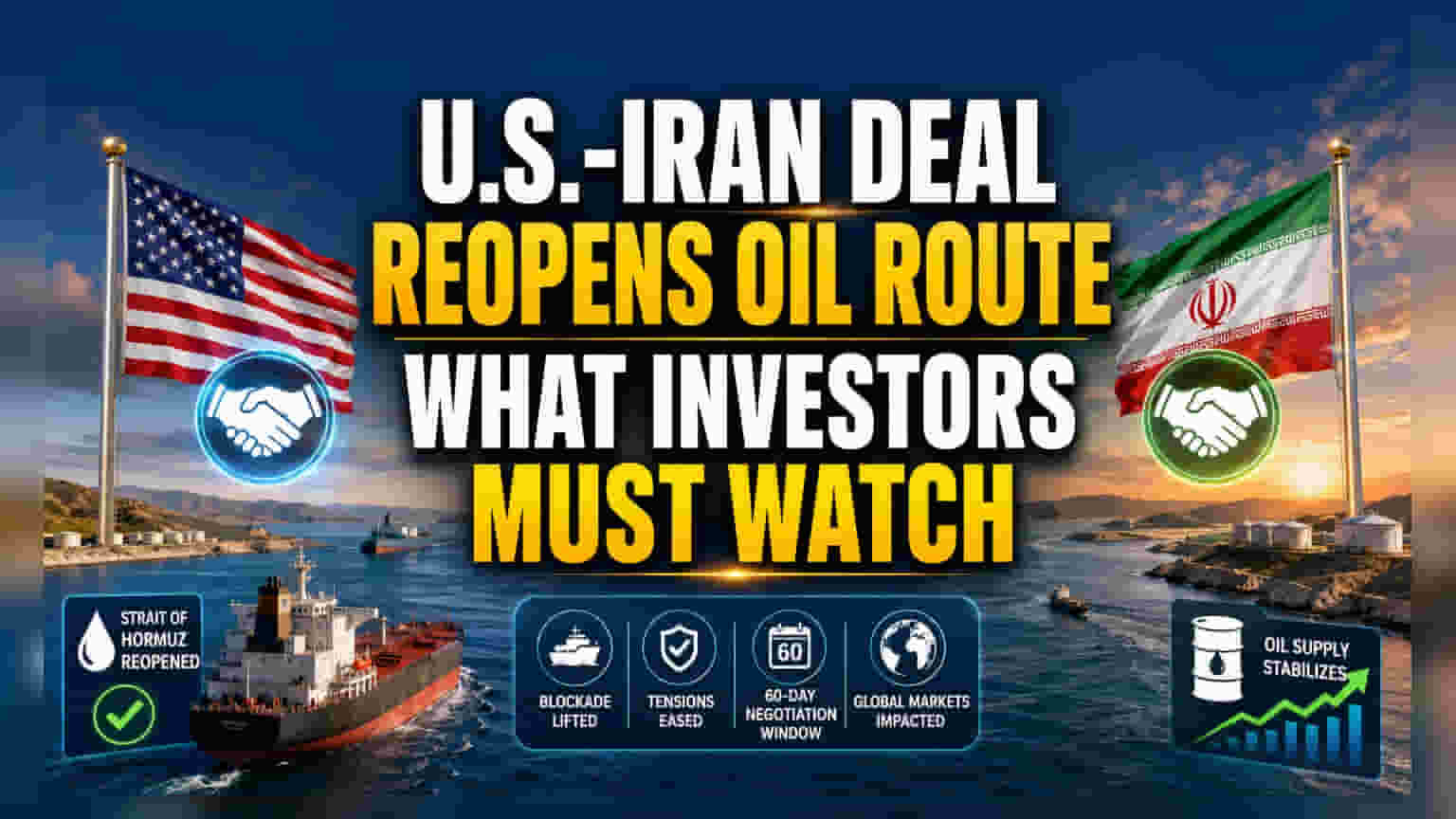
The US and Iran have signed a memorandum of understanding to end their conflict, resulting in the immediate lifting of the naval blockade in the Strait of Hormuz. With maritime traffic resuming, global markets expect a reduction in oil supply volatility. However, the agreement is considered a fragile truce, as significant political hurdles in the US, Iran, and the Middle East remain unresolved, keeping the long-term economic outlook uncertain.
What Happened
The United States and Iran have signed a memorandum of understanding (MoU) aimed at de-escalating their long-standing conflict. This agreement has resulted in the immediate lifting of the U.S. naval blockade against Iran and the simultaneous removal of passage restrictions in the Strait of Hormuz by Tehran. This strategic waterway is a vital artery for the global energy market, and its reopening marks the first step in a 60-day negotiation window set by both nations to address critical issues, including nuclear programs and regional stability.
Why It Matters For Global Oil
The Strait of Hormuz is one of the world's most significant shipping lanes for oil, gas, and fertilizers. When tensions in this region rise, oil prices often climb due to fears of supply disruptions. The reopening of this route allows tankers to resume normal operations, which could help stabilize global energy supplies. For investors, this development is relevant because oil price volatility is a major factor influencing inflation, logistics costs, and the profitability of oil-importing and consuming industries, including those in India.
The Fragile Nature Of The Deal
While the market may react positively to the easing of supply constraints, the agreement is currently viewed as a fragile truce. The path forward is complicated by internal and external political pressures. In the United States, prominent Republicans have criticized the deal, while in Iran, leadership has acknowledged signing the document with reservations. Furthermore, tensions involving Israel and Hezbollah, as well as unresolved questions regarding Iran’s nuclear enrichment program, create significant uncertainty. Reports of postponed negotiations in Switzerland suggest that the geopolitical situation remains tense and could change rapidly.
What Investors Should Track Next
Investors should look beyond the initial market relief and monitor the progress of the 60-day negotiation window. Key monitorables include the consistency of tanker traffic through the Strait of Hormuz and any formal updates on Iran’s nuclear program, specifically regarding uranium enrichment. Additionally, changes in political rhetoric from US and Iranian officials, as well as any developments in broader Middle Eastern geopolitical tensions, will be crucial. These factors will determine whether this initial de-escalation leads to a stable long-term energy outlook or if renewed geopolitical risk will return to the markets.