

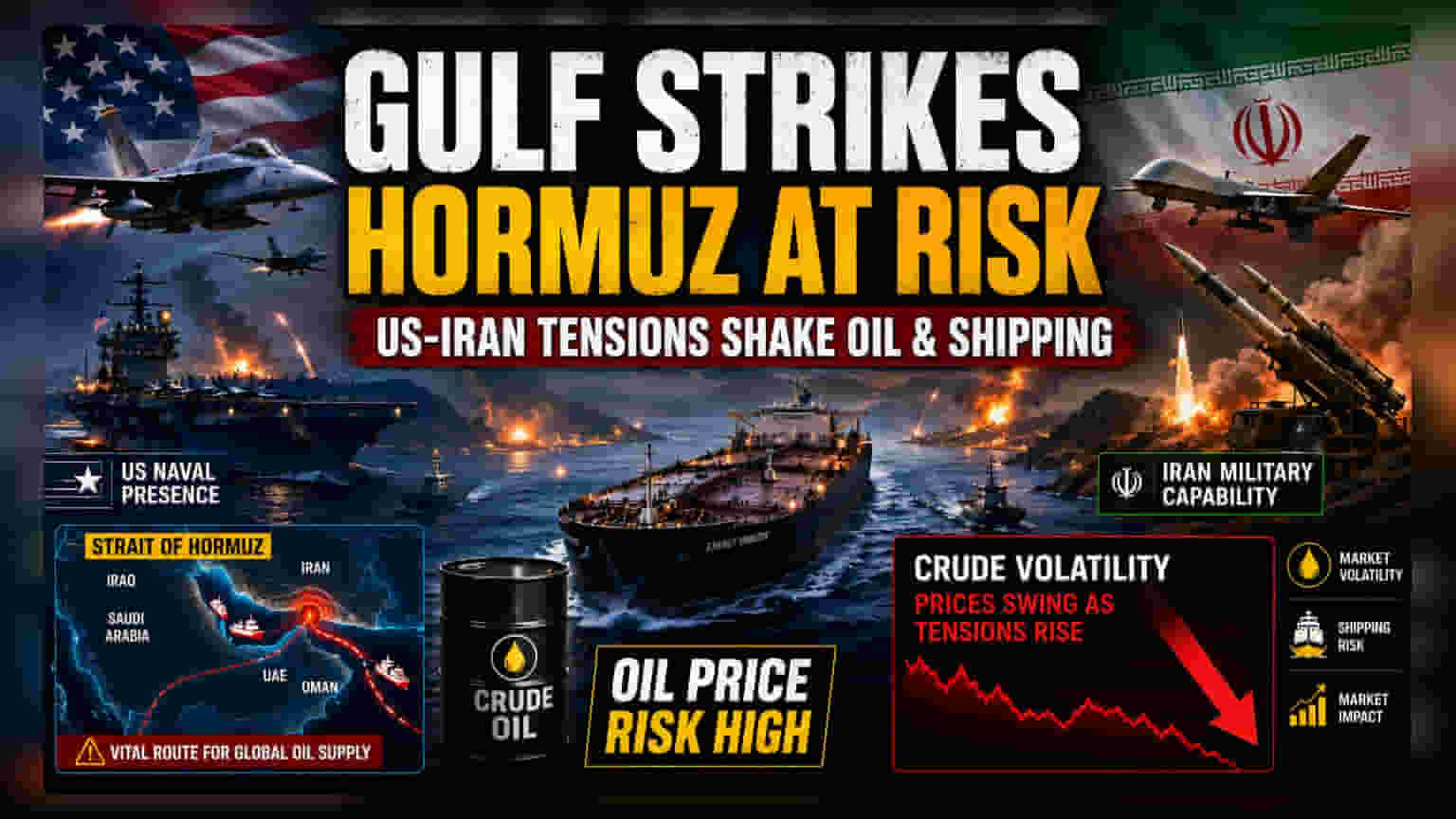
Tensions have flared between the U.S. and Iran in the Persian Gulf, challenging a recent ceasefire and threatening a key global shipping route. While initial market reactions saw a decline in oil prices, the situation creates uncertainty for energy-dependent economies like India. Investors should watch for potential volatility in oil prices, shipping costs, and related sector stocks.
What Happened
On Saturday, June 27, 2026, the United States and Iran exchanged retaliatory strikes in the Persian Gulf, escalating regional tensions and jeopardizing a ceasefire agreement established just days earlier on June 17. The Islamic Revolutionary Guard Corps (IRGC) reported targeting U.S. sites, following U.S. Central Command’s (CENTCOM) strikes on Iranian missile and drone facilities. This escalation follows an Iranian drone attack on a Singapore-registered commercial vessel, the Ever Lovely, as it navigated the Strait of Hormuz. The exchange of fire marks a significant breakdown in the recent Memorandum of Understanding intended to stabilize maritime traffic through this vital global trade artery.
Why It Matters for Indian Investors
For Indian investors, the Persian Gulf is not just a geopolitical hotspot but a critical energy and trade corridor. India imports a significant portion of its crude oil through the Strait of Hormuz. Disruptions in this region can lead to immediate concerns regarding supply chains, shipping insurance premiums, and energy costs. Even when physical supply is not immediately halted, the perception of risk in the region often creates volatility in global commodity markets, which directly impacts the cost structure of Indian companies reliant on energy inputs.
The Oil Price Paradox
Despite the clear security risk to oil transport, global oil prices have reportedly declined following the news. This market movement suggests that traders are currently focused on lingering hopes that traffic through the Strait of Hormuz will continue or recover, rather than on the immediate risk of a long-term blockade. However, for investors, this divergence between geopolitical tension and market pricing creates a window of high uncertainty. If the situation deteriorates further or if shipping lanes face sustained blockades, the downward trend in oil prices could reverse rapidly.
Sectors Sensitive to Gulf Tensions
Market participants often monitor specific sectors during Gulf instabilities. Oil Marketing Companies (OMCs) and upstream oil producers are typically the first to feel the impact of shifting crude prices. If tensions lead to higher crude costs, OMCs may face pressure on their refining margins, while upstream companies might see volatility in their realization prices. Additionally, the shipping and logistics sector is highly sensitive to maritime security. Attacks on commercial vessels often lead to higher war-risk insurance premiums, which can increase operating costs for global shipping lines and supply chain intermediaries.
What Investors Should Track Next
The primary monitorable is the safety and traffic volume of the Strait of Hormuz. Any further escalation, official warnings to shipping companies, or major changes in crude oil futures will be key indicators of how the market is processing the risk. Investors should also watch for official statements from the Indian government regarding energy security, as well as management commentary from large Indian oil and shipping companies regarding their exposure to potential supply chain disruptions. The stability of the June 17 agreement will remain the central factor defining the risk premium for the coming weeks.