

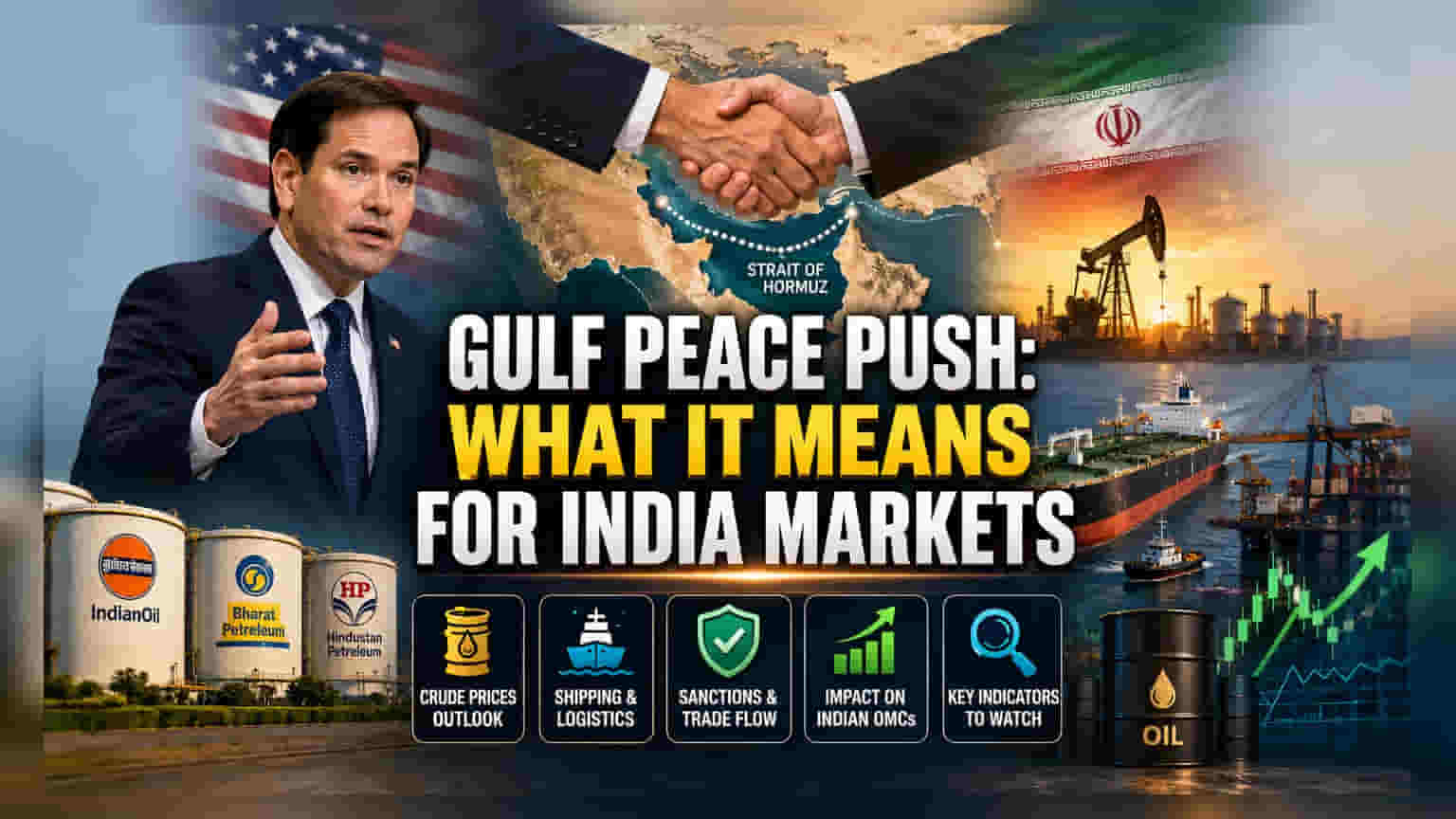
US-Iran diplomatic efforts to extend a ceasefire and stabilize regional security in the Gulf are critical for global energy markets. For Indian investors, these developments influence crude oil prices and maritime logistics, directly affecting companies in the oil marketing and shipping sectors.
What Happened
United States Secretary of State Marco Rubio is conducting diplomatic meetings in the Gulf region, focusing on extending a ceasefire agreement between the U.S. and Iran. Following over 100 days of conflict that severely disrupted infrastructure in the Middle East, this move aims to stabilize the region and address concerns regarding nuclear and security policies. The discussions are particularly relevant as they coincide with potential plans to normalize traffic through the Strait of Hormuz and address trade sanctions.
Impact on India’s Energy Sector
India remains one of the world's largest importers of crude oil, with a significant portion of its energy supply traveling through the Middle East. The Strait of Hormuz serves as a critical maritime chokepoint. Any instability in this region typically introduces a "war risk premium" to global crude oil prices, which directly impacts the profitability of Indian Oil Marketing Companies (OMCs) like Indian Oil Corporation (IOCL), Bharat Petroleum (BPCL), and Hindustan Petroleum (HPCL). A sustainable ceasefire, by reducing the risk of supply blockades, generally helps stabilize global energy prices, which can ease cost pressures for these firms.
Shipping and Logistics Implications
During the recent conflict, reports indicated significant damage to infrastructure and disruptions to shipping routes. For Indian logistics and shipping companies, the stability of these trade lanes is vital for maintaining cost-efficient cargo movement. If the diplomatic process leads to safer passage through the Strait of Hormuz and a reduction in insurance premiums for commercial vessels, it could benefit the margins of companies involved in maritime trade and port operations. Conversely, any failure to maintain this ceasefire could trigger renewed volatility in shipping costs and regional supply chain reliability.
Understanding the Macro Risks
While the current diplomatic efforts are intended to de-escalate tensions, the situation remains complex. The existing agreements do not fully address Iran’s ballistic missile program or its regional alliances, which continue to be points of friction. Investors should recognize that the economic benefit for India is tied to the durability of this peace. Any resumption of hostilities could quickly reverse gains in energy price stability, impacting India's trade deficit and domestic inflation, which in turn influences broader market sentiment.
What Investors Should Track Next
Investors may monitor three key indicators in the coming weeks. First, movements in global crude oil benchmarks (like Brent crude) provide the fastest reaction to regional stability updates. Second, any official announcements regarding the lifting of sanctions or changes in shipping fees through the Strait of Hormuz will provide clarity on trade logistics. Finally, monitoring the quarterly results and management commentary of domestic energy and logistics firms may reveal how these geopolitical shifts are impacting their operational costs and inventory management.