 Whalesbook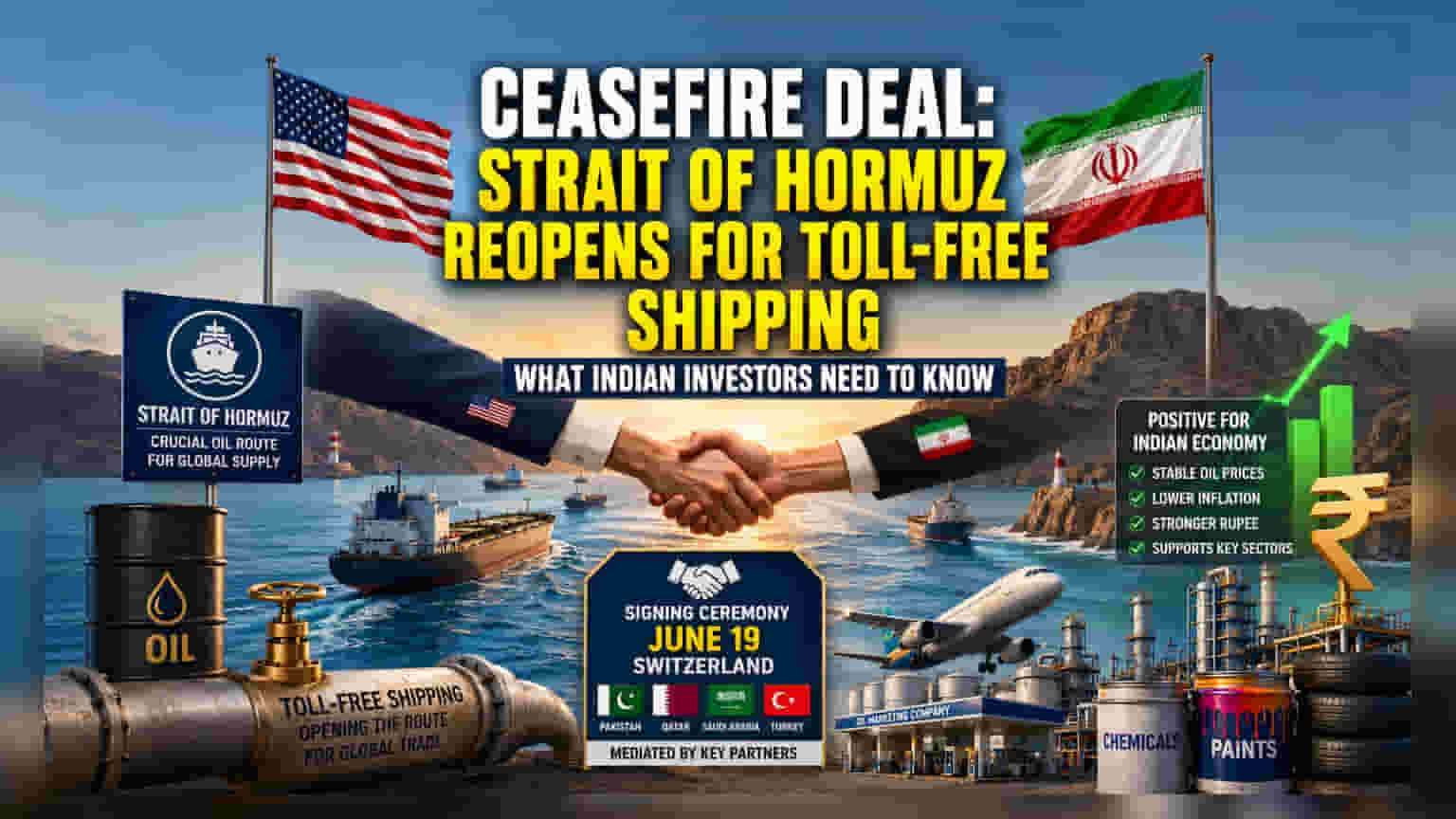


The US and Iran have announced a ceasefire and the reopening of the Strait of Hormuz for shipping. This de-escalation is significant for India, a major crude oil importer. A smoother supply of oil through this key route could potentially help ease global crude prices, reduce import bills, and bring relief to Indian sectors heavily dependent on oil, such as aviation, paints, and tyres.
What Happened
The United States and Iran have announced a ceasefire, marking an immediate end to hostilities between the two nations. As part of the agreement, the United States has ordered the reopening of the Strait of Hormuz, a critical maritime chokepoint, for toll-free shipping. The deal, which also involves the removal of the United States naval blockade in the region, aims to restore the flow of oil through this vital global supply route. An official signing ceremony is planned for June 19 in Switzerland, with mediation support from Pakistan, Qatar, Saudi Arabia, and Turkey.
Why This Matters For Indian Investors
For Indian stock market investors, this development is relevant primarily due to India's heavy reliance on imported crude oil. The Strait of Hormuz is one of the world's most important oil transit routes. Any disruption in this area often leads to volatility in global oil prices, which directly impacts India’s import bill and macroeconomic health.
When global oil prices rise due to geopolitical tensions, it often puts pressure on the Indian Rupee and increases inflation. Conversely, if this ceasefire leads to a more stable and reliable supply of oil, it may help stabilize or even soften global crude prices. This stability is generally viewed as a positive development for the Indian economy and several specific industrial sectors.
Sector Impact
Several sectors in the Indian market are sensitive to crude oil price movements. A potential easing in oil prices could be monitored for its impact on:
Oil Marketing Companies (OMCs): These companies are sensitive to crude oil costs. A steady and lower-cost supply chain could help in managing margins better.
Aviation: Aviation Turbine Fuel (ATF) is a significant expense for Indian airlines. Lower crude oil prices often translate into lower fuel costs, which can support the profitability of the aviation sector.
Chemicals, Paints, and Tyres: Many companies in these sectors rely on crude oil derivatives as raw materials. When crude prices are stable or lower, it often helps these companies protect their profit margins.
How Investors May Read This
While the news of a ceasefire and the reopening of the Strait of Hormuz is a positive signal for global trade stability, investors should approach the situation with a balanced view. Markets often react to the actual implementation of such agreements rather than just the announcement.
There is still a gap between the current announcement and the formal signing ceremony scheduled for June 19. Investors may look for updates on the ground, such as whether oil tankers have successfully resumed normal operations and if the removal of the blockade is proceeding as planned. Diplomatic agreements can sometimes face hurdles, and the market often waits for confirmation that the flow of goods is genuinely back to normal.
What Investors Should Track
Moving forward, the primary monitorables for investors include:
Global Crude Oil Price Trends: Watch how Brent and WTI crude prices respond to this news in the coming days. A sustained decline or stability in prices would be the key indicator of the market's confidence in this deal.
Official Signing Ceremony: Track the developments surrounding the scheduled signing on June 19 in Switzerland. Any change or delay in this process could impact market sentiment.
Indian Rupee Performance: The stability of the Rupee against the Dollar is often linked to the oil import bill. Investors may observe if this development provides any support to the currency.
Management Commentary: Keep an eye on the quarterly results and management commentary of companies in the aviation, oil marketing, and chemical sectors, as they may discuss the impact of oil price volatility on their future business operations.