 Whalesbook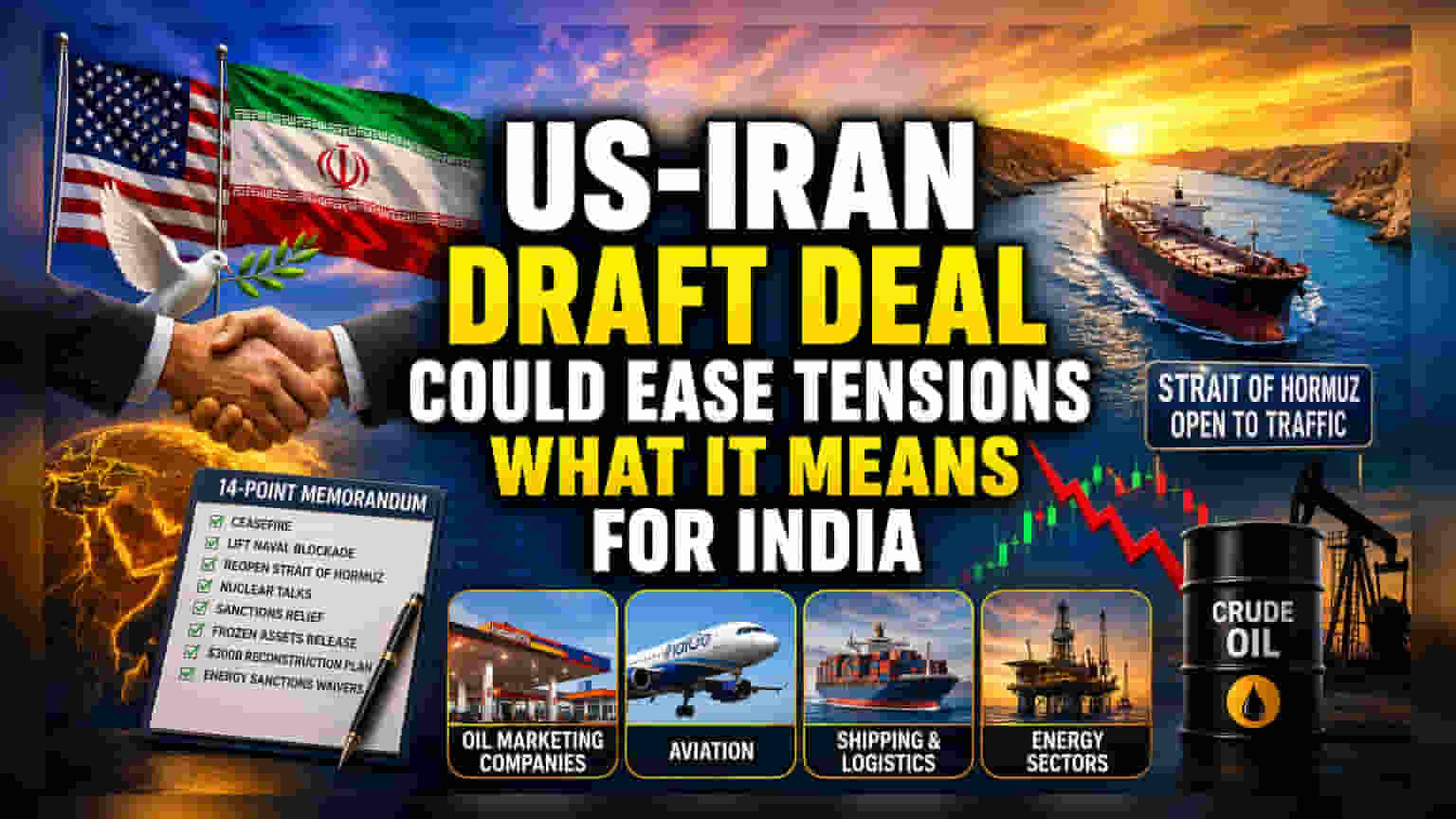
A reported US-Iran ceasefire draft aiming to open the Strait of Hormuz and ease sanctions could impact Indian energy, shipping, and aviation sectors. While lower crude oil prices would benefit oil marketing and aviation companies, geopolitical uncertainty remains high. Investors should track official confirmations and global oil price trends.
What Happened
A senior U.S. official has detailed a 14-point memorandum of understanding aimed at ending hostilities between the United States and Iran. According to this account, the draft includes a permanent halt to military operations, the lifting of a U.S. naval blockade, and the reopening of the Strait of Hormuz to commercial maritime traffic. The agreement, which has not yet been officially confirmed by either government, outlines a 60-day roadmap for intensive negotiations. This process is expected to cover significant topics including the future of Iran’s nuclear program, the lifting of U.S. sanctions, the release of frozen Iranian assets, and a U.S.-backed $300 billion reconstruction plan for the country. The draft also proposes immediate sanctions waivers for Iran’s fossil fuel sector to facilitate global energy supply stability.
Why This Matters for Investors
For the Indian stock market, the most direct implication of this development involves crude oil prices. India imports a significant portion of its oil and gas, and the Strait of Hormuz is a critical global chokepoint for energy supplies. If the Strait is fully opened and tensions in the region subside, global crude oil supply could theoretically stabilize or increase, potentially putting downward pressure on international oil prices.
Energy-intensive sectors in India are typically the most sensitive to such geopolitical shifts. Oil Marketing Companies (OMCs) like Indian Oil Corporation, BPCL, and HPCL often benefit when international crude prices decline, as it can help manage under-recoveries and improve gross marketing margins. Similarly, the aviation sector, including carriers like InterGlobe Aviation (IndiGo), benefits from lower Aviation Turbine Fuel (ATF) costs, which are directly linked to crude oil prices.
The Shipping and Logistics Impact
Companies involved in shipping and maritime logistics, such as The Shipping Corporation of India and Great Eastern Shipping, may also monitor these developments. A reduction in regional conflict and the reopening of key trade routes like the Strait of Hormuz could lower insurance premiums for vessels traversing the region and improve the efficiency of maritime trade lanes. However, the exact impact would depend on the long-term stability of the region rather than a short-term diplomatic announcement.
Understanding the Risks and Uncertainty
Investors should approach this news with caution as it involves a reported draft that lacks official confirmation from both the U.S. and Iranian governments. Geopolitical agreements of this complexity are subject to significant execution risks. If the negotiations fail or if the ceasefire does not materialize into a formal treaty, the resulting market volatility could offset any initial optimism regarding energy costs.
Furthermore, upstream oil companies like ONGC and Oil India generally see their realization prices aligned with global crude benchmarks. A sustained drop in global oil prices, while beneficial for the economy and OMCs, can be a headwind for the profitability of upstream producers.
What Investors Should Track
There are several monitorables for investors as this situation evolves. First and foremost is official confirmation from both Washington and Tehran. Markets often react sharply to initial news, but long-term trends depend on the successful implementation of the deal's provisions.
Second, investors may keep a close watch on global crude oil price benchmarks. Any sustained move in Brent or WTI crude will likely influence the stock performance of oil-sensitive sectors in India. Finally, management commentary from Indian energy and transport companies regarding their exposure to Middle Eastern supply chains and fuel cost assumptions will provide deeper insight into how this geopolitical shift may affect their specific financial performance.

