

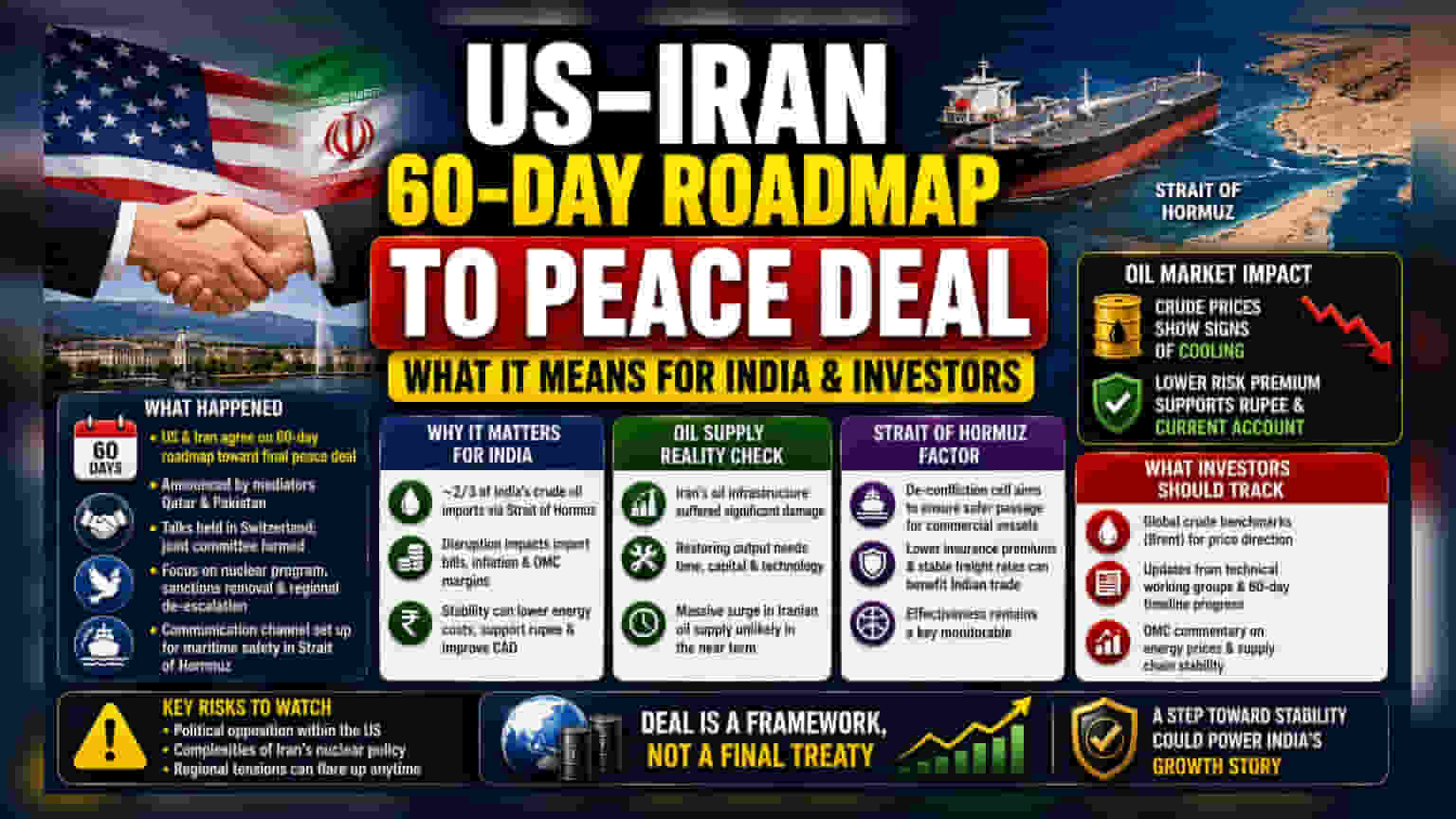
The US and Iran have announced a 60-day roadmap for a potential peace deal, leading to a decline in global crude oil prices. For Indian investors, this move is crucial as it could stabilize energy costs and secure vital shipping lanes in the Strait of Hormuz. However, the path to a final agreement involves significant technical and political challenges that remain to be addressed.
What Happened
The United States and Iran have entered into a 60-day roadmap to reach a final peace deal, as announced by mediators Qatar and Pakistan. This development follows high-level talks in Switzerland, where a joint committee was formed to oversee the process. The initiative aims to address key issues, including the Iranian nuclear program and the removal of various sanctions. The agreement also established a communication channel to de-escalate regional tensions and manage maritime traffic, particularly in the strategic Strait of Hormuz.
Why It Matters For India
For the Indian economy, the Strait of Hormuz is more than just a geographic chokepoint; it is a critical artery for energy security. Nearly two-thirds of India's crude oil imports and a significant portion of its LNG imports pass through this narrow passage. Any disruption in this region directly impacts India's import bills, inflation levels, and the operating margins of downstream oil companies. A credible roadmap toward stability can help reduce the risk premium on oil, potentially lowering the cost of energy imports. For Indian investors, this development is a factor in broader market sentiment, as lower oil prices typically help the Indian rupee and improve the country's current account balance.
The Oil Supply Reality Check
While global markets have reacted positively, with crude oil prices showing signs of cooling, investors should distinguish between a diplomatic roadmap and immediate supply recovery. Iran's oil infrastructure, particularly its petrochemical and refining complexes, has suffered significant damage during recent conflicts. According to industry reports, restoring production capacity will take time, capital, and technology—factors that have been severely constrained by years of sanctions. Therefore, even if sanctions are eventually lifted, a sudden and massive surge in Iranian oil supply to global markets is unlikely in the immediate term.
The Strait Of Hormuz Factor
Shipping companies and logistics firms closely monitor the Strait of Hormuz, as the cost of insurance and freight is directly linked to the security of this route. The establishment of a de-confliction cell is a positive step to ensure safer passage for commercial vessels. If this channel functions effectively, it could lead to lower insurance premiums and more stable freight rates, benefiting Indian companies involved in international trade and shipping logistics. However, the effectiveness of this security framework remains a monitorable, as regional geopolitical tensions often fluctuate.
What Investors Should Track
Investors should focus on several key areas to gauge the practical impact of this roadmap. First, monitor global crude oil benchmarks, such as Brent, as they reflect the market's confidence in the deal's progress. Second, watch for official updates on the technical working groups, as these will indicate whether the 60-day timeline is realistic or if negotiations will face delays. Finally, look for management commentary from Indian Oil Marketing Companies (OMCs) regarding energy pricing trends and supply chain stability. The deal is currently a framework, not a finalized treaty, and political opposition within the US and the complexities of Iran’s nuclear policy remain the primary risks to watch.