 Whalesbook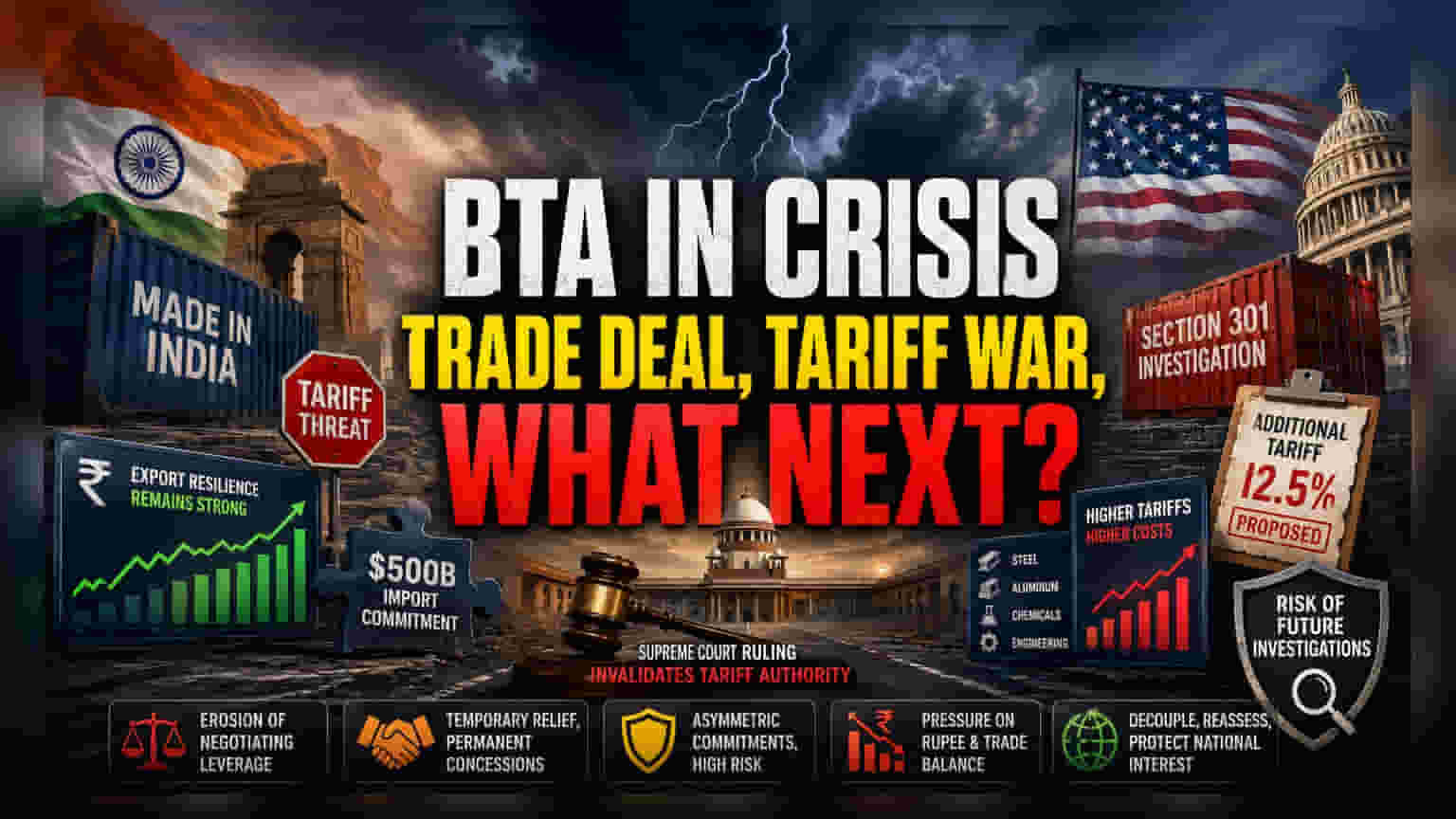


The Erosion of Negotiating Leverage
The fundamental premise of the proposed India-US trade framework has effectively dissolved. What began as a strategic exercise in mutual tariff reduction has transitioned into a high-stakes standoff defined by judicial intervention and administrative volatility. By invalidating the legal authority behind previous reciprocal tariff frameworks, the February 2026 Supreme Court ruling stripped the agreement of its most tangible benefit: the reduction of import duties from 25% to 18%. This legislative vacuum has rendered the original deal framework not merely obsolete but economically disadvantageous for New Delhi.
The Section 301 Tariff Escalation
Compounding the impasse, the Office of the US Trade Representative has weaponized Section 301 investigations, targeting 60 economies under the guise of supply chain transparency. The release of findings on June 3, 2026, regarding alleged labor practices places a proposed 12.5% additional tariff on Indian goods directly in the crosshairs. This shift signals a broader move toward unilateralism in Washington, where trade deals are increasingly viewed as contingent, rather than binding, obligations. For India, the transition from a preferred trading partner to a target of indiscriminate, broad-spectrum tariffs necessitates a reassessment of the $500 billion import commitment currently tethered to the BTA negotiations.
The Forensic Risk Assessment
From a risk-management perspective, the primary danger lies in the asymmetry of the proposed commitments. India is being pressured to provide permanent regulatory and digital trade concessions in exchange for temporary, easily revocable tariff relief. Historically, such arrangements have proven brittle; the implementation of a universal 10% tariff—applicable even to allies—demonstrates that domestic political pressures in the US frequently override international pacts. Furthermore, the persistent threat of additional investigations into industrial overcapacity suggests that even a signed BTA would offer little protection against future regulatory friction or administrative tariffs.
Strategic Alternatives for New Delhi
Continuing to pursue the BTA under these conditions invites significant exposure. The capital-intensive requirement to purchase $500 billion in US imports over five years could place severe downward pressure on the rupee, especially if trade resilience remains high despite higher tariffs. Market data suggests that Indian export volume remained robust throughout the previous fiscal year despite elevated tariff barriers, implying that India may possess more leverage by maintaining an independent trade policy rather than entering a one-sided, long-term commitment. New Delhi's most pragmatic course is to decouple the BTA from the Section 301 discussions, effectively freezing the trade deal until US policy signals stabilize and the legal framework for international cooperation becomes predictable once more.