 Whalesbook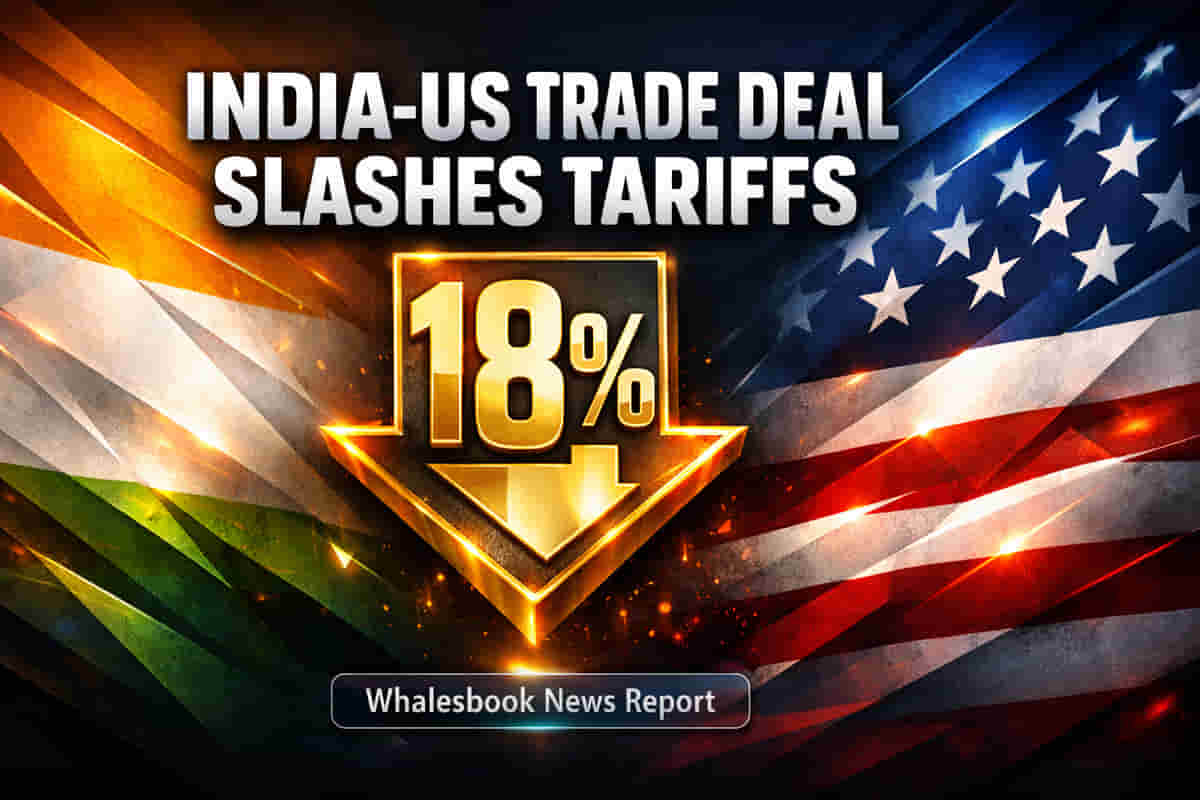


### The Tariff Realignment
The immediate reduction of US reciprocal tariffs on Indian imports to 18%, a drop from the prior 25% rate, signals a significant recalibration of bilateral trade policy. This move provides tangible cost relief for Indian exporters who have faced increased duties in recent periods, including a prior imposition of up to 50% tariffs on certain goods. India's commitment to eliminate its own tariffs and non-tariff barriers against the United States to zero reciprocates this reduction, aiming to facilitate smoother market access for American products. The declaration of the deal being "effective immediately" suggests an intent to rapidly alter trade flows, potentially boosting Indian export volumes and competitiveness in key US market segments.
### The 'Buy American' Pledge and Sectoral Commitments
Beyond tariff adjustments, the agreement centers on a significant "Buy American" commitment from India, reportedly valued at over $500 billion. This pledge spans critical sectors such as US energy, technology, agriculture, and coal. Notably, this commitment is coupled with India's reported agreement to halt purchases of Russian oil, redirecting a substantial portion of its energy sourcing towards the United States. Negotiations also addressed US demands for greater market access for its companies, particularly concerning data centers in India, which could involve tax breaks and duty exemptions.
### Geopolitical and Economic Undercurrents
This trade agreement frames a narrative of strengthened bilateral ties, with President Trump and Prime Minister Modi reportedly emphasizing their ability to achieve decisive outcomes. The accord emerges against a backdrop of India's recent efforts to diversify its trade relationships, including a significant free trade agreement with the European Union signed concurrently. India's economy has previously shown vulnerability to US trade policy shifts, with tariffs threatening substantial export volumes and potentially impacting GDP growth. While sectors like textiles, gems, and leather have been previously identified as most at risk from US tariffs, others like pharmaceuticals and IT have demonstrated resilience or received exemptions. The scale of the "Buy American" commitment suggests a strategic realignment, aiming to rebalance trade deficits and foster closer economic interdependence, although it also places India in a potentially exposed position regarding reliance on US exports.
### Forward Look
The immediate impact of this tariff reduction and procurement commitment will likely be closely monitored by market participants. The agreement, characterized by its leaders as a product of "friendship and respect," suggests a period of intensified economic cooperation between the two nations. This could pave the way for further collaborative initiatives across various sectors, solidifying the strategic partnership between the United States and India.