

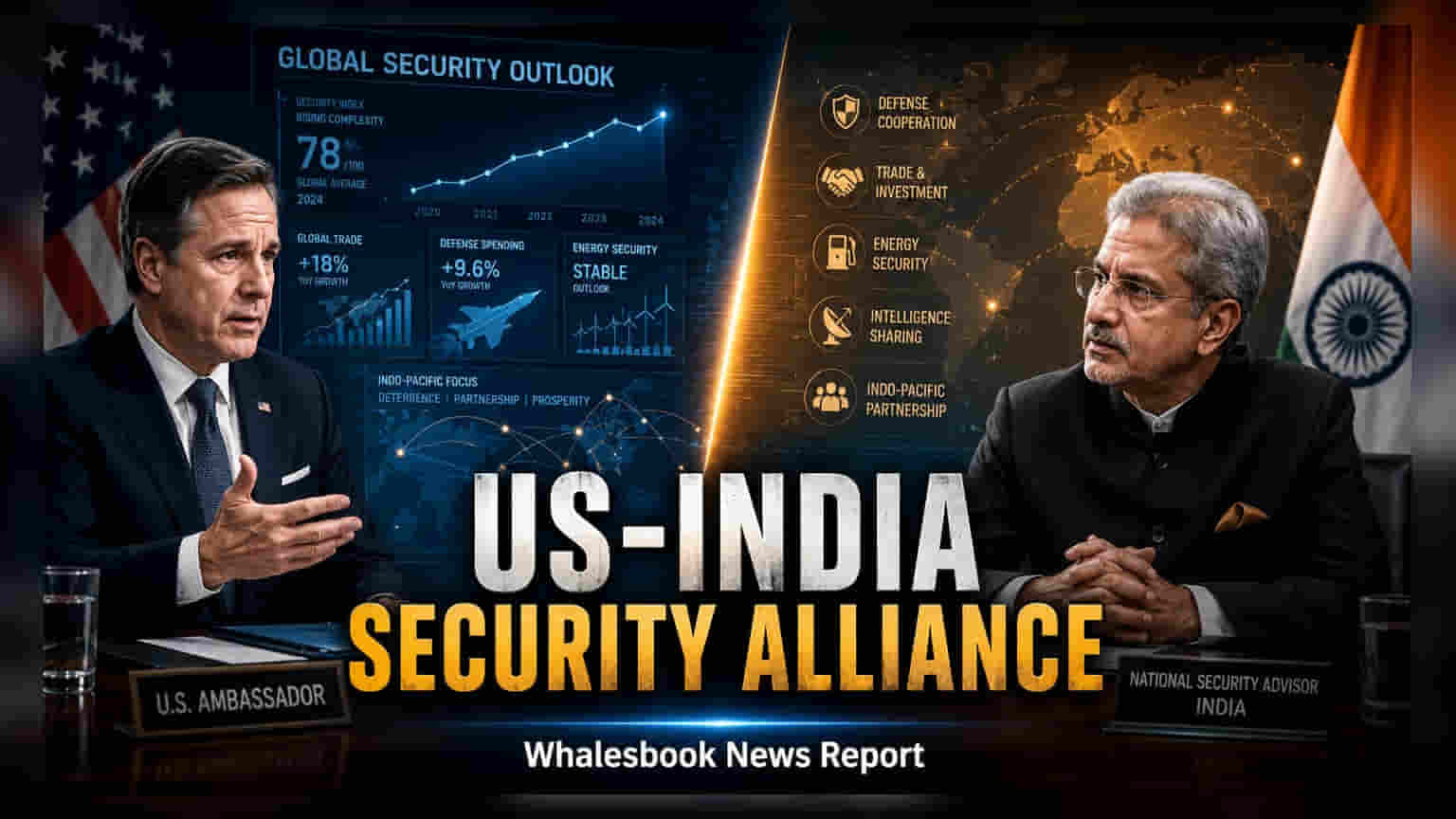
US Ambassador Sergio Gor and NSA Ajit Doval held discussions to strengthen the US-India partnership, focusing on trade, energy security, and defense. This high-level engagement occurs amid shifting regional security dynamics in West Asia. For investors, the focus remains on whether these diplomatic efforts will lead to policy stability regarding trade agreements and long-term supply chain cooperation.
US Ambassador Sergio Gor held high-level discussions with National Security Advisor (NSA) Ajit Doval in New Delhi on August 11, 2026, aimed at deepening the strategic partnership between the United States and India. The meeting, which follows recent engagements between the US State Department and Indian leadership, including a phone call between Vice President JD Vance and Prime Minister Narendra Modi, signals an attempt to solidify bilateral ties.
The discussions primarily centered on bolstering cooperation in defense, energy security, and trade. For the business community and investors, the importance of this relationship lies in its potential to influence policy frameworks for critical sectors. These include the defense manufacturing industry, which is seeking deeper technology collaboration, and the energy sector, where access to critical minerals and energy security are becoming central to industrial supply chains.
This diplomatic push takes place against a backdrop of evolving regional dynamics. The emergence of a recent defense pact involving Turkiye, Saudi Arabia, and Pakistan has added a layer of complexity to West Asian security. For India, maintaining a stable partnership with the United States is essential to navigate these shifting regional alignments, which directly affect global supply chains, oil and gas prices, and regional trade routes.
While the current narrative focuses on cooperation, investors and market analysts are aware of historical friction points that have previously impacted sentiment. Past tensions have included disputes over punitive trade tariffs and concerns regarding US immigration policies, specifically those impacting H1B visa fees. While both nations have made efforts to repair and advance the bilateral trade framework, these unresolved policy hurdles remain a key risk factor. Investors will be watching for concrete progress on a balanced trade agreement, which was previously mandated for review by both US and Indian leadership.
The focus on critical minerals is another area of interest. As global manufacturing shifts toward more diverse supply chains, the ability of India and the US to collaborate on mineral security—essential for technologies like semiconductors and renewable energy—could open new avenues for industrial growth. However, the success of these initiatives will depend on the speed of implementation and the ability of both governments to navigate complex trade regulations.
Looking ahead, the market will monitor follow-up actions from these discussions. The key monitorable will be whether this high-level dialogue leads to tangible policy changes, particularly regarding the ease of doing business, defense manufacturing indigenization, and a sustainable trade pact that addresses past concerns over tariffs and labor mobility.