 Whalesbook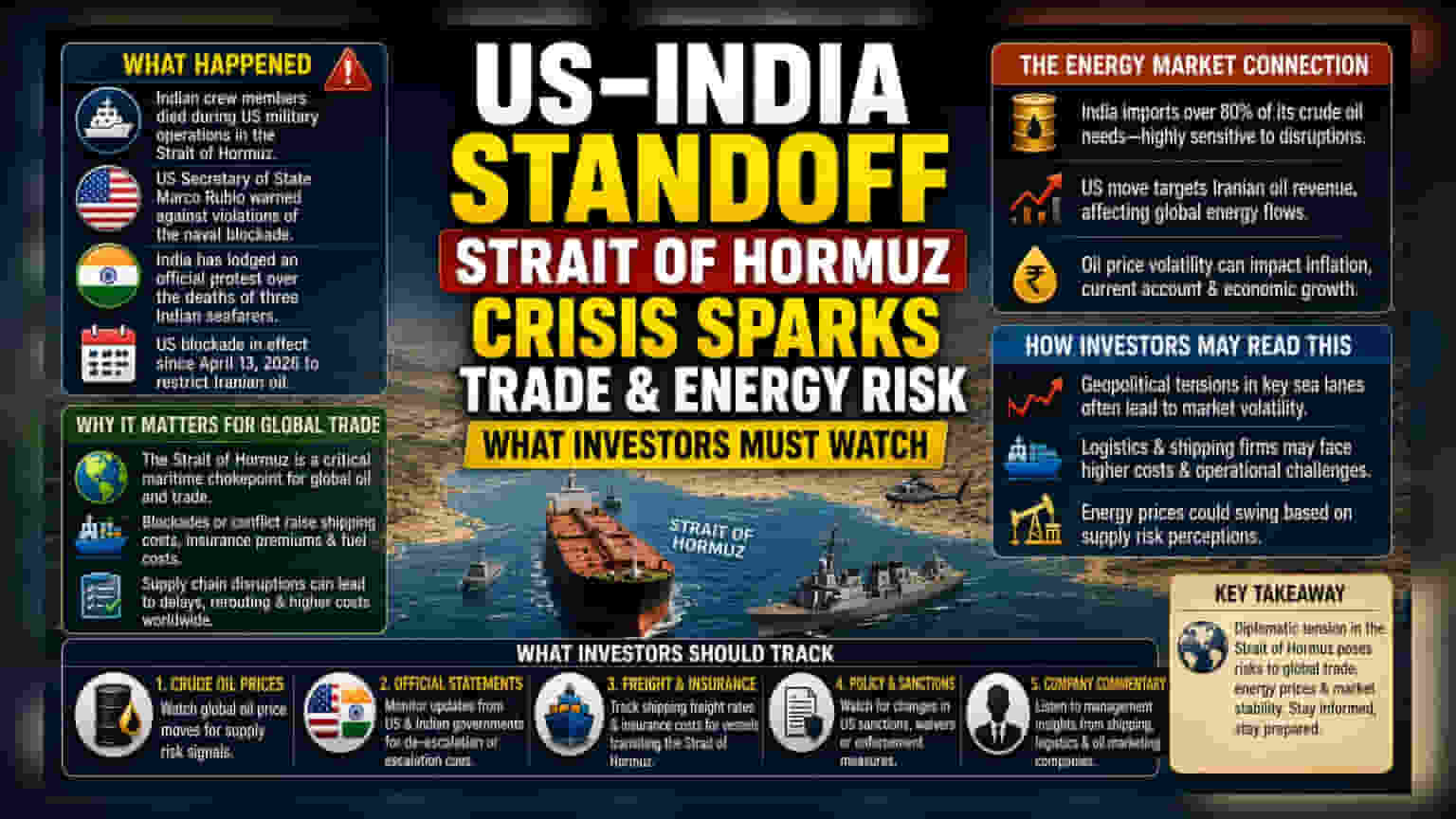


Tensions have flared between the US and India following the deaths of Indian sailors during US operations in the Strait of Hormuz. The US has issued a firm warning against violating its naval blockade, which is designed to restrict Iranian oil transit. For investors, this situation highlights risks to global shipping lanes, maritime logistics, and potential volatility in energy markets due to the region's status as a critical energy chokepoint.
What Happened
The United States and India are engaged in a diplomatic standoff following the deaths of Indian seafarers during recent US military operations in the Strait of Hormuz. US Secretary of State Marco Rubio held discussions with Indian External Affairs Minister S. Jaishankar, delivering a firm warning that the US would not tolerate violations of its naval blockade. The blockade, which the US has enforced since April 13, 2026, aims to restrict the flow of Iranian oil. India has officially lodged a protest against the military actions, which reportedly resulted in the deaths of three Indian crew members on a merchant vessel earlier this week.
Why This Matters For Global Trade
The Strait of Hormuz is widely considered one of the world's most critical maritime chokepoints. A significant portion of the world's seaborne oil passes through this narrow waterway. Any military presence, blockade, or conflict in this region creates immediate uncertainty for international shipping and logistics. For investors, the primary concern is the potential for supply chain disruptions. When major powers restrict or police transit in key waterways, insurance premiums for commercial vessels often rise, and shipping routes may be altered, leading to increased fuel costs and delivery delays.
The Energy Market Connection
India is one of the world's largest importers of crude oil, making its economy highly sensitive to disruptions in energy supply chains and price volatility. The US enforcement of a blockade to restrict Iranian oil revenue directly impacts the flow of energy commodities. While global oil markets often price in geopolitical risks, a direct confrontation involving key diplomatic partners like the US and India adds a layer of uncertainty. Investors in the energy sector and logistics companies may monitor how this diplomatic friction affects freight rates and global energy pricing indices.
How Investors May Read This
Market participants typically view regional conflicts in critical maritime lanes as a risk factor that can increase market volatility. The immediate impact is often seen in energy prices, which can fluctuate based on the perceived threat to supply. Furthermore, logistics companies and firms with heavy exposure to Middle Eastern trade routes may face operational challenges if the blockade leads to prolonged delays or rerouting. The situation is evolving, and the primary investor focus remains on whether the diplomatic dispute can be resolved without causing a broader impact on trade or energy supplies.
What Investors Should Track
Investors may keep an eye on several monitorables as this situation develops. First, the movement in global crude oil prices serves as a key indicator of market sentiment regarding supply risks. Second, official statements from both the US and Indian governments will be critical in assessing whether the diplomatic tension is de-escalating or intensifying. Third, any updates on shipping freight rates or insurance costs for vessels navigating the Strait of Hormuz will provide insight into the practical impact on maritime trade. Finally, management commentary from shipping and oil marketing companies during upcoming quarterly updates may provide more clarity on how these geopolitical risks are being managed at an operational level.