

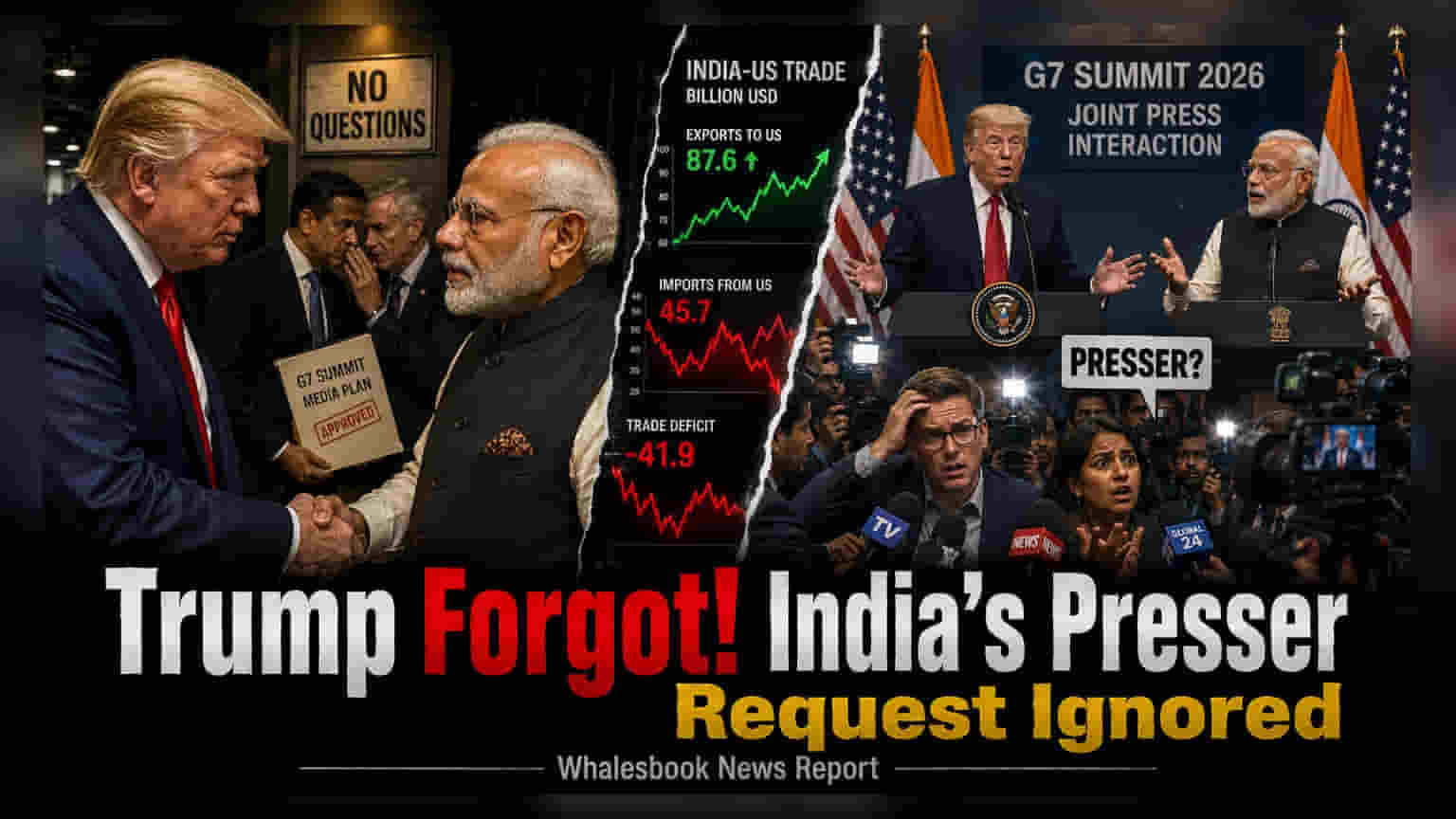
US Ambassador Sergio Gor disclosed that a planned G7 summit press event involving Prime Minister Narendra Modi deviated from the agreed-upon protocol. Although India requested no questions, President Donald Trump opened the floor to reporters, extending the session to 45 minutes. The account highlights the unpredictable nature of high-level diplomatic media interactions.
US Ambassador to India, Sergio Gor, has shared details regarding a diplomatic media interaction during the G7 summit held in June 2026. Speaking at the Economic Times World Leaders Forum on August 22, the ambassador provided an account of the press event held alongside Prime Minister Narendra Modi and US President Donald Trump.
According to the ambassador, the Ministry of External Affairs had requested that the media briefing be limited to a no-questions format. President Trump had initially agreed to this approach. However, once the event began in front of the press, the President opened the floor for questions, resulting in an unplanned 45-minute press conference rather than a brief interaction.
The ambassador described the incident as an example of how high-level diplomatic exchanges can sometimes deviate from pre-planned protocols. While the Indian government has not issued an official response to the disclosure, the account offers insight into the management of media expectations during international summits.
For observers of India-US relations, the incident underscores the difference in communication styles between the leaderships of the two nations. Beyond the diplomatic nuance, the G7 meeting remains significant for its focus on broader bilateral ties, including ongoing discussions regarding trade agreements and regional security concerns, such as maritime safety in the Strait of Hormuz.
As India continues to engage with global powers on trade and defense matters, these diplomatic interactions serve as important reference points. Analysts often monitor such high-level meetings for signals regarding policy stability, progress on trade deals, or the strengthening of strategic defense partnerships between the two nations.