 Whalesbook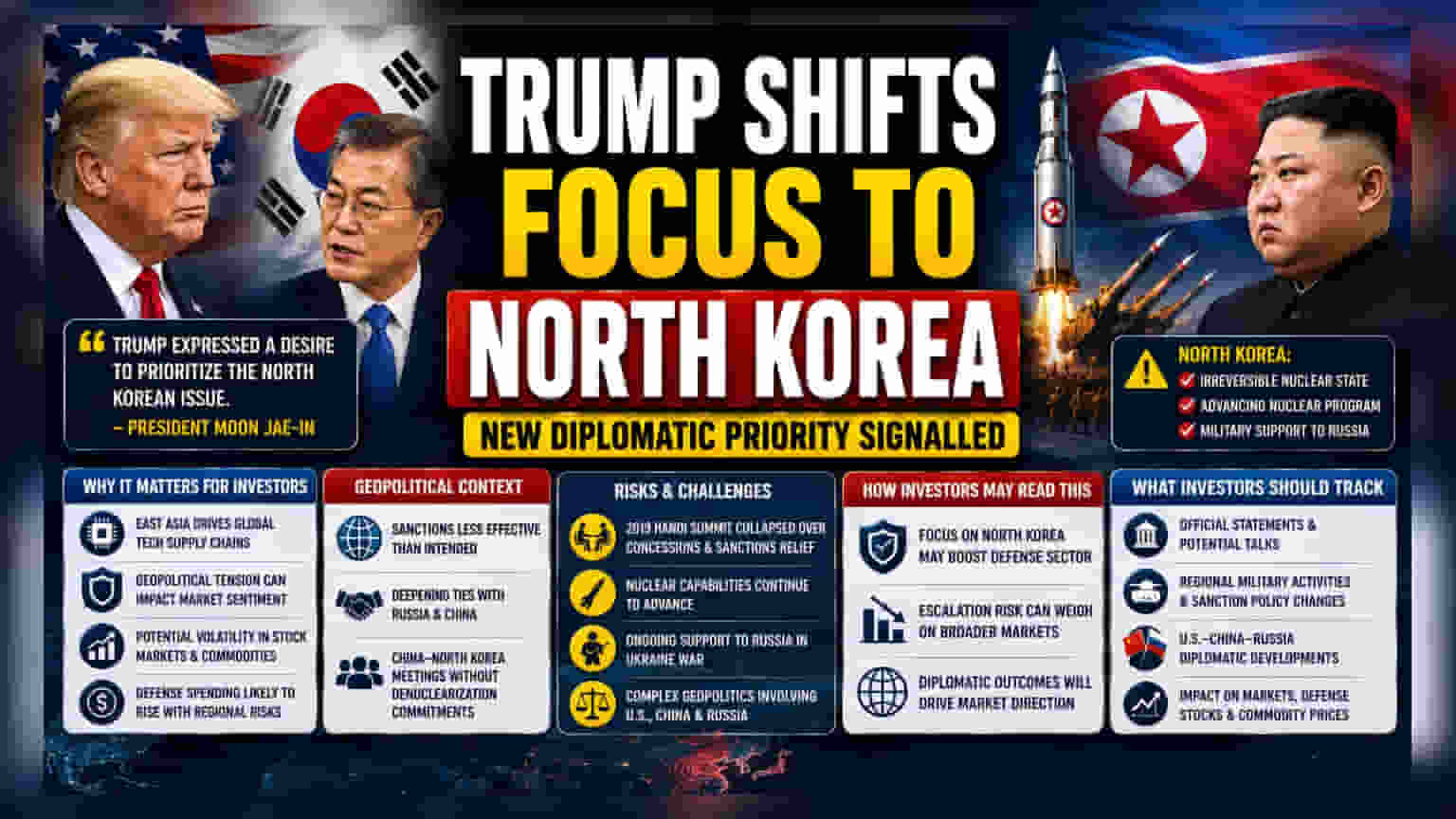
President Donald Trump has signaled a renewed focus on North Korea’s nuclear program following a diplomatic agreement with Iran. This shift, noted during a G7 summit, highlights potential geopolitical tensions in East Asia. For investors, this development raises questions about regional stability, global defense spending, and supply chain security, as shifts in international relations often influence market sentiment and commodity prices.
What Happened
President Donald Trump has indicated a strategic pivot in U.S. foreign policy, shifting focus toward North Korea’s nuclear program. This announcement follows recent diplomatic efforts involving Iran. The update was relayed by South Korean President Moon Jae-in, who stated that Trump expressed a desire to prioritize the North Korean issue during a G7 dinner. This signal suggests a potential new phase in diplomatic engagements with Pyongyang, marking a departure from previous priorities.
Why This Matters For Investors
Geopolitical changes often impact stock markets by influencing investor sentiment, defense spending, and commodity prices. When major powers shift their diplomatic focus, it creates uncertainty in the regions involved. For investors, news regarding North Korea is significant because the region is a critical hub for global technology supply chains, including semiconductors and consumer electronics. Any increase in regional tension can cause volatility in markets and may affect companies with large operations or supply dependencies in East Asia.
The Geopolitical Context
South Korean President Moon Jae-in noted that current international sanctions against North Korea have been less effective than intended. He pointed to deepening military and economic cooperation between North Korea and Russia as a concern, suggesting that even limited aid provides a substantial boost to Pyongyang. Additionally, North Korea’s strategic alignment with China remains a factor. Recent high-level meetings between Chinese and North Korean leadership have occurred without explicit commitments to denuclearization, which some observers view as a sign of regional support for Pyongyang’s current stance.
Risks and Challenges
Investors monitoring this situation should be aware of the historical context. Denuclearization efforts have remained stagnant since the 2019 Hanoi summit between Trump and Kim Jong Un, which collapsed due to disagreements over the scope of concessions and sanctions relief. Since then, Pyongyang has designated itself an irreversible nuclear state and has continued to develop its nuclear capabilities. The ongoing military support from North Korea for Russia’s activities in Ukraine adds another layer of complexity, making the diplomatic environment more difficult to navigate than in previous years.
How Investors May Read This
Markets typically react to geopolitical news based on the perceived threat to global stability. A focus on North Korea may lead to a renewed interest in the defense sector, as government spending in this area often correlates with rising international tension. Conversely, unexpected escalations can weigh on the broader market by dampening investor sentiment. The effectiveness of future diplomatic efforts, or the lack thereof, will be a primary driver for how this story develops in the financial markets.
What Investors Should Track
Investors may monitor several key areas as this situation evolves. First, any official statements from the U.S. or North Korean governments regarding potential talks or policy changes will be important. Second, developments in regional military activities or changes in international sanction policies could alter the risk profile for companies with exposure to East Asia. Finally, the broader diplomatic relationship between the U.S., China, and Russia will likely influence how the situation with North Korea is handled. Tracking these diplomatic and military indicators can help investors understand whether the situation is stabilizing or facing new pressure.