

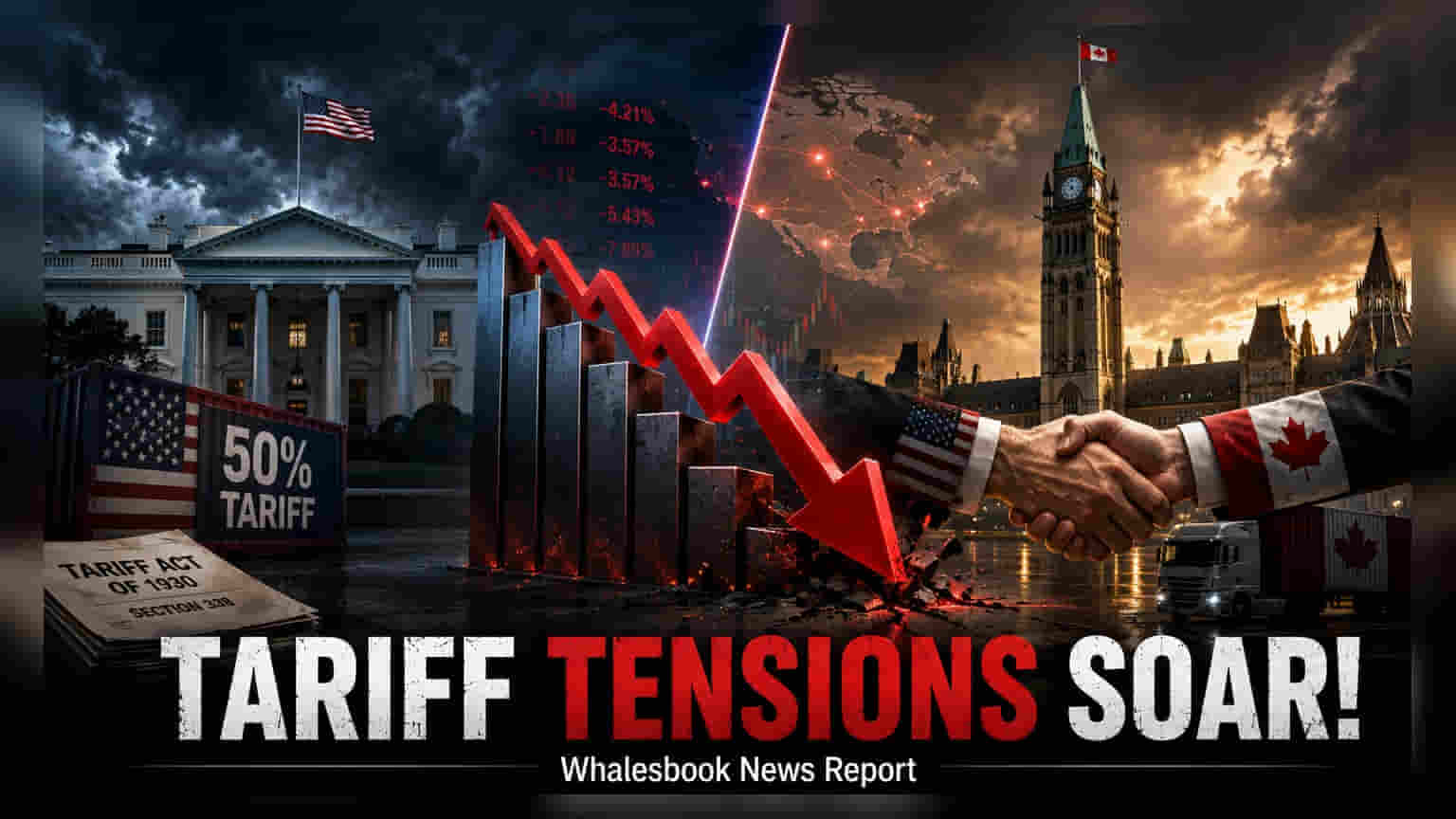
The U.S. and Canada are in last-minute negotiations to avoid a 50% tariff on $20–$30 billion worth of Canadian goods set to take effect on August 19. If no deal is reached, the duties under the Tariff Act of 1930 could significantly disrupt cross-border supply chains and increase costs across the automotive, dairy, and manufacturing sectors.
The United States and Canada are currently engaged in high-stakes, last-minute trade negotiations, racing to reach an agreement before a looming 12:01 a.m. ET deadline on Wednesday, August 19, 2026. At the center of the dispute is a threatened 50% tariff on approximately $20 billion to $30 billion worth of Canadian exports, a move that would represent a significant shift in the trade relationship between the two long-standing partners.
Impact of the Tariff Act of 1930
The proposed tariffs are being invoked under Section 338 of the Tariff Act of 1930, a rarely used, decades-old statute. This provision allows for the imposition of duties without the typical investigation requirements, creating significant uncertainty for businesses operating across the border. Unlike standard trade actions, these tariffs are set to apply to a wide range of goods, including motor vehicles, dairy products, alcoholic beverages, cement, and electrical equipment, regardless of their origin status under existing agreements like the USMCA.
Canadian Prime Minister Mark Carney and U.S. President Donald Trump have held multiple discussions in the lead-up to the deadline, seeking a way to de-escalate the situation. Negotiators are reportedly focusing on specific concessions, such as potential adjustments to auto content rules and a possible reduction in existing U.S. tariffs on Canadian vehicles from 25% to 15%, provided that U.S. content calculations are met. However, the path to an agreement remains narrow, with both sides balancing domestic political pressures and the need to protect their respective industries.
Economic Risks and Market Concerns
For investors and market participants, the outcome of these talks carries significant weight, particularly for industries heavily integrated into the U.S.-Canada trade corridor. A failure to avert the tariffs would likely lead to immediate cost increases for manufacturers and retailers on both sides of the border.
Analysts have highlighted that the automotive and agri-food sectors are most exposed to these potential levies. Beyond immediate price hikes, there is a risk of longer-term structural disadvantage for Canadian exporters, which could impact profit margins and operational efficiency for companies relying on cross-border supply chains. Furthermore, Canadian officials have indicated that retaliation measures remain an option if the tariffs proceed, which could exacerbate economic friction and lead to broader market volatility.
The final resolution will depend on whether the two nations can agree on critical sticking points, such as U.S. access to Canada's dairy market and provincial restrictions on U.S. alcohol. Investors should monitor official announcements following the August 19 deadline, as any outcome—whether a last-minute deal, a phased implementation, or the full imposition of tariffs—will likely shift the operational landscape for major North American industries.