

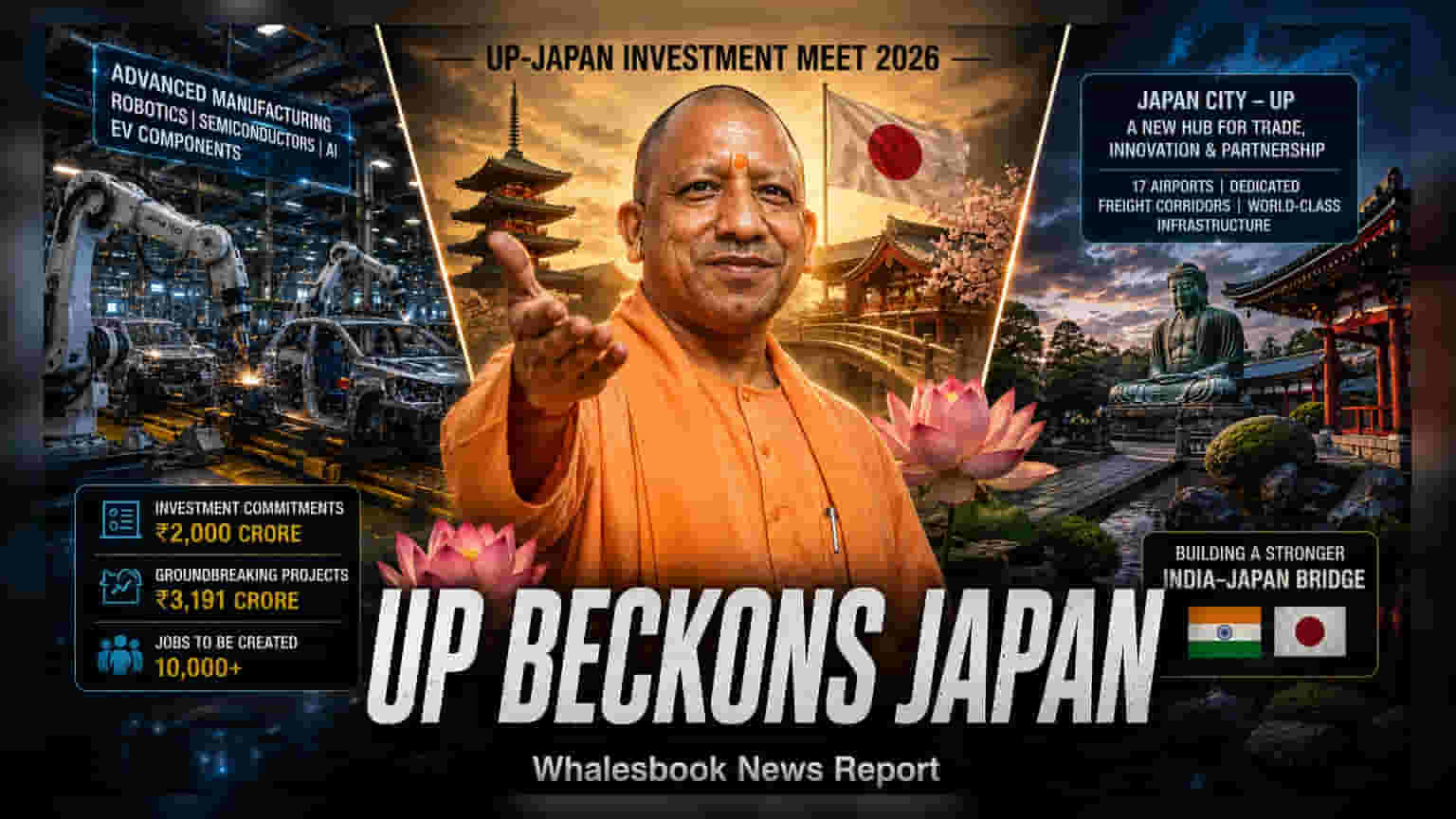
Uttar Pradesh has unveiled plans for a 'Japan City' to attract investors, backed by Rs 2,000 crore in fresh commitments and the start of Rs 3,191 crore in new industrial projects. The state is targeting sectors like electric vehicles, semiconductors, and green hydrogen. Investors will now monitor the execution of these projects and how effectively the state converts these industrial commitments into operational output.
Uttar Pradesh has taken significant steps to position itself as a key destination for Japanese industrial investment. During the 'UP-Japan Investment Meet 2026' held in New Delhi, the state government outlined a roadmap that includes developing a dedicated 'Japan City' to facilitate trade and manufacturing partnerships. This initiative aims to deepen ties between the state and Japanese firms, particularly in advanced technology sectors.
The investment drive has moved beyond just proposals, with concrete project activity being reported. While the event saw Rs 2,000 crore in new investment commitments, the state also oversaw the virtual groundbreaking for projects worth Rs 3,191 crore. These specific initiatives, involving companies such as Escorts Kubota Ltd. and Spark Minda Corporation, are expected to generate over 10,000 jobs. For investors, this distinction between long-term commitments and immediate, active capital spending is essential, as it highlights the state’s current momentum in industrial expansion.
The focus of this partnership is heavily weighted toward high-value manufacturing. Uttar Pradesh is aggressively pitching its capabilities in semiconductors, artificial intelligence, robotics, and electric vehicle (EV) components. By inviting Japanese expertise, the state hopes to tap into advanced manufacturing standards that can bolster its existing industrial base. The government is also promoting its infrastructure upgrades, including a network of 17 airports and new dedicated freight corridors, as a solution to logistical challenges that historically hampered large-scale manufacturing in northern India.
Despite the positive reception, the path forward involves significant execution requirements. The success of these investments will depend on the government’s ability to maintain a consistent business environment, provide reliable utility support, and ensure that the promised infrastructure remains on schedule. Large-scale industrial projects often face challenges related to land acquisition, regulatory clearances, and supply chain integration. Investors should monitor the progress of these specific projects, as the ability to move from initial groundbreaking to full-scale production will be the primary measure of the state’s effectiveness in creating a sustainable 'Japan City' and broader manufacturing hub.
Furthermore, while the state boasts significant economic growth, the real-world impact will be tied to how well the local workforce is integrated into these high-tech Japanese operations. The long-term success of these collaborations will depend on steady policy support and the state's capacity to keep project costs under control, as global economic shifts could affect the pace of foreign direct investment. Monitoring the commissioning timelines for the projects announced by Escorts Kubota and Spark Minda, along with further updates on the 'Japan City' development, will be important for tracking the state’s manufacturing trajectory.