

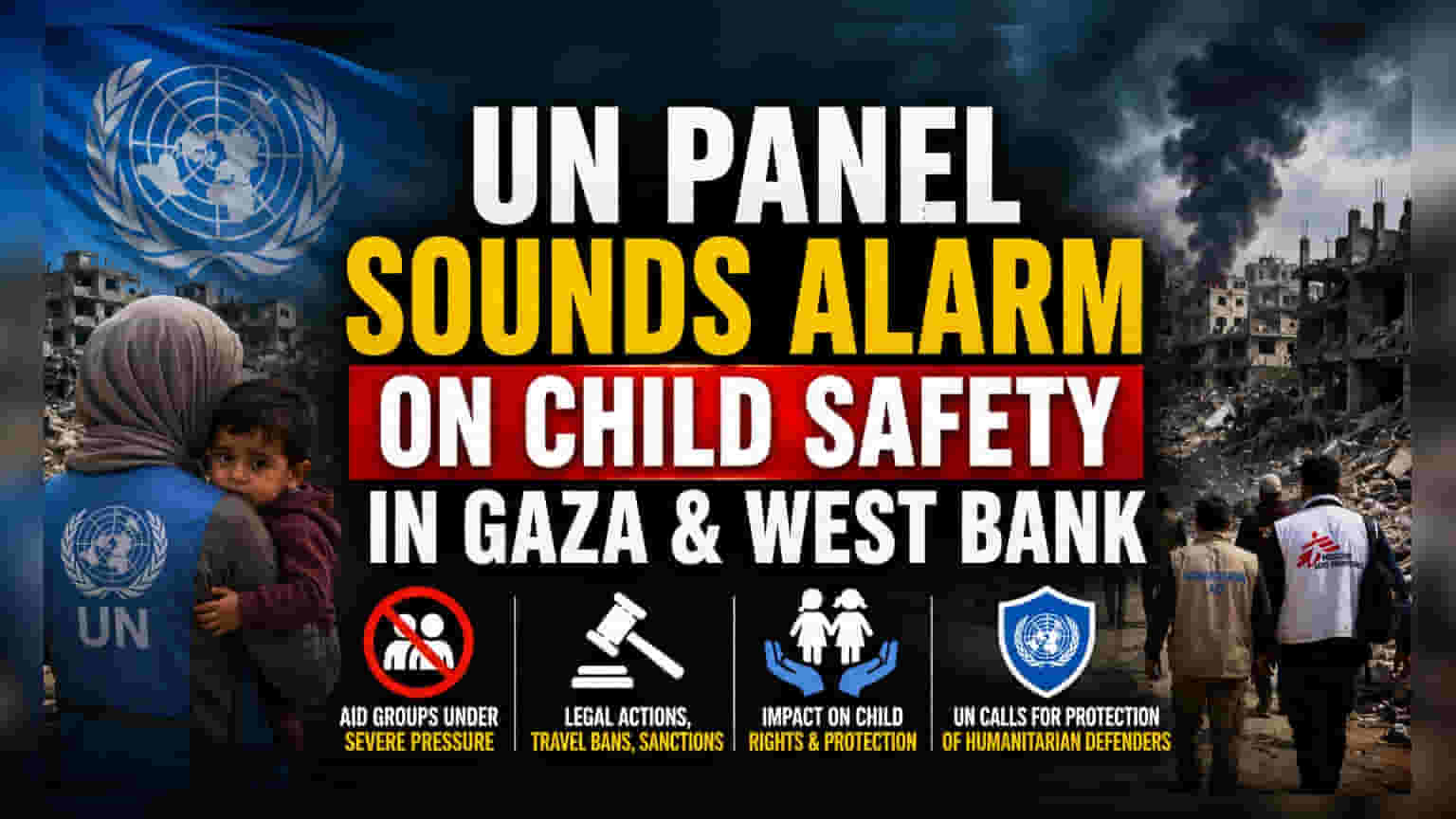
The United Nations Committee on the Rights of the Child has issued a warning regarding the safety of children in Gaza and the West Bank as humanitarian NGOs face increasing pressure. Aid groups report operational challenges, including being labeled 'terrorists,' which has hindered their ability to provide essential services and document rights violations in the region.
What Happened
The United Nations Committee on the Rights of the Child has released a statement expressing deep concern over the safety and well-being of children in Gaza and the West Bank. The committee reports that humanitarian and rights-based organizations are facing severe operational pressure, forcing many to reduce or completely halt their activities. These organizations have historically played a vital role in documenting violations and delivering aid in the region.
The Operational Challenges Facing Aid Groups
According to the UN committee, these humanitarian groups are encountering significant hurdles in their day-to-day operations. Some organizations have been labeled as "terrorists" by political and group entities, a designation that has been accompanied by travel bans, financial sanctions, and the threat of legal action or arrest.
These tactics have made it difficult for groups to continue their long-standing work, which includes providing support and defense for children within the legal and military systems of the region. The committee has called for the international community to protect these defenders who operate under high-risk conditions.
Impact on Child Rights and Aid Delivery
the withdrawal or reduction of these humanitarian services has created a void in protection for vulnerable children. The Office of the United Nations High Commissioner for Human Rights (OHCHR) has noted that without these groups, it becomes nearly impossible to effectively protect families and children or to track rights violations.
Since the ceasefire that began on October 10, reports indicate an intensification of measures against humanitarian operations. Notably, organizations like Doctors Without Borders (MSF) have faced bans after failing to provide specific staff lists. Additionally, a coalition of 17 international aid groups recently petitioned the Israeli Supreme Court to challenge government efforts to halt their operations in the occupied territories.
The Broader Context of Regional Stability
For global observers and international markets, the situation in the Middle East remains a critical area of focus. Ongoing humanitarian crises and the restricted operation of international aid groups often contribute to regional uncertainty.
Geopolitical instability frequently affects global supply chains, energy prices, and investor sentiment regarding emerging and conflict-prone markets. While this specific update focuses on the humanitarian aspect, the inability of aid organizations to operate freely highlights the complexity of the current regulatory and security environment in the region.
What to Watch Next
The key monitorables for the international community include the outcome of the ongoing legal petitions in the Supreme Court regarding aid group operations and the response of international bodies to the UN committee's call for protection. Continued restrictions on humanitarian groups may have long-term implications for stability in Gaza and the West Bank, which remains a factor in global geopolitical assessments.